-
+86 13720060320
-
lanna@haitangs.com

Blog
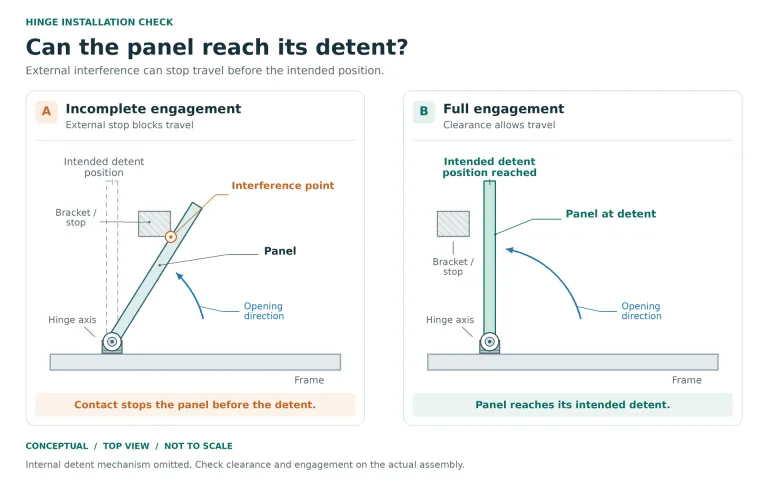
Detent Hinge Not Holding Position? Causes & Checks
The cover clicks into position, then starts to move as soon as the operator lets go. The sound is easy to notice. The cause is less obvious: the detent may be only…
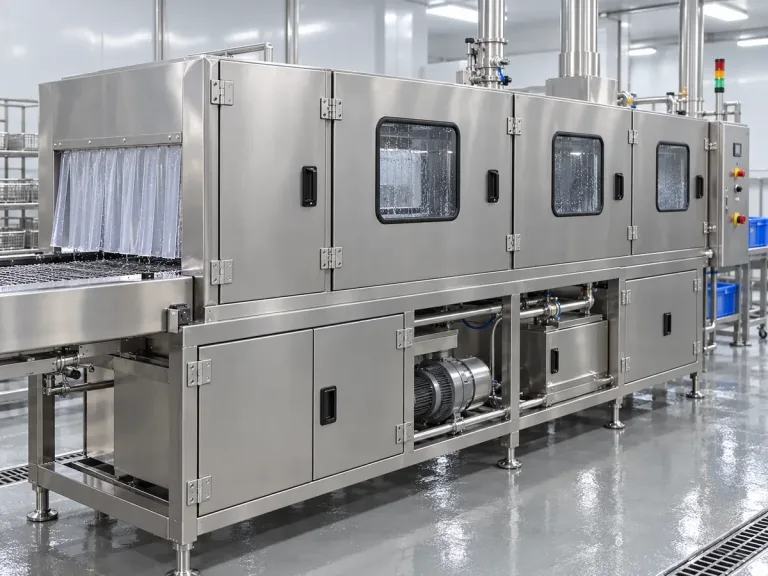
Washdown Equipment Hinges: Avoiding Water and Residue Traps
A narrow wet line can remain beneath a hinge after the surrounding door has drained. Opening the door may release another drop. At the next inspection, a deposit appears along the same…
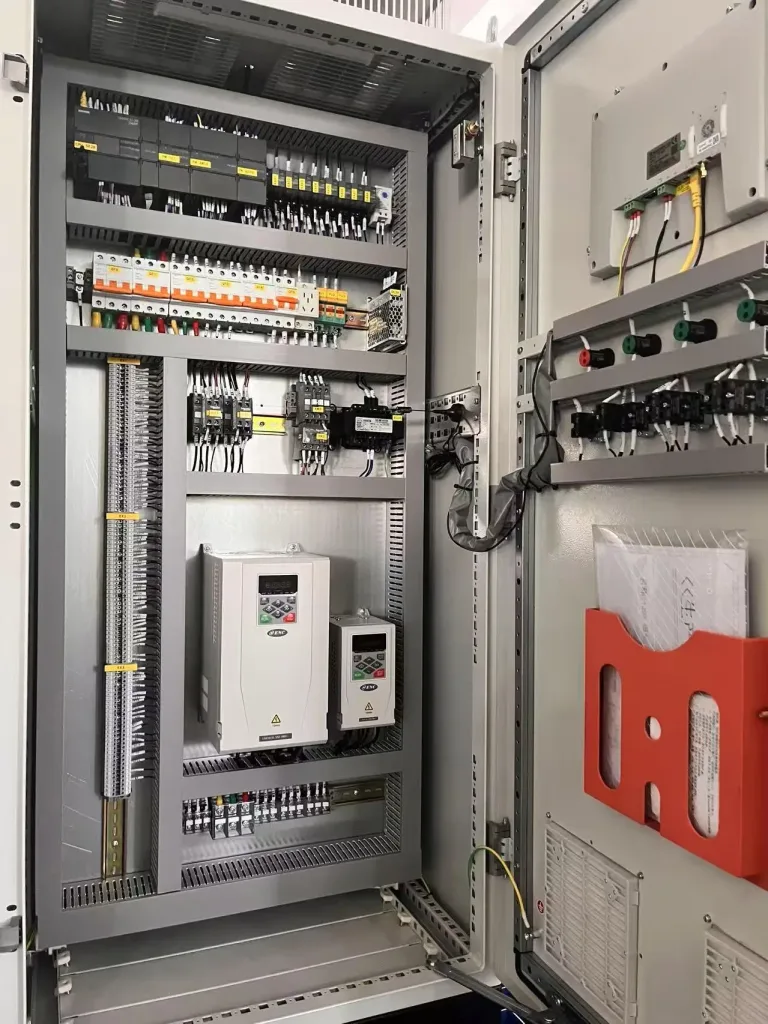
How to Specify Industrial Control Panel Door Hinges: Door Load, Cable Clearance & Service Access
A control-panel door can close correctly in CAD and still become difficult to use after the cabinet is wired. Add an HMI, selector switches, meters, cable harnesses, a bonding strap and internal…
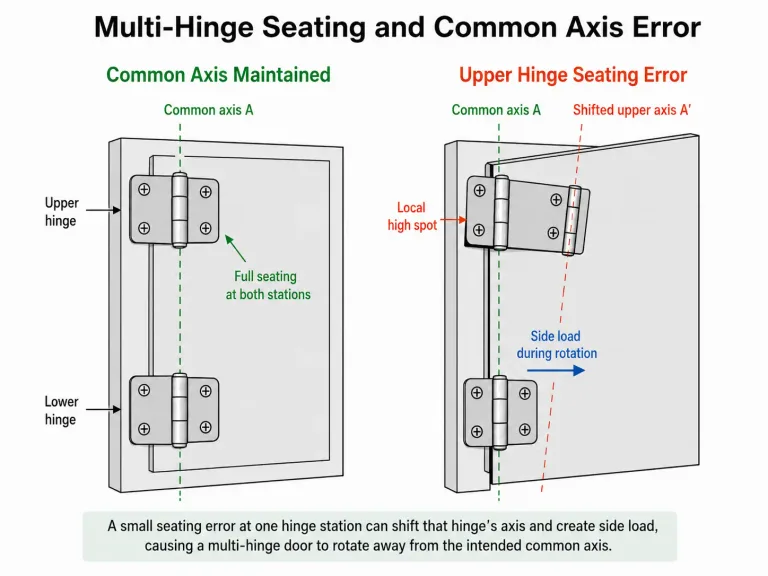
Industrial Hinge Mounting Surface Flatness: Leaf Seating, Clamp-Up and Axis Shift
An industrial hinge can rotate freely in the hand, line up with every mounting hole and still become noticeably tighter after the fasteners are fully tightened. When that happens, the fastening operation…
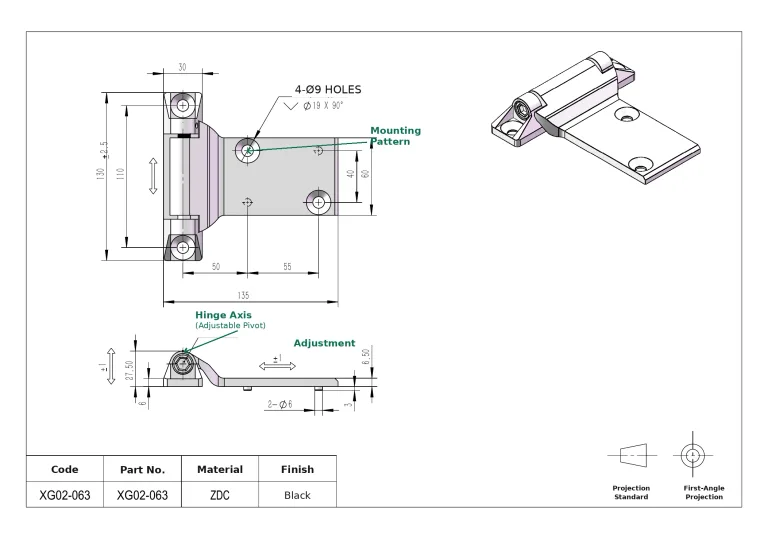
Industrial Hinge Axis Alignment: Why Multi-Hinge Doors Bind After Assembly
The bolts can fit. The hinge axes can still be wrong. A multi-hinge industrial door may swing reasonably well while the fasteners are loose, then become noticeably harder to move after final…
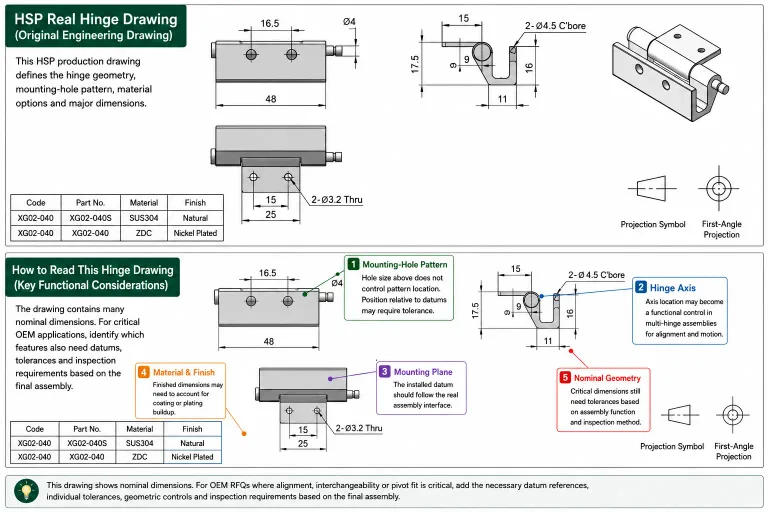
Industrial Hinge Tolerances: What to Put on the Drawing Before RFQ
Industrial hinge tolerances should not be a blanket ± value copied into the title block. The drawing has to distinguish dimensions that locate the hinge, dimensions that keep multiple hinge axes aligned,…
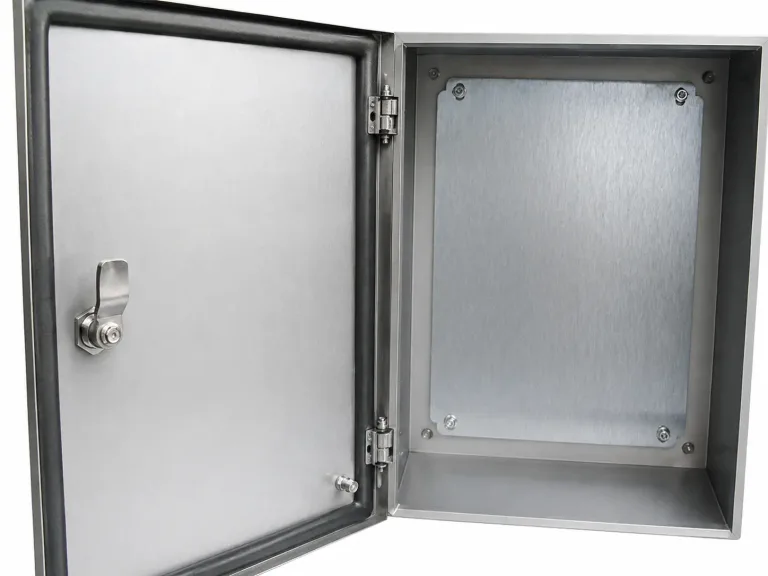
Fixed-Pin vs Removable-Pin Hinges: Serviceability and Maintenance
The difference between a fixed-pin hinge and a removable-pin hinge is not simply whether a door can be taken off quickly. It determines whether the pivot itself remains permanently assembled or becomes…
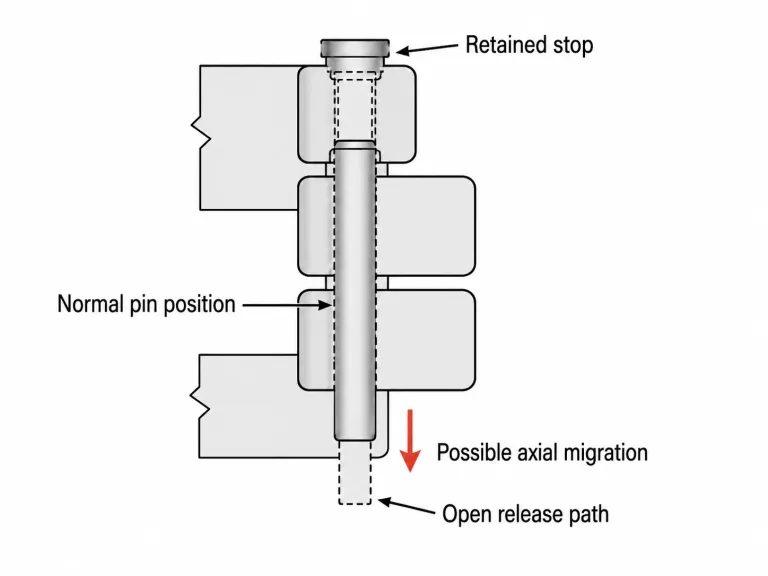
How to Choose a Hinge Pin Retention Method for Vibration Equipment
A hinge pin does not have to fall out before retention becomes a problem. Partial axial migration can reduce engagement with one knuckle, increase projection at the opposite end, move a groove…
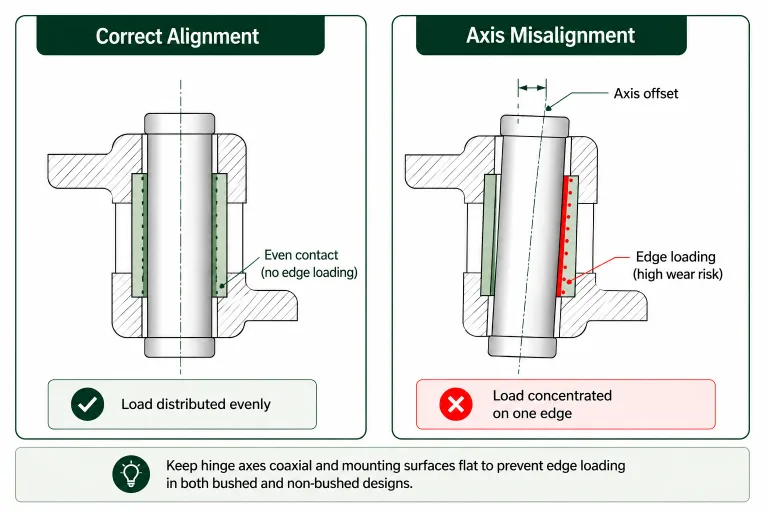
Bushed vs Non-Bushed Industrial Hinges: Wear, Fit and Serviceability
Adding a bushing to an industrial hinge is easy to describe as an upgrade. It adds a separate bearing surface, can move wear away from the hinge body and may create a…
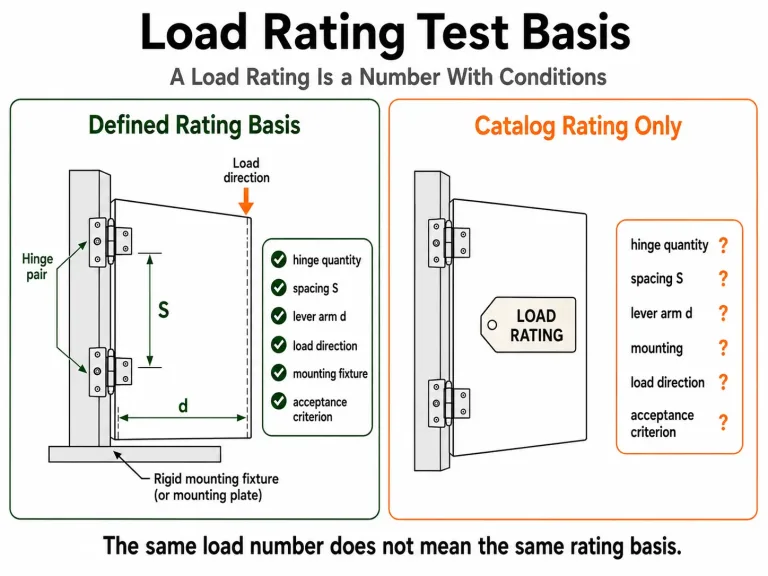
Industrial Hinge Load Ratings: What OEM Buyers Should Compare Before Selection
Supplier A publishes a lower industrial hinge load rating. Supplier B publishes a higher one. At first glance, Supplier B looks like the safer choice. That conclusion may be wrong. The first…
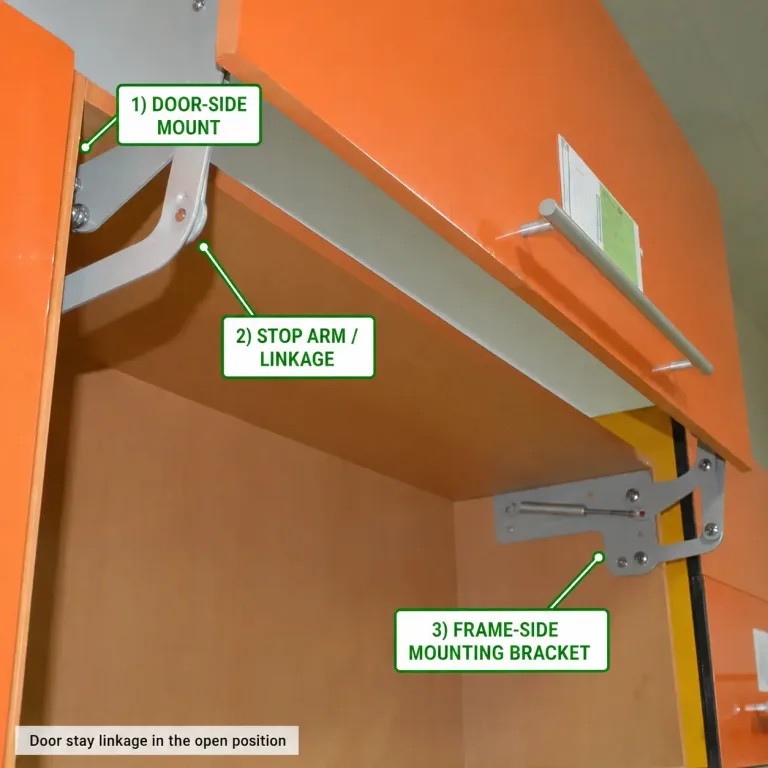
How to Specify Industrial Door Opening Stops: Opening Angle, Impact Load and Overtravel
Industrial door opening stops should not be specified from whatever angle the hinge happens to reach. By the time a hinge reaches its own mechanical end travel, a handle may already have…
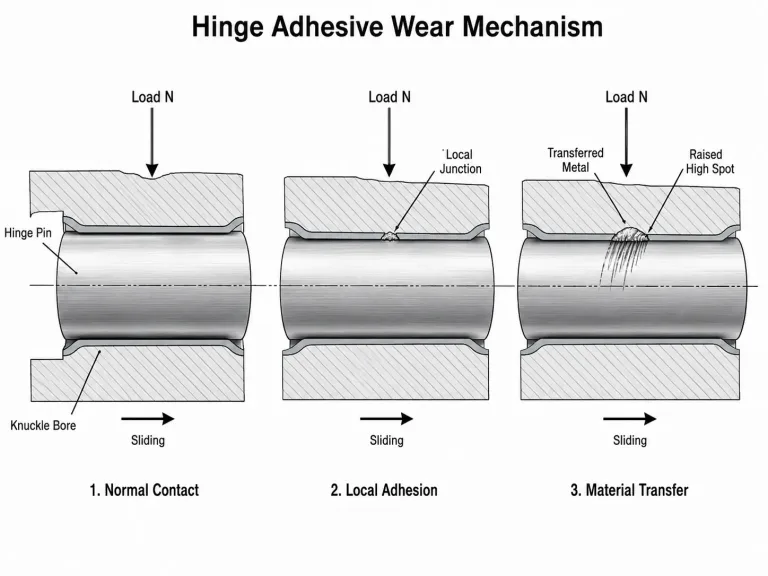
Stainless Steel Hinge Galling: Adhesive Wear, Material Pairing and Lubrication
A stainless steel hinge can have measurable pin clearance and still become progressively harder to move. A rough spot may appear at one part of the opening arc. The motion may then…