-
+86 13720060320
-
lanna@haitangs.com

Fixed-Pin vs Removable-Pin Hinges: Serviceability and Maintenance
The difference between a fixed-pin hinge and a removable-pin hinge is not simply whether a door can be taken off quickly. It determines whether the pivot itself remains permanently assembled or becomes an intentional service interface.
That distinction matters when a worn pin may need replacement, when a door has to be separated without disturbing the hinge leaves, when loose hardware must be controlled, or when repeated disassembly could change the fit between the pin and knuckles.
For fixed pin vs removable pin hinges, the useful comparison is therefore pivot serviceability. A removable pin can be a maintenance part even when the complete door is rarely removed. A fixed pin can remain non-serviceable while the complete bolt-on hinge is still easy to replace.
Fixed Pin and Removable Pin Describe the Pivot, Not the Mounting
A fixed-pin hinge keeps the hinge pin captive within the assembled hinge during normal service. Depending on the construction, the pin end may be formed, staked, spun, captured by the knuckle geometry or otherwise assembled so that routine pin extraction is not intended.
A removable-pin hinge uses a pin that can intentionally be withdrawn after any required retaining feature has been released. This separates the pivot without first removing both hinge leaves from their mounting surfaces.
Neither description tells you how the hinge is attached to the equipment. A bolt-on hinge can have a fixed pin. A welded hinge can use a removable pin. Pin serviceability and leaf mounting are separate design decisions.
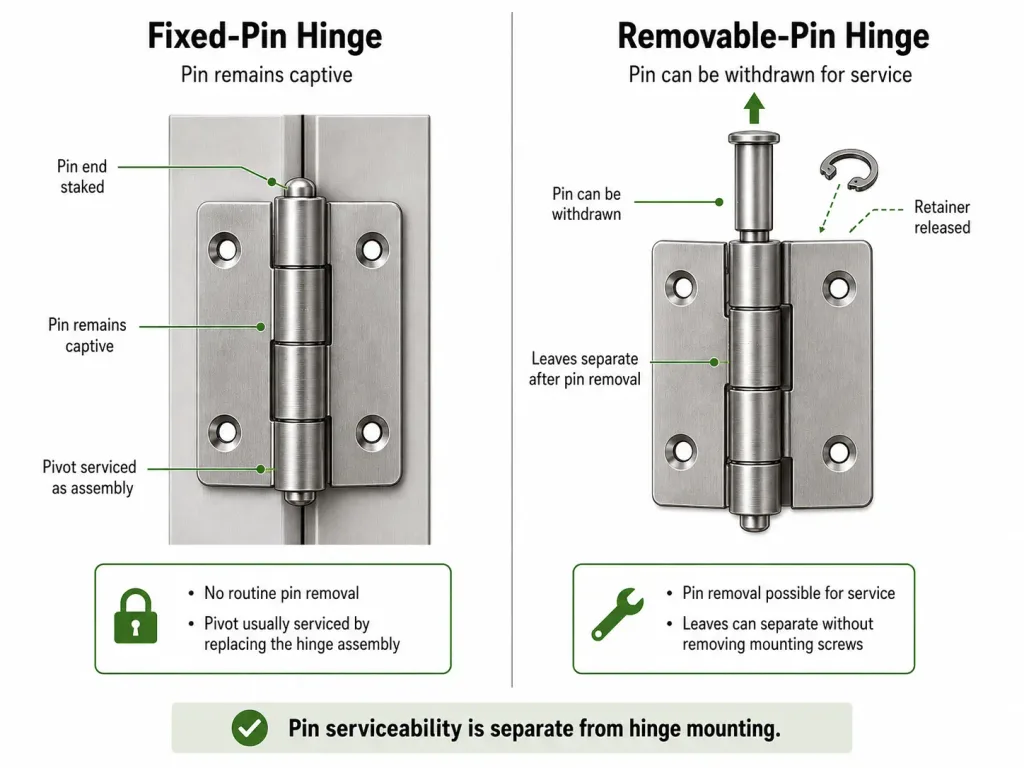
Fixed pin does not mean fixed mounting. It only means that normal service is not intended to separate the hinge by withdrawing the pivot pin.
The same distinction applies to door removal. A removable pin creates one possible separation method, but it does not automatically make the complete door a routinely removable service panel. Wiring, restraints, locks, stays, surrounding structure and door handling can still prevent practical removal.
A Fixed-Pin Hinge Keeps the Pivot Out of Routine Service
A fixed pin is a good starting point when the pivot is expected to remain assembled for the useful life of the hinge or when maintenance is performed by replacing the complete hinge rather than rebuilding the pin-and-knuckle joint in the field.
This removes one service step. There is no separate hinge pin to store, reinstall or verify after routine work, and no removable pin retainer has to be released before the hinge can be handled.
It also keeps the original pin-to-knuckle relationship intact during ordinary maintenance. That can be useful where the pivot fit, wear pattern and assembled alignment should not be disturbed unless the hinge itself is being replaced.
The limitation appears when the pivot becomes the part that needs attention. If the pin wears, corrodes, bends or damages a knuckle and the pin is not intended for service removal, repair may require removing the complete hinge or carrying out a workshop operation rather than simply withdrawing and replacing the pin.
Fixed pin is not automatically stronger
A fixed pin should not be treated as a higher load rating by definition. Load capacity depends on the complete hinge construction: pin diameter, knuckle geometry, effective bearing length, leaf section, material, mounting structure, hinge spacing and the applied load path.
A well-designed removable-pin hinge can carry a higher load than a smaller fixed-pin hinge. Conversely, changing a fixed pin to a removable design without checking the surrounding geometry can weaken or loosen an otherwise suitable pivot. Pin removability is a service feature, not a load-capacity classification.
A Removable Pin Makes the Pivot a Service Interface
Once the pin is intentionally removable, the maintenance procedure can separate the hinge at the pivot rather than disturbing the mounting of both leaves. That can be useful for door replacement, hinge inspection, pin replacement or a service operation where the two leaves need to be separated temporarily.
The pin itself now becomes a controlled service component. The design has to answer where the pin is withdrawn, how it is retained during operation, whether a tool is required, what happens to the pin after removal and how the correct pin is identified if replacement is permitted.
This is an important distinction from a lift-off arrangement. A lift-off hinge may keep the male pivot permanently attached to one leaf while the mating leaf disengages along the hinge axis. A removable-pin hinge can instead require a separate pin-extraction operation before the leaves separate.
If the main maintenance objective is frequent complete panel removal rather than service of the pivot itself, the more specific lift-off hinge access-panel guide covers that application decision.
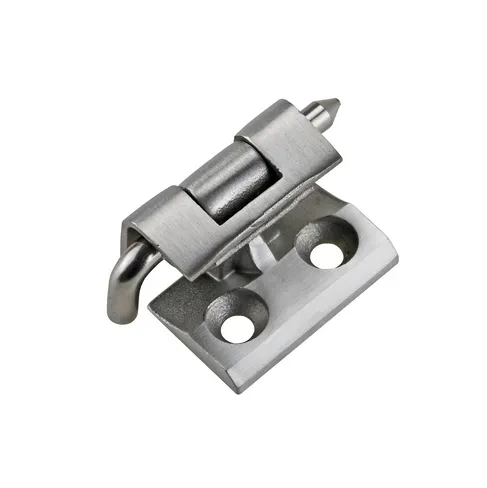
HG02-198 is one example of a removable-pin construction. Whether that architecture is suitable still depends on the required pin-removal procedure, installed clearance and maintenance task.
Removable Does Not Mean the Pin Should Come Out During Every Service
A removable hinge pin can exist for occasional overhaul rather than routine maintenance. That distinction should be decided before the hinge is selected.
One machine may use a removable pin because the door is replaced during major overhaul. Another may allow pin removal so a damaged pivot can be serviced without disturbing welded hinge leaves. Neither case means the technician should withdraw the pin every time the enclosure is opened.
Frequent unnecessary removal adds its own wear mechanisms. The pin has to pass through the knuckles again during every reassembly. If the hinge leaves are not coaxial, technicians may push, tap or force the pin through an offset bore stack. That can mark the pin, damage bore edges and progressively increase clearance.
A pin intended for repeated removal should therefore be evaluated as a repeated assembly interface, not merely as a pin that can be extracted once on a clean bench.
Pin Retention and Pin Serviceability Are Separate Decisions
A removable pin still has to stay where it belongs while the equipment operates. The fact that a technician can intentionally withdraw the pin does not mean the pin should be free to migrate during vibration, transport or repeated door movement.
The retaining method may use a ring, thread, cross-pin, captive hardware or another release feature. Some designs may instead depend partly on a controlled fit. The correct architecture depends on the required release method and operating condition.
The detailed engineering choice between positive retention, friction-dependent retention, axial migration paths and retainer access is covered separately in the hinge pin retention method guide.
Keeping these decisions separate prevents a common mistake: selecting a pin that is easy to remove during maintenance but inadequately controlled during operation, or selecting an extremely permanent retention feature for a pin that the maintenance procedure expects to replace.
Repeated Pin Removal Changes the Fit You Have to Maintain
Every removable pin works through an assembled relationship between the pin and the hinge knuckles. The ease of first removal says little about how that relationship will behave after wear, contamination, corrosion or repeated disassembly.
If the pin is intended to slide freely through several knuckles, those bores need enough alignment and clearance for intentional withdrawal without excessive forcing. Too little usable clearance can make service difficult. Too much clearance can increase play and change the way the door is supported.
The pin can also have different relationships with different knuckles. It may rotate in one region while another interface is intended to remain stationary. Removing and reinstalling the pin can disturb that original contact condition if the service procedure does not return the pin to the intended assembled position.
Surface damage matters as well. Burrs at a cross-hole, a damaged retaining-ring groove, corrosion on the pin or peening at the pin end can turn a nominally removable design into a difficult field operation.
For regularly serviced pins, inspectability and replacement control are therefore part of the architecture. A pin should not be considered serviceable only because it was possible to remove it during initial assembly.
Tool Access and Loose-Part Control Can Decide the Pin Type
A removable pin creates an extraction path. The installed machine has to provide that path after covers, wiring trays, brackets and neighboring equipment are in place.
A retaining ring may require plier access before the pin can move. A threaded retainer may need room for a driver or wrench. The pin itself then needs enough space to clear the engaged knuckles. A removable design that cannot complete that sequence in the finished machine is not practically serviceable.
Loose-part control matters just as much. A removed pin, ring, washer or cotter may be acceptable in a general workshop and undesirable where dropped hardware can enter electrical compartments, moving machinery or a controlled-cleanliness area.
Where loose hardware is tightly restricted, a fixed pin or a removable architecture that keeps the release hardware captive may be preferable even when occasional pivot separation is useful.
Full Door Removal Is a Different Maintenance Decision
Removing the hinge pin and removing the complete door are related operations, but they are not the same engineering requirement.
A removable pin can release the hinge leaves while the door still remains connected by a bonding conductor, cable harness, pneumatic line, stay, tether or another device. The door may also be too large to handle safely or may have no clear path away from the equipment.
Conversely, a lift-off architecture can provide complete door removal without creating a loose hinge pin at all. The male pivot may remain attached to one hinge member while the other leaf disengages.
Once a project has already chosen a lift-off architecture, handing, pin direction, axial clearance and anti-lift requirements should be defined using the lift-off hinge handing and pin-direction guide.
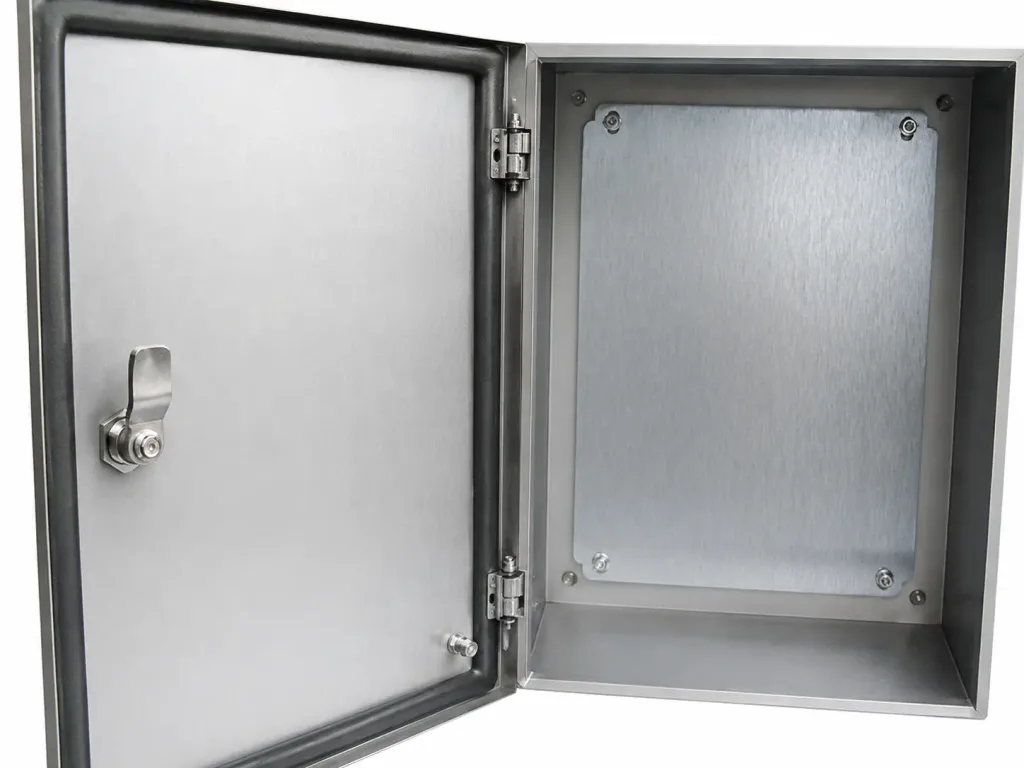
Fixed-Pin vs Removable-Pin Hinges by Pivot Maintenance Task
| Pivot / Maintenance Requirement | Fixed-Pin Direction | Removable-Pin Direction | What to Check |
|---|---|---|---|
| Pivot should remain assembled during normal service | Natural starting point | Possible, but removable feature may provide no routine benefit | Whether complete-hinge replacement is acceptable if the pivot eventually wears |
| Pin is expected to be replaced without replacing both hinge leaves | Usually conflicts with the service requirement | Strong candidate | Pin specification, retention release, extraction path and replacement-part control |
| Hinge leaves must occasionally separate without disturbing their mounting | May require removing the complete hinge or mounting hardware | Provides a defined separation point at the pivot | Pin access, door support and reassembly procedure |
| Loose service hardware must be minimized | Keeps the pin captive during normal maintenance | Prefer captive retention or controlled handling if removal is still required | Which pin, clip, ring, washer or retainer becomes loose |
| Pin will be removed repeatedly | Not intended for this service model | Can be suitable when the joint is designed for repeatable disassembly | Knuckle alignment, insertion force, wear, contamination and retainer condition |
| High load capacity is the main concern | Evaluate the complete hinge geometry | Evaluate the complete hinge geometry | Pin diameter, bearing length, leaves, material, mounting and load path—not pin removability alone |
| Complete door must leave the machine frequently | May not be the most efficient service architecture | Can work, but pin extraction is only one part of the removal sequence | Determine whether a lift-off or another removable-door architecture is more appropriate |
These are architecture choices, not hinge load ratings. The pin arrangement should follow the required pivot maintenance strategy and the way the hinge will actually be serviced.
Verify the Pin Service Procedure on the Actual Assembly
A removable pin that slides easily through a loose hinge on a bench can become difficult to service after the hinge leaves are mounted to a real door and frame.
Use the installed or representative assembly to check the complete procedure. Release the retainer if one is used, withdraw the pin from the intended direction and observe whether the pin remains free through the knuckle stack. Nearby structure should not force the technician to bend the pin, rotate the door into an unintended position or remove unrelated equipment simply to gain extraction clearance.
Reassembly matters equally. The pin should return without forcing misaligned knuckles together, damaging a bore edge or using the pin as an alignment tool. After assembly, the hinge should rotate as intended and any required retained condition should be restored.
If the design uses several hinges on one door, check the complete hinge line rather than one loose sample. Frame distortion or hinge-location error can make an individually removable pin difficult to withdraw once all hinge stations are carrying the real assembly geometry.
After the required pin strategy is clear, suitable industrial hinge models can be compared by their actual construction, dimensions, mounting and application requirements.
Fixed-Pin and Removable-Pin Hinge FAQ
What is the main difference between a fixed-pin and removable-pin hinge?
A fixed-pin hinge is not intended to have its pivot pin withdrawn during normal service. A removable-pin hinge allows the pin to be intentionally extracted so the pivot can be separated, serviced or reassembled without first removing both hinge leaves from their mounting surfaces.
Is a fixed-pin hinge stronger than a removable-pin hinge?
Not automatically. Load capacity depends on the complete hinge geometry, including pin diameter, knuckle and bearing length, leaf construction, material, mounting, hinge spacing and applied load. Pin removability is primarily a serviceability feature, not a load rating.
Does a removable hinge pin mean the door should be removed during routine maintenance?
No. A removable pin may be provided for occasional overhaul, pin replacement or door separation during major service. The pin does not need to be removed during every maintenance operation unless the equipment service procedure actually requires it.
Is a removable-pin hinge the same as a lift-off hinge?
Not necessarily. A removable-pin hinge normally separates after the pivot pin is withdrawn. A lift-off hinge may keep the male pin or pivot attached to one leaf while the mating leaf moves axially off it. The service motion and loose-part condition can therefore be different.
What should be checked when a hinge pin will be removed repeatedly?
Check knuckle alignment, pin and bore condition, insertion and withdrawal access, retention hardware, contamination, loose-part control and whether repeated disassembly changes the intended fit or wear interface.
Can a bolt-on hinge still use a fixed pin?
Yes. Pin construction and hinge mounting are separate attributes. A hinge can use a non-removable fixed pin while both leaves are bolted to the door and frame, allowing the complete hinge to be replaced even though the pin itself is not a service-removable component.
Choose the Pin Construction Around the Maintenance Plan
Send the hinge location, mounting method, required pin serviceability, expected removal frequency and available pin-extraction space. HSP can compare suitable hinge constructions against those application requirements.
Send Your Hinge Requirements