-
+86 13720060320
-
lanna@haitangs.com


Server Rack & Network Cabinet Hinge Solutions
Compare HSP hinge routes for server rack front doors, rear service doors, removable side panels and network cabinet access.
Start with how the rack is accessed, then compare the door or panel behavior, clearance and mounting interface.
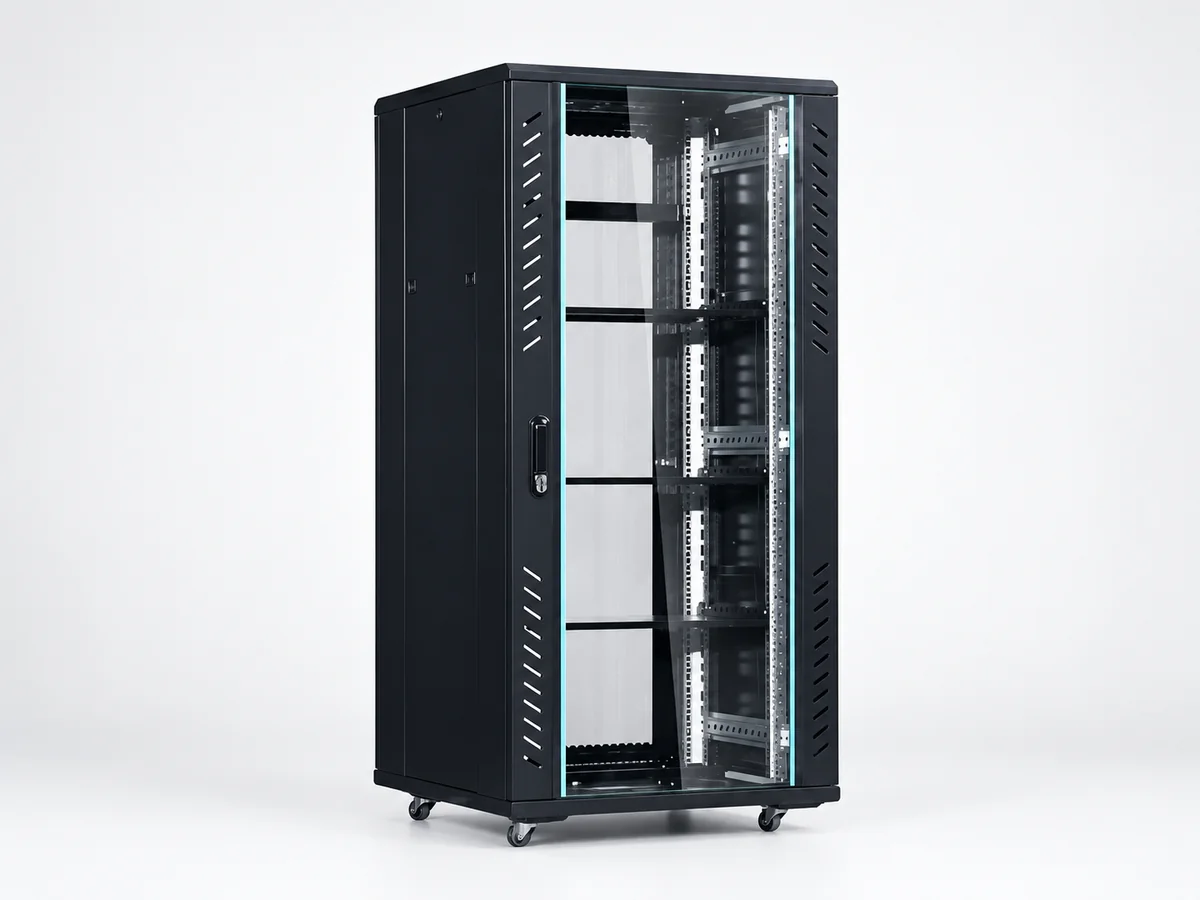
Application scene; not presented as an HSP customer installation.
Start With the Rack Access Point
Identify which part of the rack or cabinet must open, remain attached or be removed before comparing hinge families.

Front Equipment Door
Repeated access calls for stable latch-side alignment. Check the opening of a perforated, solid or glass door against the next rack.
Rear Service Door
Allow technician reach to equipment while checking cable and PDU clearance. Confirm whether a full or split rear door stays attached.
Removable Side Panel
Define the lift or pull direction, panel weight and handling space before treating the panel as removable in the installed row.
Wall-Mount / Rear Swing Access
Check the cabinet-section swing, wall clearance and cable entry when rear equipment access depends on a retained moving section.
Retained, Reversible or Removable?
Retained Door
- Frequent access with repeatable alignment
- Known opening envelope and door-mounted hardware
- Cable or bonding movement, where present
Reversible Door
- Left- or right-hand installation requirement
- Hinge-side change and latch relationship
- Symmetric mounting only when the rack architecture permits it
Removable Panel
- Complete removal for service
- Defined removal direction and lift clearance
- Technician handling space beside the next rack
Door behavior alone does not select the hinge. Compare it with moving weight, mounting space, opening clearance and the actual rack construction.
Match the Rack Access to the Hinge Route
Use the access function to narrow the first hinge family before comparing individual HSP products.
Front Equipment Door
Retained door, repeated access and controlled external projection
Starting Hinge RouteConcealed / Industrial
Rear Service Door
Technician access with cable and internal-clearance constraints
Starting Hinge RouteIndustrial / Lift-Off where removal is required
Removable Side Panel
Panel must be removed completely
Starting Hinge RouteLift-Off
Wall-Mount / Rear Swing Access
Retained cabinet section with a defined swing envelope
Starting Hinge RouteHeavy-Duty / Industrial
Larger Cabinet Door
Higher complete moving load or larger door moment
Starting Hinge RouteHeavy-Duty
These are starting routes, not a final model approval. Confirm the installed door and mounting interface before ordering.
HSP Hinge Routes for Server and Network Cabinets
The products below are existing HSP catalog references. Use each one to start a drawing and fit comparison, not as a blanket rack specification.
Family Route Overview
Family
Concealed Hinges
Typical use: Retained front door with limited external projection.
Starting point: Internal leaf and frame space.
View Product Family →Family
Concealed Removable Hinges
Typical use: Service door with concealed placement and planned removal.
Starting point: Release direction and rack clearance.
View Product →Family
Lift-Off Hinges
Typical use: Rear or side panel removed for service.
Starting point: Panel weight and a clear lift path.
View Product Family →Family
Heavy-Duty Hinges
Typical use: Larger retained door or swinging cabinet section.
Starting point: Complete moving load and frame strength.
View Product Family →Representative Products
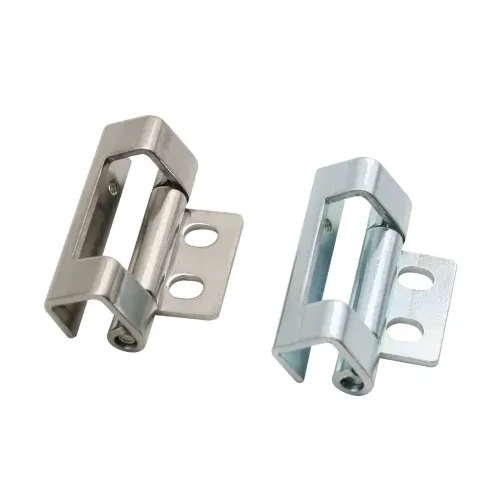
Concealed Hinges
71×30mm Concealed Industrial Cabinet Hinge
Representative product shown: HG02-003
Retained front or compartment door where external projection is limited.
View Product →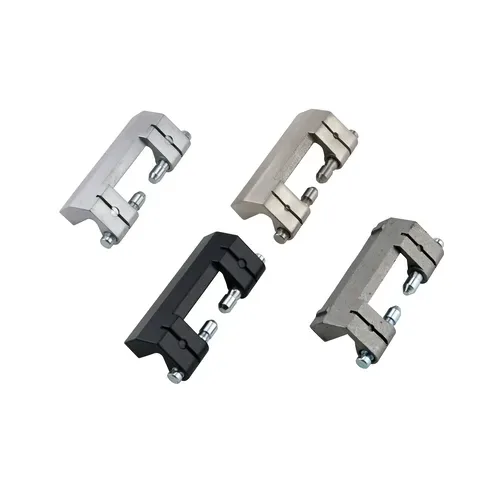
Concealed Removable Hinges
Industrial Concealed Removable Hinge
Representative product shown: HG02-022 series
Service door that needs a concealed hinge location and planned removal.
View Product →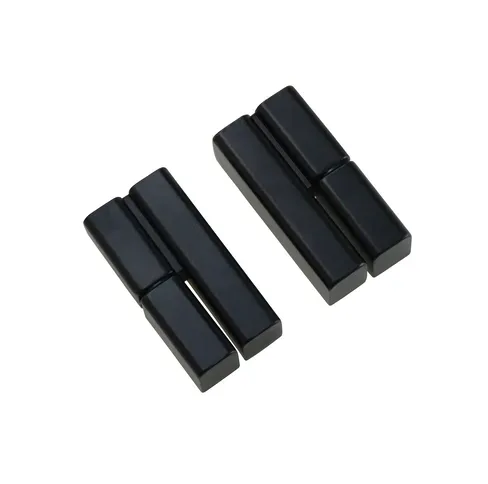
Lift-Off Hinges
Industrial Lift-Off Hinge for Cabinets & Enclosures
Representative product shown: HG02-025-2
Rear or side access that calls for intentional removal during service.
View Product →
Heavy-Duty Hinges
Heavy-Duty Industrial Cabinet Hinge for Enclosures
Representative product shown: HG02-097
Larger retained cabinet door or swinging cabinet section.
View Product →What to Confirm Before Comparing These Products
- Door weight / complete moving load
- Internal mounting envelope
- Opening sweep / access clearance
- Removal direction / technician handling
Check the Rack Before Selecting the Hinge
A hinge that fits the door in isolation may still conflict with the rack, equipment or service aisle.
Complete Moving Assembly
Include the door plus handle, lock, latch, fan, filter, cable, bonding hardware and mounted components where present.
Adjacent Rack Clearance
Confirm that an open door does not strike the next rack, wall or technician aisle.
Internal Mounting Envelope
Check rack rails, PDU, latch, cable routing, hardware and frame return against the hinge body.
Door Removal Path
Check vertical lift or pull-out travel against nearby racks, overhead equipment and handling space.
Opening Requirement
Specify the angle needed for the service task; do not assume every rack needs a 180° opening.
Latch / Lock Relationship
Review door alignment and compression with the latch and lock. The hinge alone does not establish rack security.
Release Check
- Does the opened door interfere with the next rack?
- Can the door or panel actually be removed in the installed aisle?
- Does the hinge interfere with rail, latch, PDU, cable or bonding hardware?
- Is there enough tool access to install and service the hinge?
Procurement Inputs Before RFQ
Send the available inputs for the actual access position; exact values can be confirmed from the drawing during follow-up.
| Access Type | Key Door / Panel Inputs | Installation Check | Useful Information to Send |
|---|---|---|---|
| Front Equipment Door | Width × height; complete moving weight; retained or reversible | Opening sweep, latch edge and adjacent rack | Door drawing, mounting edge and quantity |
| Rear Service Door | Full or split door; required service opening | PDU, cable and bonding path | Rear layout, frame return and quantity |
| Removable Side Panel | Panel size, weight and removal direction | Lift space and technician handling area | Panel drawing and nearby-rack clearance |
| Wall-Mount Rear Access | Moving cabinet section and required swing | Wall clearance, cable entry and mounting | Installed envelope and attachment drawing |
| Larger Cabinet Door | Complete moving load and door geometry | Hinge spacing and frame strength | Door assembly drawing and estimated quantity |
Ordering Information
PricingConfirmed for the selected product and quantity in the quotation.
MOQConfirmed for the selected model and order terms.
SamplesAvailability and configuration confirmed before dispatch.
Lead TimeConfirmed against the production schedule at quotation.
Quality InspectionApplicable dimensional and mounting features can be reviewed for the selected product.
Warranty & Order TermsConfirmed in the formal quotation and order documents.
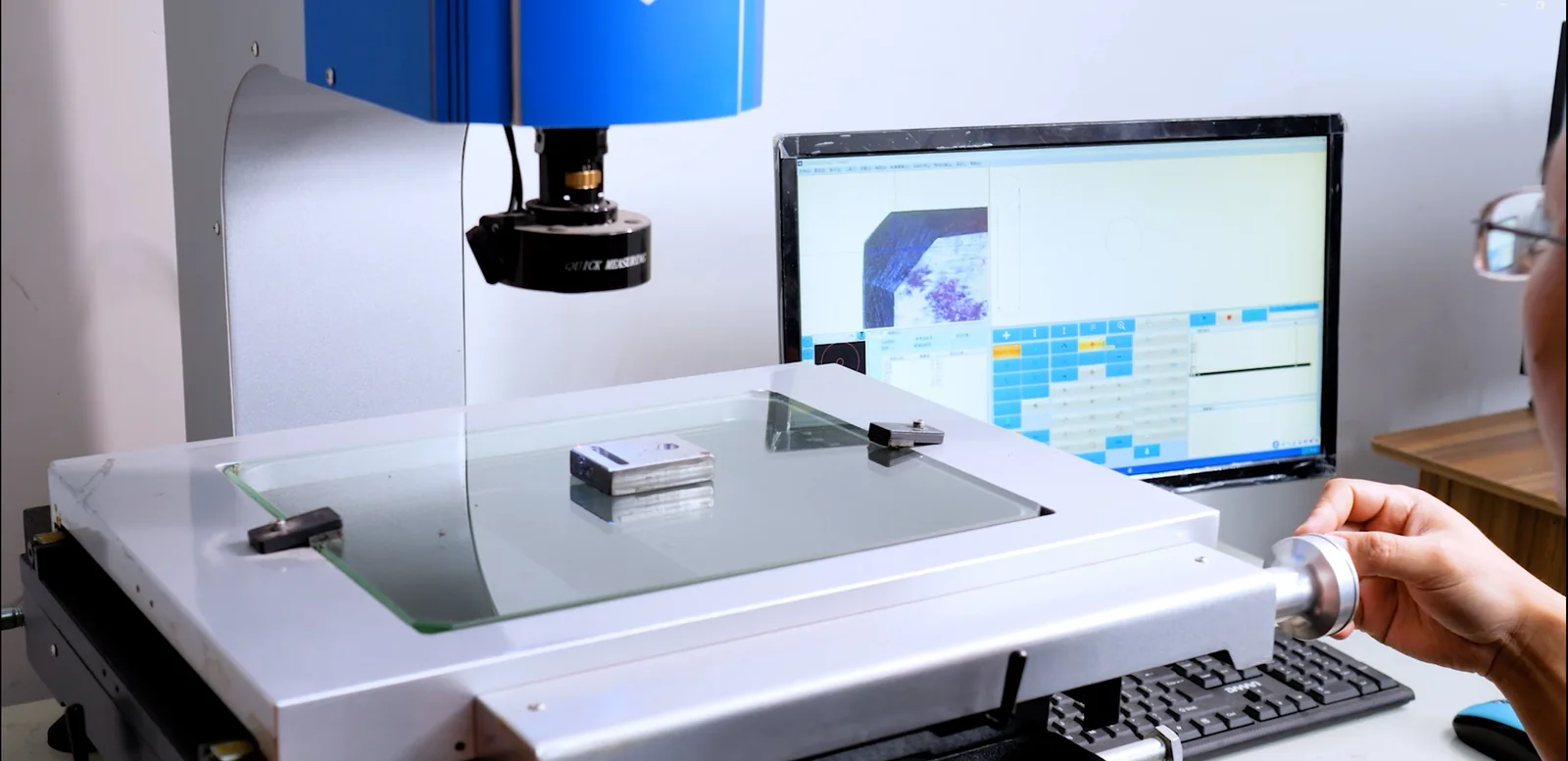
Product Inspection & Dimensional Verification
For a selected HSP hinge, the drawing can identify mounting features and dimensions to check before a sample or production order. The applicable inspection scope depends on the product and agreed requirements.
Send Your Rack or Cabinet Door Details
A complete drawing is not required for the first quotation review.
Helpful inputs include:
- Rack / cabinet type
- Door or panel function
- Approximate door size
- Approximate complete moving weight, if known
- Retained, reversible or removable
- Opening requirement
- Estimated quantity
If a drawing or photo is available, mention it in Project Details. Files can be requested during follow-up.
Request a Quote
Share the information available now; the mounting interface can be clarified later.
What Happens Next
Technical Guides
Use these existing engineering references for detailed calculation and installation questions; this page remains the application-to-product route.