-
+86 13720060320
-
lanna@haitangs.com

Lift-Off Hinges for Air Handling Unit Access Doors
A filter access door can open fully yet obstruct filter withdrawal or occupy the service aisle. Lift-off hinges for AHU access doors are worth considering when removing the leaf creates useful working space and it can be handled and reinstalled reliably.
Review the maintenance task, removal route, mounting support, closed-door position, and pressure-related access controls together. Hinge separation alone does not establish serviceability.
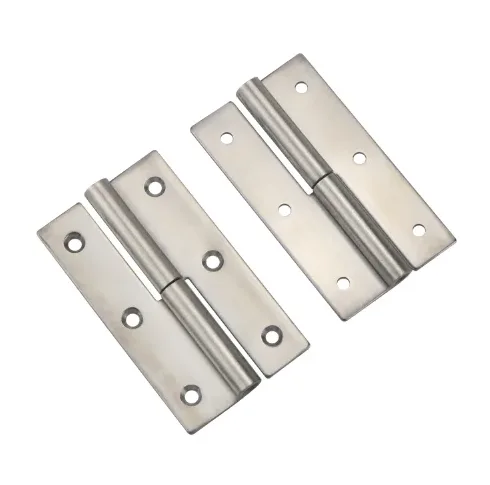
Where Lift-Off Hinges for AHU Access Doors Help
Door removal can help with filter withdrawal, access across a shallow compartment, or positioning a handling aid beside an approved component-removal opening.
In other bays, securing the door open provides all the access needed. Removing a large insulated leaf introduces lifting, storage, and refitting work; settle that tradeoff before choosing the hinge size.
| Service situation | What removal changes | Selection direction |
|---|---|---|
| Filters fit through the opening, but the open door blocks withdrawal. | Removing the leaf may clear the filter path. | Consider lift-off hinges after checking the complete withdrawal route. |
| Inspection or adjustment is practical with the door secured open. | Removal adds handling without resolving an obstruction. | A retained swing door may remain the simpler arrangement. |
| A fan or coil is larger than the clear frame opening. | Removing the door leaves the frame restriction unchanged. | Use the AHU manufacturer’s component-replacement arrangement. |
| A narrow aisle has no suitable place to support the detached door. | The obstruction moves from the hinge line into the workspace. | Resolve door handling and storage before specifying lift-off hardware. |
Filter bays, fan sections, and controls compartments can need different door arrangements. For broader mechanism choices, see our HVAC and thermal equipment hinge solutions.
Three Spaces Must Remain Usable
Review door movement with the installed pipework, cable trays, roof overhangs, drains, and service platforms. Clearance available on the factory floor may disappear after installation.
- Opening space: the door must reach the position required for hinge separation without hitting nearby equipment.
- Door removal space: the leaf must disengage, move away from the casing, and reach a supported storage position. Include handles and any lifting aid.
- Component service space: the filter, fan module, or other service item must follow its own withdrawal route, with room for the technician and handling equipment.
Mark these as separate swept volumes. A pipe can clear the opening door yet obstruct the upward movement needed to separate a particular hinge.
The Door Comes Off, but the Filter Still Stops
Consider an AHU filter bay beside a pipe riser. The door opens, lifts clear of its pins, and can be placed on a nearby support. During the layout review, however, the filter’s withdrawal path intersects the riser. Removing the door has cleared the hinge-side obstruction, but it has not created a usable filter replacement route. The useful next step is to review the filter path and surrounding services with the unit designer. A different hinge alone cannot resolve that obstruction. This is an illustrative engineering scenario, not a customer project record or product test claim.
Daikin’s Vision air handler manual, IM 672-22, distinguishes routine access through doors or panels from replacement work that may require additional panel removal or unit disassembly. It covers the listed Vision models; use the actual AHU’s service instructions to establish its extraction route.
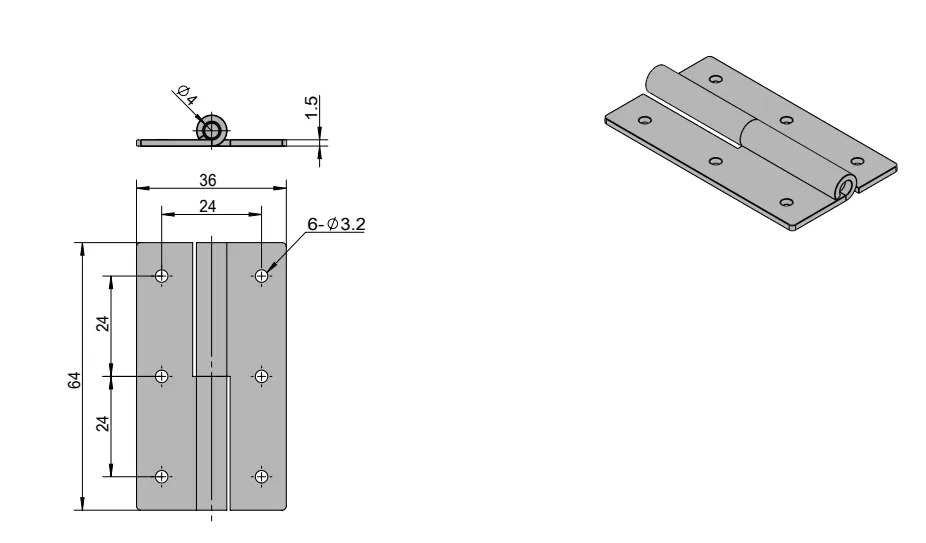
Use the selected hinge drawing to establish separation travel, orientation, and retention. Our guide to lift-off hinge clearance and pin retention covers these checks. There is no universal lift distance or release angle.
Loads Must Reach the Insulated Door Frame
A double-skin AHU door’s outer sheet does not reveal its load path. The mounting detail may use a perimeter frame, reinforcement, inserts, or bonded construction. Review the section before accepting a matching hole pattern.
Both door-side and casing-side attachments must transfer load without local crushing or unwanted movement. Larger washers or longer fasteners do not automatically replace the specified reinforcement.
Show the hinge axis, door edge, gasket plane, mounting face, and backing structure together. The section should reveal whether a mounting pad changes the closed position or a fastener crosses a drainage path or thermal break.
Door Mass and Hinge Loading
Use the completed door mass, including its skins, insulation, window, handles, latches, and attached equipment. Evaluate it with the door width, center of gravity, hinge spacing, and mounting structure. Multiplying a catalog load figure by the hinge quantity does not establish the assembly’s capacity.
At the same mass, moving the center of gravity farther from the hinge line increases the moment on the attachments and frame. Compare the loading direction and mounting conditions behind a published rating with the actual AHU construction.
During separation, the weight transfers to the person or device supporting the door. Include that transition in the service plan. A freely swinging door can still be awkward to carry.
Pressure Changes the Access Arrangement
Identify the section’s pressure conditions and the hazards behind the door before deciding how access is released. Pressure loads belong in the complete door, frame, hinge, and latch assessment; a removable hinge alone does not establish an allowable casing pressure.
Eurovent 6/18–2022, Quality Criteria for Air Handling Units, addresses tool-controlled access or guarding for hazardous components and protection against uncontrolled opening of doors on the positive-pressure side. It is an industry recommendation, not a hinge certification. The unit design and applicable requirements still determine the access arrangement.
Keep hinge retention, door latching, and access control distinct in the design. A removable leaf must remain secure during normal operation, while its authorized removal must not bypass a required guard or interlock. Follow the unit’s isolation and lockout procedure, including verifying that moving parts have stopped and pressure has equalized, before service access.
Condensation and Rooftop Exposure
Specify the actual exposure: indoor plant room, wet service compartment, or rooftop. Each can involve different moisture, cleaning, and contamination conditions.
The hinge must still separate after time in service. Review the leaf, pin, bearing or bushing where fitted, fasteners, finish, and permitted lubrication together. A stainless steel leaf does not establish the suitability of the other components. Check compatibility against the supplier’s maintenance instructions and the actual cleaning agents.
A detached rooftop door remains exposed to wind. Provide a support or storage position that keeps it stable, protects the gasket, and fits the service platform. Do not assume it can simply lean against the casing.
The Door Must Return to Its Sealing Position
With the hinges fully engaged and supporting the door, the leaf should approach the frame without needing the latch to correct its position. Do not use latch pull-in to force a misaligned edge into place.
Compare closure with the original assembled condition. Changed latch effort is an observation, not proof of hinge failure. Inspect the door before adjusting compression hardware.
- The door sits higher: inspect whether the hinge halves have fully seated and whether debris or an incorrectly installed part is preventing engagement.
- One corner contacts first: review the door position, hinge mounting, and frame condition before increasing latch pull-in.
- The door position appears unchanged, but closure is harder: inspect the gasket and latch for displacement, damage, or obstruction.
The gasket supplier’s compression requirements and the AHU manufacturer’s closure arrangement govern the seal setting. Free door movement or an even-looking gap alone does not demonstrate the required air leakage performance. Where that performance is specified, evaluate the assembled casing under the defined test conditions.
A Service Trial on the Complete AHU
Evaluate a representative door, frame, gasket, and latch arrangement in the actual access environment or a mock-up of its obstructions. Include space for the technician and handling aid.
After the unit has been made safe for access, carry out the intended task from opening through reinstallation. Pay particular attention to the transfer of door weight during separation.
| Trial observation | Evidence to keep | If the result is unsatisfactory |
|---|---|---|
| The door clears adjacent services during separation and removal. | Photos or video showing the complete movement and installed obstacles. | Revise the door route, surrounding layout, or access arrangement. |
| The detached leaf can be supported without blocking the service task. | Door mass, handling method, and storage position. | Provide suitable handling support or reconsider full door removal. |
| The intended filter or component passes through its service route. | The actual service item or a dimensionally representative mock-up. | Review the opening and extraction route with the AHU designer. |
| The reinstalled door seats and latches consistently. | Before-and-after door position, latch behavior, and gasket condition. | Investigate seating and mounting before changing latch adjustment. |
| The closed assembly meets its specified performance requirements. | Results under the project’s defined pressure and acceptance conditions. | Resolve the assembly-level issue before accepting the hinge arrangement. |
A successful removal trial establishes access feasibility for that arrangement. It does not establish service life. Set any repeated-removal, opening-cycle, environmental, or leakage validation requirements from the intended duty and the applicable equipment specification.
Match the Hinge to the AHU Door Layout
With the service route established, compare industrial lift-off hinge models against the door section and loading conditions. The useful starting package is a marked-up drawing showing:
- The AHU bay and the maintenance task that requires door removal.
- Finished door dimensions, mass, hinge positions, and mounting reinforcement.
- The removal route, nearby obstacles, and door handling method.
- The gasket and latch arrangement, pressure conditions, and environmental exposure.
For help comparing lift-off hinges for AHU access doors, share your AHU door layout with HSP. The team can use these details to compare available models and identify the product information needed for your assembly review.
Questions About Removable AHU Doors
What if the access door has a bonding strap or sensor cable?
The electrical design must provide an approved disconnection and restoration method where door removal is intended. The hinge does not replace a specified bonding conductor. Never use the cable or bonding strap to support the detached leaf.
Can the same lift-off arrangement serve an overhead AHU panel?
Changing the orientation changes how gravity acts during opening and separation. Review an overhead panel separately, with appropriate support, retention, and controlled weight transfer before disengagement. A side-door selection is not sufficient.
Are left-opening and right-opening AHU doors interchangeable?
Only when the complete door design permits it. Hinge orientation, separation direction, latch position, gasket details, and adjacent obstructions can differ. State the viewing direction and required opening direction on the drawing, then match the relevant hinge variant. Reversing the leaf on site may not preserve the intended removal or closure behavior.
Can a door stay support the leaf after it is detached?
Only if designed and rated for that function. A swing-limiting or hold-open stay should not be assumed to carry a detached insulated door. Provide support through the complete separation and transfer movement.
Can lift-off hinges replace fixed hinges on an existing AHU?
A retrofit needs review of the original mounting structure, hinge axis, door offset, sealing arrangement, and service route. Matching the existing holes is only one check. Changes to the casing or door can affect the equipment’s specified performance, so obtain the AHU manufacturer’s approval where required before modifying the assembly.
Can removed doors be exchanged between similar AHU bays?
Keep each door identified with its original bay unless interchangeability has been established. Similar dimensions do not confirm matching hinge alignment, latch adjustment, gasket condition, or attached controls. Marking the door and bay before removal makes it easier to restore the checked assembly and investigate any change in closure.