-
+86 13720060320
-
lanna@haitangs.com

Custom Hinge Development Process | Drawing to Production
A custom hinge goes through five stages — drawing, confirmation, tooling, sample, and production — and the two things that decide whether it goes smoothly are getting the drawing right before tooling starts, and only opening tooling when a standard part genuinely cannot do the job. Custom development is not the default: it is what you do when no existing product meets the application and there is a real, specific requirement. This guide walks each stage so an engineer or buyer knows what happens, what to prepare, and where the time and cost actually go. It is about the development process, not which hinge to pick; for the sourcing path around it, see how to source industrial hinges.
Quick answer: The custom hinge development process follows five stages — drawing, confirmation, tooling, sample, and production. The drawing defines the size, hole pattern, material, finish, and performance; confirmation locks the design before tooling begins; tooling (the mold) is the longest and least reversible step, often around 20 days; a sample is then validated on the real door, panel, or frame before volume production starts. Open tooling only when a standard product genuinely cannot meet the requirement.
When custom is the right call — and when it isn’t
Before any development starts, it is worth being honest about whether custom is needed at all. Compare the existing-platform and OEM manufacturing routes first. Custom tooling makes sense when an existing product genuinely cannot meet the application and the customer has a specific requirement a standard part cannot satisfy — a non-standard size, hole pattern, torque value, material, or mounting form that no catalog model covers. It does not make sense when a standard model would work with minor accommodation, because custom adds both tooling cost and lead time that a stock part avoids. The first question in any custom conversation should therefore be: has a standard product been ruled out for a real reason? Working through how to choose an industrial hinge often shows that a standard model fits, which is almost always the faster and cheaper route. Custom is the answer to a genuine gap, not a default upgrade.
Step 1 — The drawing
Development begins with a drawing that defines the part: dimensions, hole pattern, material, finish, and — for a functional hinge — the performance it has to deliver, such as torque value, load, opening angle, or cycle life. The more precise the drawing, the fewer surprises later, because everything downstream (tooling, sample, production) is built from it. This is also the cheapest stage to change things: a dimension fixed on paper costs nothing, while the same change after tooling is cut is expensive and slow. If you have a 2D or 3D file, share it; if you have only a concept and requirements, a capable manufacturer’s engineering team can help turn the application into a manufacturable drawing.
A complete drawing brief usually covers:
DRAWING CHECKLIST
-----------------
[ ] Overall dimensions
[ ] Hole pattern
[ ] Material
[ ] Finish
[ ] Load requirement
[ ] Torque requirement (if functional)
[ ] Opening angle
[ ] Cycle-life target
[ ] Operating environment
[ ] Annual volume
Step 2 — Confirmation
Before any tooling is cut, both sides sign off on the drawing. This confirmation step exists precisely because the next step is expensive and hard to reverse: once a mold is machined to a dimension, changing that dimension means reworking or recutting the tooling. So confirmation is the moment to check every critical feature — the mounting interface, the material and finish, the functional performance, and the tolerances — against the real application one last time. Treat sign-off as a genuine review, not a formality; the cost of catching an error here is a conversation, and the cost of catching it after tooling is time and money.
Step 3 — Tooling
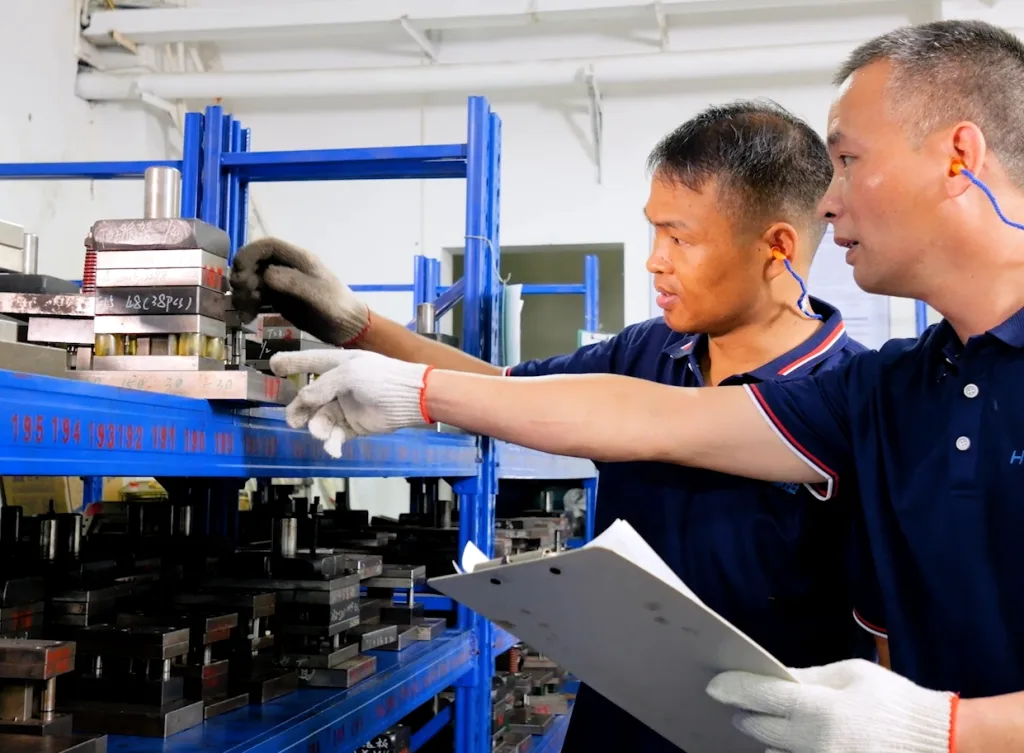
With the drawing confirmed, tooling — the mold or die that will form the custom part — is made. This is the step that adds the most lead time to a custom program: for us, tooling takes around 20 days, and it is the main reason a custom hinge takes longer than pulling a standard one off the shelf. Because it is both the slowest and the least reversible stage, it belongs in the project schedule explicitly from day one, not treated as a surprise. Two practical implications follow: build the tooling lead time into your timeline before you promise a date downstream, and make absolutely sure Step 2 sign-off was thorough, because tooling is where “we’ll fix it later” stops being cheap.
Step 4 — The sample
Once tooling is ready, a sample is produced — the first real part off the new tooling. This is where the drawing becomes a physical hinge you can hold, measure, and, most importantly, fit to the real assembly. Validate it on the actual door, panel, or frame: check that it fits, that it moves the way it should, that it holds or closes as required, and that the material and finish are right. The sample is the checkpoint that catches anything the drawing and confirmation missed, before it multiplies across a full production run. Skipping validation here — approving a sample on paper or a photo rather than on the real product — is the most common and most expensive mistake in the whole process.
When the sample arrives, validate it against:
SAMPLE VALIDATION CHECKLIST
---------------------------
[ ] Fit on the real assembly
[ ] Hole alignment
[ ] Opening and closing movement
[ ] Load holding
[ ] Torque or friction feel (if functional)
[ ] Surface finish
[ ] Fastener compatibility
[ ] Corrosion / environment requirement
Step 5 — Production
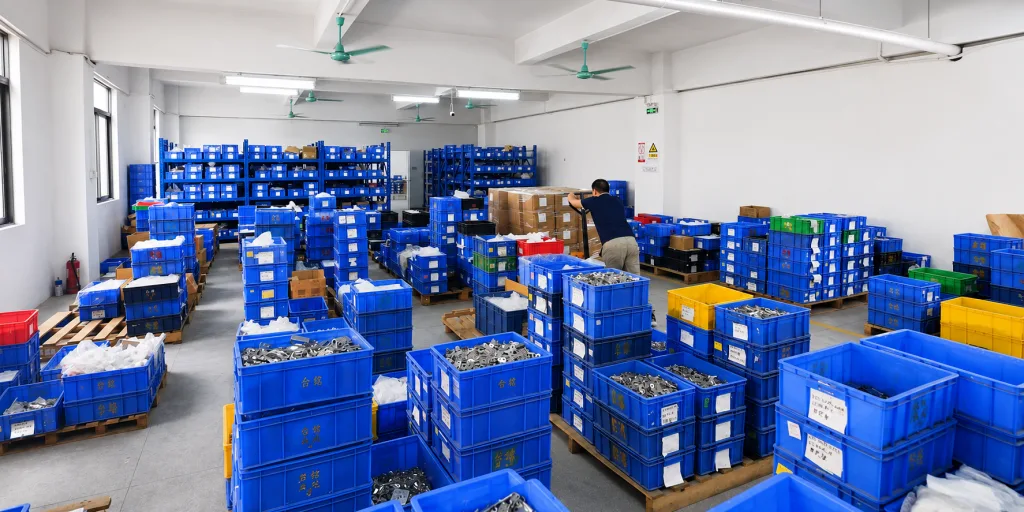
With the sample approved, the part moves to volume production supported by HSP manufacturing capabilities. At this stage the terms should already be agreed — quantity against the MOQ, production lead time, finish, packaging, inspection standard, and the documentation the program needs, such as material certificates and test reports. Production is also where consistency matters: every unit should match the approved sample, which is what an ISO 9001 quality system and in-house testing exist to ensure. When the drawing, sample, and terms are all settled, the custom part is simply repeated to specification.
The whole process at a glance
| Stage | What happens | What to get right |
|---|---|---|
| 1. Drawing | Define size, holes, material, finish, performance | Precision — cheapest stage to change |
| 2. Confirmation | Both sides sign off the drawing | A real review, not a formality |
| 3. Tooling | Mold/die is made (~20 days) | Build lead time into the schedule |
| 4. Sample | First part off tooling, validated | Test on the real assembly, not on paper |
| 5. Production | Volume run to the approved sample | Consistency + agreed terms and documents |
The pattern across all five stages is the same: get it right early, when changes are cheap. If you have an application that no standard hinge covers, share the drawing or the requirement and our engineering team can take it through development to production.
FAQ
What are the steps in custom hinge development?
Drawing, confirmation, tooling, sample, and production. The drawing defines the part; both sides confirm it; tooling (the mold) is made; a sample is produced and validated on the real assembly; then the part goes to volume production on agreed terms. Get changes in early – they are cheapest at the drawing stage.
When do I need a custom hinge instead of a standard one?
When no existing product meets the application and you have a specific requirement a standard part cannot satisfy – a non-standard size, hole pattern, torque, material, or mounting form. If a stock hinge fits with minor accommodation, that is faster and cheaper; custom answers a real gap, not a default upgrade.
How long does custom hinge tooling take?
Tooling typically takes around 20 days, and it is the step that adds the most lead time to a custom program. Because it is also the least reversible stage, build the tooling time into the schedule from the start and make sure the drawing is fully confirmed before tooling begins.
Why is confirming the drawing before tooling so important?
Because tooling is expensive and hard to reverse. Once a mold is cut to a dimension, changing it means reworking or recutting the tooling. Catching an error at the drawing or confirmation stage costs a conversation; catching it after tooling costs time and money. Treat sign-off as a genuine review.
What should I prepare before starting a custom hinge project?
Prepare the hinge dimensions, hole pattern, material, finish, load requirement, opening angle, torque or motion requirement, operating environment, expected volume, and any 2D or 3D drawings you have. These inputs let the manufacturer confirm whether a standard hinge can work or whether custom tooling is truly needed.