-
+86 13720060320
-
lanna@haitangs.com

Individualaus sukimo momento vyrio konstrukcijos reikalavimai, skirti OEM įrangai
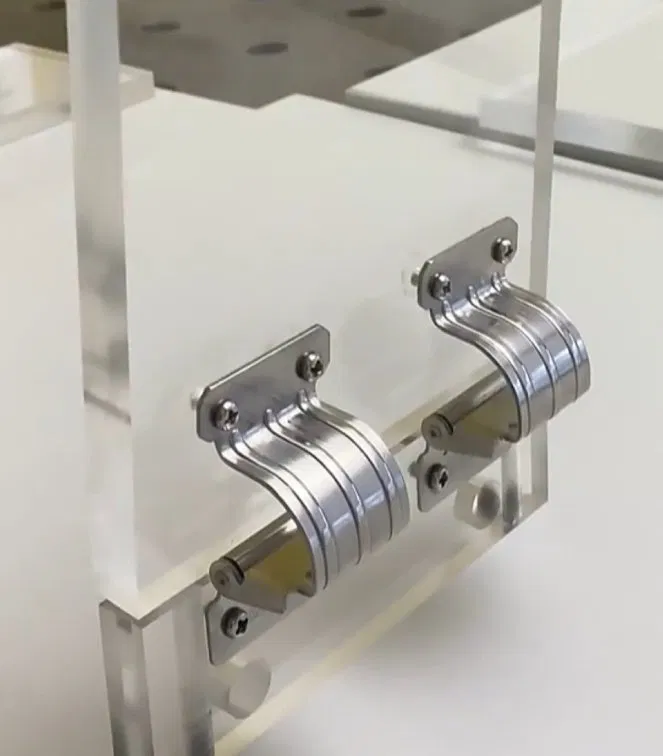
Sukimo momento vyris gali atrodyti tinkamas brėžinyje, tačiau vis tiek sugesti po to, kai bus sumontuotas realioje įrangoje. Plokštė gali pasislinkti eksploatacijos kampuose, atrodyti pernelyg standi esant žemai temperatūrai, atsipalaiduoti po pakartotinio naudojimo arba netolygiai apkrauti ploną montavimo paviršių. Kiekvienu atveju problema nebūtinai yra susijusi su pagrindiniu vyrio tipu. Standartinis modelis galėjo būti suprojektuotas atsižvelgiant į kitokią geometriją, apkrovas, eksploatavimo sąlygas ar numatomą tarnavimo laiką.
OEM įrangos atveju pritaikymas turėtų išspręsti konkrečią integracijos problemą. Tai gali apimti sukimo momento vertės, sukimo momento krypties, tvirtinimo laikiklio, skylių išdėstymo, atidarymo ribos, medžiagos, apdailos, tepalinės medžiagos arba vidinės trinties struktūros pakeitimą. Tam ne visada reikia visiškai naujos vyrio.
Šiame vadove paaiškinama, kada standartinės sukimo momento vyrio konstrukcijos nebepakanka, kokius parametrus galima pritaikyti, kaip pasirinkti tarp esamos platformos modifikacijos ir visiškai individualaus projekto, taip pat ką reikia patikrinti prieš pradedant gamybą. Jei jūsų komanda vis dar svarsto, ar šis vyrio tipas yra tinkamas, pradėkite nuo mūsų apžvalgos apie kaip veikia sukimo momento vyriai.
Projektavimo ribos: Naudokite standartinį modelį, jei jo sukimo momento diapazonas, montavimo geometrija, medžiaga ir patvirtintos eksploatavimo sąlygos jau atitinka įrangą. Individualų pritaikymą apsvarstykite tik tuomet, kai vieno iš šių reikalavimų neįmanoma įvykdyti neperprojektavus durų, skydelio, ekrano ar aplinkinės konstrukcijos.
Kada pakanka standartinės sukimo momento vyrio – o kada ne
Ne kiekvienam OEM projektui reikalinga specialiai pagaminta detalė. Pradedant nuo... esama vyrų platforma paprastai sumažina kūrimo riziką, nes pagrindinis veikimo mechanizmas, medžiagos, gamybos procesas ir sukimo momento charakteristikos jau yra žinomi. Todėl pirmasis sprendimas yra ne “Kaip suprojektuoti naują vyrį?”, o “Kas trukdo veikti esamam modeliui?”
| Projekto būklė | Rekomenduojamas maršrutas | Priežastis |
|---|---|---|
| Kataloge nurodyti sukimo momentai ir matmenys jau atitinka reikalavimus | Naudokite standartinę vyrį | Venkite nereikalingų įrangos paruošimo ir patikrinimo darbų |
| Reikia pakoreguoti tik sukimo momento vertę arba apdailą | Pakeisti esamą platformą | Patikrinta struktūra gali likti nepakitusi |
| Reikia pakeisti skylių išdėstymą, laikiklį, veleno kryptį arba atidarymo ribą | Iš dalies individualizuotas dizainas | Šarnyras gali būti pritaikytas prie įrangos sąsajos |
| Reikalingas sukimo momento tankis viršija galimą korpuso dydį | Inžinerinė peržiūra | Gali prireikti pakeisti vidinę struktūrą arba apkrovos pasiskirstymą |
| Jų judėjimo ypatybės, forma ir vidinis mechanizmas skiriasi | Visiškai individualus programavimo sprendimas | Esama platforma gali nebeužtikrinti patikimo pagrindo |
| Apimtis yra nedidelė, o durų konstrukcija tebėra lanksti | Rinkitės standartinę platformą | Įrangos keitimas gali būti praktiškesnis nei naujų įrankių gamyba |
Kodėl standartinės sukimo momento vyriai gali nepateisinti lūkesčių po įmontavimo
Atliekant stendo bandymą tikrinama pati vyris. Galutiniame įrenginyje įvertinami tokie veiksniai kaip durų lenkimas, tarpiklio reakcija, laidų varža, temperatūros svyravimai, užterštumas, surinkimo nuokrypiai ir valdiklio jėga. Šie veiksniai gali paveikti vyrio veikimą ir tai, koks laikymo sukimo momentas perduodamas plokštei.
- Faktinis rodiklis yra didesnis nei tikėtasi. Pridėti ekranai, dangteliai, laidai, rankenos ar kiti priedai keičia svorio centrą ir padidina apkrovą vyrio ašyje.
- Reikiamas judesys skiriasi nuo kataloge pateiktos prielaidos. Plokštei gali būti reikalinga maža atidarymo jėga, bet didesnis uždarymo pasipriešinimas, arba ji turi išlaikyti padėtį tik nustatytame eksploatacijos diapazone.
- Tvirtinimo konstrukcija yra pernelyg lanksti. Plonas lakštinis metalas, ilgi laikikliai arba nekoaksialios vyrių tvirtinimo vietos gali išsikreipti dar prieš vyriui pasiekus numatytą atsparumą.
- Temperatūra keičia naudojimo pojūtį. Dėl trinties medžiagų ir tepalų savybių vyris gali atrodyti laisvesnis arba standesnis, kai temperatūra skiriasi nuo kambario temperatūros.
- Aplinka kenkia surinkimui. Drėgmė, druska, valymo chemikalai, dulkės ar alyvos garai gali turėti įtakos paviršiams, trinties sąsajoms, tvirtinimo detalėms ar gretimų įrenginių medžiagoms.
- Sukimo momento išlaikymas nebuvo apibrėžtas. Vyris gali atitikti pradinį sukimo momento reikalavimą, tačiau po pakartotinių ciklų nebegalės išlaikyti plokštės.
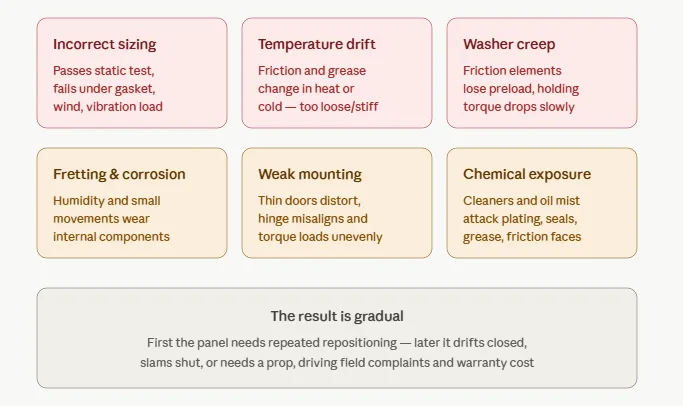
Teisingas sprendimas nebūtinai yra “padidinti sukimo momentą”. Didesnis sukimo momentas gali padidinti vartotojo pastangas, sukelti apkrovą tvirtinimo taškams ir paslėpti konstrukcijos ar išlyginimo problemą. Individualiai pritaikytas projektas turėtų būti nukreiptas į tikrąjį gedimo mechanizmą.
Ką galima pritaikyti pagal užsakymą „Torque Hinge“ vyrioje?
Individualizavimas gali turėti įtakos vyrių judėjimui, tvirtinimo būdui, atsparumui aplinkos veiksniams ir veikimo pastovumui gamybos procese. Toliau pateiktoje lentelėje išskirti pagrindiniai projektavimo kintamieji.
| Pasirinktinis parametras | Ką ji valdo | Tipinė priežastis, dėl kurios tai keičiama |
|---|---|---|
| Nominalus sukimo momentas | Atsparumo išlaikymas šarnyro ašyje | Suderinti su faktiniu plokštės sukimo momentu |
| Sukimo momento nuokrypis | Vienetų tarpusavio suderinamumas | Vartotojo patirties valdymas skirtingose įrangos konfigūracijose |
| Atidarymo ir uždarymo sukimo momentas | Atsparis kiekviena kryptimi | Sukurkite subalansuotą, asimetrinį arba vienakryptį judesį |
| Atsijungimo sukimo momentas | Judėjimui pradėti reikalinga jėga | Išvengti užstrigimo ar staigaus pirmojo judesio |
| Sukimo momento kreivė priklausomai nuo kampo | Kaip keičiasi pasipriešinimas sukimosi metu | Remkite stiprią zoną arba sumažinkite pastangas artėjant prie pabaigos |
| Pradinis diapazonas arba mechaninis stabdys | Didžiausias leidžiamas pasukimas | Apsaugokite kabelį nuo įtempimo, susidūrimo ar per didelio poslinkio |
| Fiksavimo padėtis | Nustatyti sustojimo taškai | Sukurti aptarnavimo, patikrinimo ar apžiūros vietas |
| Tvirtinimo laikiklis ir skylių išdėstymas | Sąsaja su įranga | Įmontuokite į esamą korpusą be projektavimo pakeitimų |
| Veleno kryptis ir sukimosi kryptis | Montavimo kryptis į kairę/dešinę ir surinkimo orientacija | Pritaikyti prie durų išdėstymo arba gamybos proceso |
| Pakuotės dydis ir forma | Vyrio užimamas plotas | Įmontuokite kompaktiškus ekranus, dangčius arba vidinius mazgus |
| Korpuso, veleno ir tvirtinimo detalių medžiagos | Stiprumas, atsparumas korozijai ir suderinamumas | Skirta naudoti lauke, aplinkai, kurią reikia nuplauti, medicinos srityje, transporto priemonėse arba pakrantės sąlygomis |
| Paviršiaus apdorojimas | Apsauga nuo korozijos ir išvaizda | Pritaikyti prie įrangos apdailos arba ekspozicijos lygio |
| Trinties medžiaga ir tepalas | Temperatūros pokyčiai, nusidėvėjimas ir judėjimo kokybė | Pagerinti stabilumą visame veikimo diapazone |
| Tikslinis eksploatacijos ciklų skaičius | Reikalaujama paslaugos trukmė | Nustatyti priimtiną sukimo momento išlaikymą po naudojimo |
Svarbu: Kai kurie parametrai tarpusavyje sąveikauja. Padidinus sukimo momentą toje pačioje konstrukcijoje, gali padidėti paleidimo jėga, šilumos išsiskyrimas, nusidėvėjimas arba apkrova tvirtinimo ausims. Pakeitus medžiagą, taip pat gali pasikeisti gamybos galimybės ir matmenų leistini nuokrypiai. Visus reikalavimus būtina vertinti kaip sistemą, o ne kaip atskiras pozicijas.
Prieš keičiant vyrius, apibrėžkite „Real Door“ sistemą
Tikslinis sukimo momentas turėtų būti nustatomas atsižvelgiant į visą judamąjį mazgą, o ne į pačią plieninę plokštę. Įvertinkite ekraną, dangtelį, rankeną, tarpiklio pasipriešinimą, kabelius, žarnas, apsaugines movas ir visus priedus, kurie juda kartu su durelėmis. Atstumas nuo vyrio ašies iki faktinio svorio centro yra toks pat svarbus kaip ir masė.
Taip pat reikia nustatyti kampus, kuriuose skydas turi išlikti stabilus. Techninės prieigos durelės, kurios turi išlaikyti 90° kampą, kelia kitokią projektavimo problemą nei ekspozicinis stendas, kuris turi išlaikyti bet kokį kampą nuo 20° iki 110°. Dangčiui, kurio kampas ribotas, gali prireikti stabdžio, o besisukančiam ekspoziciniam stendui – galimybės judėti be pertraukų ir vietos laidams nutiesti.
Norėdami susipažinti su išsamiu skaičiavimo metodu, pavyzdžiais ir saugos koeficiento aptarimu, naudokite sukimo momento vyrių skaičiavimo vadovas. Šis sukimo momento vyrių skaičiuoklė Remiantis plokštės mase, atstumu iki svorio centro, kampu ir vyrių skaičiumi, galima nustatyti pradinį tikslą kiekvienam vyriui. Šis rezultatas yra projektavimo peržiūros atspirties taškas, o ne visos surinkimo konstrukcijos bandymų pakaitalas.
Standartinis modifikavimas ir visiškai individualus programavimo sprendimas
Mažiausią riziką keliantis individualus sprendimas paprastai yra mažiausias pakeitimas, kuris išsprendžia problemą. Todėl naudinga projekto peržiūra leidžia atskirti pakeitimus, kuriuos galima atlikti esamoje platformoje, nuo tų, kuriems reikalinga nauja struktūra.
| Reikalavimas | Esamos platformos modifikavimas | Visiškai individualus dizainas |
|---|---|---|
| Skirtinga sukimo momento vertė | Dažnai įmanoma platformos ribose | Reikalinga, jei mechanizmas negali saugiai pasiekti tikslo |
| Kita apdaila arba medžiaga | Tai įmanoma, jei gamybos ir trinties sąsajos išlieka suderinamos | Reikalinga, jei esminis pakeitimas turi įtakos visai struktūrai |
| Pritaikyta skylių išdėstymo schema arba laikiklis | Dažnai tai įmanoma naudojant naują plokštelę arba tvirtinimo detalę | Reikalinga, kai pasikeičia visas apkrovos kelias |
| Nauja pradžios stotelė arba kryptis | Gali būti pridedamas prie esamo mechanizmo | Reikalinga, kai kyla pakavimo arba vidinės geometrijos nesuderinamumo problemų |
| Vienakryptis arba formuotas sukimo momento elgesys | Galima tik tinkamose platformose | Tikriausiai tada, kai dabartinis mechanizmas užtikrina simetrini pasipriešinimą |
| Žymiai mažesnė konstrukcija, užtikrinanti tą patį sukimo momentą | Apribota įtempių ir trinties plotu | Gali prireikti naujo vidinio išdėstymo |
| Nauja judesio ašis arba kabelių trasos maršrutas | Tai įmanoma, jei esanti pasukamoji platforma atitinka reikalavimus | Reikalinga, kai rotacijos ir maršrutizavimo architektūra yra nauja |
Esamos platformos naudojimas nereiškia, kad tenkinamasi standartine dalimi. Tai reiškia, kad išlaikomos jau veikiančios dalys – pavyzdžiui, vidinis trinties mechanizmas ar veleno konstrukcija – tuo pačiu pritaikant sąsają ir veikimo parametrus, būdingus konkrečiai įrangai.
Konkrečioms taikmenims skirti projektavimo prioritetai
Nors sukimo momento vertė gali būti ta pati, dėl skirtingų įrangos kategorijų, kuriose vyriausiąją įtaką daro skirtingi veiksniai, gali būti taikomi skirtingi vyriausiųjų įtaką darantys veiksniai, todėl gali būti sukurti skirtingi vyriausiųjų įtaką darantys veiksniai.
| Paraiška | Pagrindinės integracijos rizikos | Individualaus dizaino prioritetai |
|---|---|---|
| Lauko telekomunikacijų arba energijos kaupimo spintelė | Temperatūros svyravimai, vėjas, dulkės, kondensatas, galimas sąlytis su druska | Temperatūrai atsparus judesys, korozijai atsparios medžiagos, tvirtas tvirtinimas, apsaugotos trinties sąsajos |
| Medicininis vežimėlis arba diagnostinis ekranas | Dažnas padėties keitimas, valymo priemonės, vartotojo jėgos ribos | Sklandus atsiskyrimas, pastovus pojūtis, lengvai valoma geometrija, kontroliuojamas sukimo momento nuokrypis |
| Maisto perdirbimo dangtis | Plovimas vandeniu, cheminiai valikliai, nuosėdų surinkėjai | Medžiagų suderinamumas, valomi paviršiai, apsaugotos tarpų vietos, dokumentuoti valymo apribojimai |
| Pramoninis HMI arba operatoriaus pultas | Vibracija, alyvos garai, plačios plokštės, kabelių pasipriešinimas | Tvirta jungtis, apsauga nuo atsipalaidavimo, stabilus tvirtinimas visame darbo kampo diapazone |
| Transporto priemonė arba geležinkelio įranga | Smūgiai, vibracija, montavimas nuolydžioje, pakartotinis prieigimas prie įrangos | Saugus laikymas, patikimas tvirtinimas, konkrečiam projektui pritaikytas medžiagų ir dokumentacijos patikrinimas |
| Kioskas arba savitarnos įranga | Kompaktiška pakuotė, dažna priežiūra, išvaizdos reikalavimai | Reguliuojamas atidarymas, kompaktiškas profilis, pakartojamas veikimas, paslėptas arba švarus montavimas |
Integracijos klaidos, dėl kurių individualus projektas gali tapti netinkamas
Specialiai pagamintas vyris negali išspręsti visų su įranga susijusių problemų. Prieš patvirtindami projektą, patikrinkite apkrovos perdavimo kelią ir montavimo būdą aplink vyrį.
Neakselinės vyrio ašys
Kai dvi šarnyrų ašys nėra suderintos, agregatas gali užstrigti ir sukelti radialines apkrovas velenams. Operatorius gali palaikyti šį užstrigimą “didesniu sukimo momentu”, tačiau šis papildomas pasipriešinimas yra nekontroliuojamas ir gali paspartinti nusidėvėjimą.
Lankstios durys arba rėmas
Jei plokštė išsilenkia dar prieš abiem vyrams pasisukant kartu, viena vyrė gali prisiimti didesnę apkrovą. Sustiprinimo plokštės, trumpesni laikikliai arba kita montavimo vieta gali būti veiksmingesni sprendimai nei nominalaus sukimo momento didinimas.
Nekontroliuojamas tvirtinimo detalių montavimas
Per stipriai priveržus, gali deformuotis tvirtinimo auselė arba plona plokštė. Per silpnai priveržus, gali atsirasti mikrojudesiai ir trintis. Įrangos brėžinyje nurodykite tvirtinimo detalės dydį, sąveiką, poveržles, prireikus – sriegių fiksavimo būdą ir surinkimo sukimo momentą.
Kabelio ir tarpiklio sąveika
Kabelinių pluoštų, žarnų, apsauginių movų ir suspaustų tarpiklių veikiamoji jėga gali kisti priklausomai nuo atidarymo amplitudės. Atliekant bandymus su bandiniais, turėtų būti naudojamas gamybai numatytas kabelių vedimo ir sandarinimo būdas.
Veikimo vertinimas vien tik pagal pojūtį rankose
Jausmas rankoje yra svarbus, tačiau jis turėtų būti derinamas su tiksliai nustatytu sukimo momentu ir aiškiai apibrėžtomis priimtinumo ribomis. Priešingu atveju du vertintojai gali patvirtinti skirtingą judėjimo elgseną, o gamybos nuoseklumą tampa sunku kontroliuoti.
Kaip patikrinti nestandartinių „Torque Hinge“ pavyzdžių tinkamumą
Išbandykite vyrį pačiame įrenginyje arba tipiniame bandymo stende. Laisvai pritvirtintas bandomasis pavyzdys negali atkurti plokštės lenkimo, kabelių jėgos, tarpiklio reakcijos, tvirtinimo detalių elgsenos ar tikrojo vartotojo sverto poveikio.
Judėjimo ir sukimo momento charakteristikos
- Išmatuokite atidarymo ir uždarymo sukimo momentą per numatytą kampų intervalą.
- Patikrinkite, ar skydas laikosi kiekvienoje reikiamoje aptarnavimo ar apžiūros padėtyje.
- Patikrinkite atitrūkimo jėgą, kai įranga jau stovi vietoje.
- Atkreipkite dėmesį į strigimą, staigų atsilaisvinimą, triukšmą arba nuo kampo priklausantį nukrypimą.
- Patikrinkite, ar vartotojui nereikia dėti pernelyg daug pastangų, kad pasiektų tikrąją rankenos vietą.
Išmatuokite atidarymo, uždarymo, atsiskyrimo ir veikimo charakteristikas, kai fiksuojimo įtaisas, kampas, greitis, sustojimo trukmė ir kryptis yra kontroliuojami. Naudokite mūsų vyrio sukimo momento matavimo metodas nustatyti bandymo sąlygas ir užregistruotus rezultatus.
Eksploatacijos ciklas ir sukimo momento išlaikymas
Ciklo trukmė turėtų apimti funkcinio patikimumo tikslą, o ne tik judesių skaičių, pagal kurį vertinama, ar reikalavimai įvykdyti, ar ne. Nustatykite pradinį matavimą, ciklo sąlygas, tikrinimo intervalus ir priimtiną likusį sukimo momentą. Mūsų Sukimo momento šarnyro eksploatacijos trukmės gidas paaiškina, kodėl vyris gali toliau judėti, nors jau nebegali tinkamai išlaikyti plokštės.
Temperatūra ir aplinka
- Patikrinkite veikimą esant projekto numatytai minimaliąjai, patalpos ir maksimaliąjai temperatūrai.
- Atlikus reikiamą poveikio bandymą, patikrinkite, ar nėra korozijos ar dangos pokyčių.
- Jei taikoma, patikrinkite suderinamumą su valymo cheminėmis medžiagomis, alyva ar kitais technologiniais skysčiais.
- Įsitikinkite, kad dulkės, nuosėdos ar drėgmė nesukurtų netikėto trinties kelio.
- Prieš patvirtinant, peržiūrėkite konkrečiam projektui skirtas medžiagų deklaracijas arba atitikties dokumentus.
Surinkimas ir montavimas
- Patikrinkite tvirtinimo skylių padėtį ir ar yra pakankamai vietos montavimo įrankiams.
- Patikrinkite varžto ilgį, sriegio įsigrūdimą ir laisvumą už tvirtinimo paviršiaus.
- Patikrinkite durų tarpelius ir sandariklio prispaudimą per visą atidarymo amplitudę.
- Tikrinkite blogiausio atvejo matmenų leistinus nuokrypius, o ne tik nominalias detales.
- Patvirtinkite, kad keičiant vyrį eksploatacijos metu nereikia atlikti išardymo, dėl kurio būtų sugadintas gaminys, nebent tai daroma sąmoningai.
Informacija, reikalinga inžineriniam įgyvendinamumo vertinimui atlikti
Pradinei techninei peržiūrai nebūtina turėti parengto pirkimo paketo. Paprastai pakanka šešių duomenų, kad būtų galima nuspręsti, ar reikėtų rinktis standartinę platformą, iš dalies pritaikytą variantą ar visiškai individualiai pritaikytą vyrį:
- Bendras judančios plokštės svoris ir svorio centro padėtis
- Reikiamas atidarymo diapazonas ir padėtys, kuriose skydas turi išlaikyti savo padėtį
- Galimas montavimo plotas, skylių išdėstymas ir plokštės arba rėmo storis
- Eksploatavimo sąlygos, įskaitant temperatūrą ir atitinkamą poveikį
- Numatomas naudojimo dažnumas ir numatomas eksploatacijos ciklas
- Instaliacijos brėžinys, 3D modelis, pavyzdys arba aiškios nuotraukos
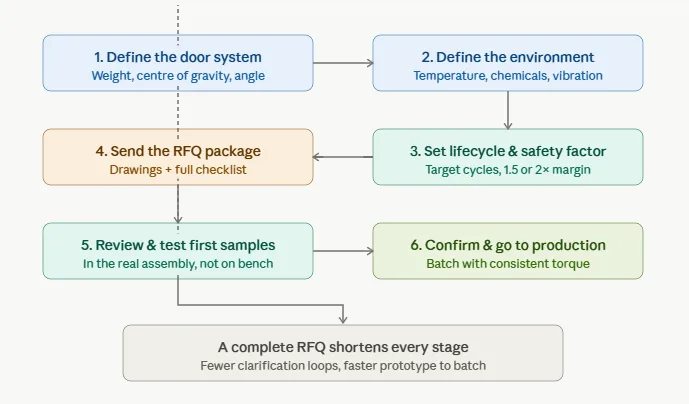
Kai techninis maršrutas bus patvirtintas, pirkimų skyrius galės nustatyti metinį kiekį, terminus, dokumentaciją, pakavimą ir komercinius reikalavimus. Naudokite atskirą Penkių žingsnių vadovas dėl sukimo momento vyrio pasiūlymo užklausos parengti išsamų tiekimo pasiūlymų paketą. Atskirti inžinerinio įgyvendinamumo vertinimą nuo komercinio pasiūlymo užklausos leidžia išvengti, kad ankstyvieji projektavimo sprendimai būtų grindžiami vien tik kaina.
Gamybos paruošimo etapo projektavimo peržiūros kontrolinis sąrašas
- Visos plokštės masė ir svorio centras atitinka išbandyto mazgo parametrus.
- Pasirinktas sukimo momentas nesukelia vartotojui pernelyg didelių pastangų ar montavimo įtampos.
- Atidarymo ir uždarymo veikimas, jei reikia, apibrėžiamas atskirai.
- Abi šarnyrų ašys išlieka lygiagrečios per visą įrangos paklaidos intervalą.
- Plokštė ir rėmas yra pakankamai tvirti, kad apkrova būtų paskirstyta tarp vyrių.
- Medžiagos, apdailos elementai, tepalai ir tvirtinimo detalės atitinka tikrąsias aplinkos sąlygas.
- Cikliniai bandymai apima leistiną sukimo momento išlaikymo ribą.
- Atliekant temperatūros ir poveikio bandymus taikomos sutartos sąlygos ir priimtinumo kriterijai.
- Gamybos brėžiniai nustato montavimo kryptį, pusę ir tvirtinimo detalių įrengimą.
- Patvirtintas etalonas ir matavimo metodas laikomi gamybos etalonais.
Santrauka: Pritaikykite apribojimą, o ne pavadinimą
Individualiai pritaikytas sukimo momento vyris turėtų būti naudojamas todėl, kad įrangai keliamas konkretus reikalavimas, kurio standartinis modelis negali patenkinti. Tas reikalavimas gali būti susijęs su sukimo momento charakteristikomis, montavimo geometrija, matmenimis, atidarymo kampu, medžiagų suderinamumu, veikimu esant skirtingoms temperatūroms, eksploatacijos trukme arba šių veiksnių deriniu.
Pradėkite nuo realaus judančio mazgo ir nustatykite gedimo mechanizmą prieš keisdami vyrį. Tada pasirinkite mažiausią patikimą kūrimo būdą: standartinį modelį, esamos platformos modifikaciją, iš dalies pritaikytą sąsają arba visiškai individualų projektą. Patikrinkite rezultatą visame įrenginyje, taikydami nustatytus matavimus ir priimtinumo ribas.
| Užsisakykite individualaus sukimo momento vyrio konstrukcijos peržiūrą Pateikite plokštės svorį, svorio centro padėtį, atidarymo amplitudę, turimą montavimo erdvę, eksploatavimo sąlygas, numatomą eksploatacijos trukmę ir montavimo brėžinį. Mūsų inžinierių komanda įvertins, ar galima pritaikyti esamą platformą, ar reikės sukurti naują vyrų konstrukciją. Susisiekite su mūsų inžinieriais → |