-
+86 13720060320
-
lanna@haitangs.com

Requisiti di progettazione personalizzata delle cerniere a coppia per apparecchiature OEM
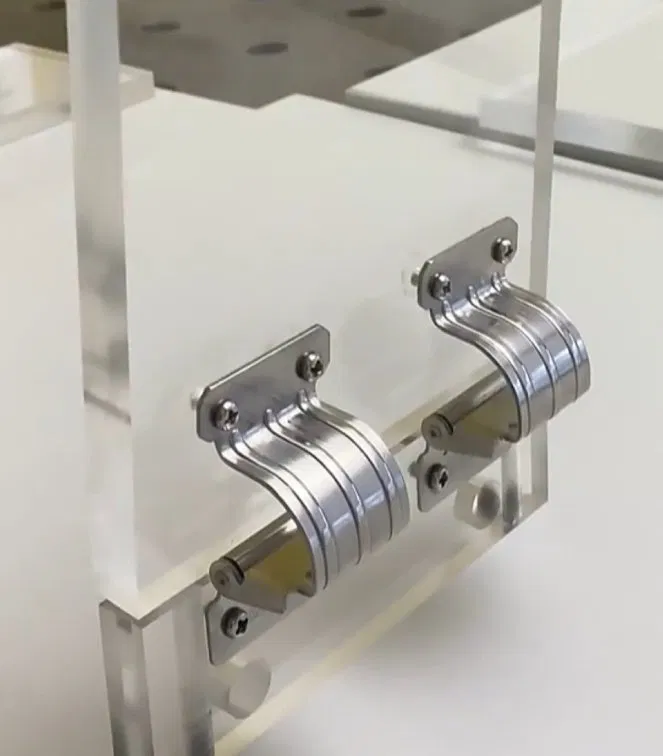
Una cerniera a coppia può sembrare corretta su un disegno e tuttavia non funzionare correttamente una volta installata sull’apparecchiatura reale. Il pannello potrebbe spostarsi agli angoli di servizio, risultare troppo rigido a basse temperature, allentarsi dopo un uso ripetuto o esercitare un carico non uniforme su una superficie di montaggio sottile. In ciascuno di questi casi, il problema non è necessariamente da attribuire al tipo di cerniera di base. Il modello standard potrebbe semplicemente essere stato progettato per geometrie, carichi, condizioni operative o aspettative di durata diverse.
Per le apparecchiature OEM, la personalizzazione dovrebbe risolvere un problema di integrazione ben definito. Ciò può comportare la modifica del valore della coppia, della direzione della coppia, della staffa di montaggio, della disposizione dei fori, del limite di apertura, del materiale, della finitura, del lubrificante o della struttura di attrito interna. Non sempre è necessario realizzare una cerniera completamente nuova.
Questa guida spiega quando una cerniera a coppia standard non è più sufficiente, quali parametri possono essere personalizzati, come scegliere tra la modifica di una piattaforma esistente e una progettazione completamente personalizzata, e cosa occorre verificare prima della produzione. Se il vostro team sta ancora valutando se questo tipo di cerniera sia appropriato, iniziate con la nostra panoramica su Come funzionano le cerniere a molla.
Limiti di progettazione: Utilizzare un modello standard quando la sua gamma di coppia, la geometria di montaggio, il materiale e le condizioni operative validate corrispondono già all’apparecchiatura. Prendere in considerazione la personalizzazione solo quando uno di questi requisiti non può essere soddisfatto senza riprogettare la porta, il pannello, il display o la struttura circostante.
Quando una cerniera a coppia standard è sufficiente… e quando non lo è
Non tutti i progetti OEM richiedono un componente su misura. Partendo da un piattaforma a cerniera esistente di solito riduce i rischi legati allo sviluppo, poiché il meccanismo di base, i materiali, il processo di produzione e il comportamento in termini di coppia sono già ben noti. La prima decisione da prendere non è quindi “Come progettiamo una nuova cerniera?”, ma “Cosa impedisce a un modello esistente di funzionare?”.”
| Stato del progetto | Itinerario consigliato | Motivo |
|---|---|---|
| Coppia nominale e dimensioni già indicate nel catalogo | Utilizzare una cerniera standard | Evitare lavori superflui relativi agli strumenti e alla convalida |
| È necessario regolare solo il valore di coppia o la finitura | Modificare una piattaforma esistente | La struttura consolidata potrebbe rimanere invariata |
| È necessario modificare la disposizione dei fori, la staffa, la direzione dell'albero o il limite di apertura | Progetto semi-personalizzato | La cerniera può essere adattata all'interfaccia dell'apparecchiatura |
| La densità di coppia richiesta supera le dimensioni disponibili del contenitore | Revisione tecnica | Potrebbe essere necessario modificare la struttura interna o la distribuzione del carico |
| Il comportamento in movimento, l'inviluppo e il meccanismo interno sono tutti diversi | Sviluppo completamente personalizzato | Una piattaforma già esistente potrebbe non costituire più una base affidabile |
| Il volume è ridotto e il design della porta è ancora flessibile | Preferisco una piattaforma standard | Sostituire le attrezzature potrebbe rivelarsi più pratico che realizzare nuovi utensili |
Perché le cerniere a coppia standard possono rivelarsi insufficienti dopo l'integrazione
Un test al banco verifica il funzionamento della cerniera da sola. L'apparecchiatura completa tiene conto della flessione della porta, della reazione della guarnizione, della resistenza del cablaggio, delle variazioni di temperatura, della contaminazione, delle tolleranze di assemblaggio e della forza esercitata dall'operatore. Questi fattori possono influire sulla sensazione che si prova azionando la cerniera e sulla coppia di tenuta che viene trasmessa al pannello.
- Il dato effettivo è superiore alle previsioni. L'aggiunta di schermi, coperture, cavi, maniglie o accessori sposta il baricentro e aumenta il carico sull'asse della cerniera.
- Il movimento richiesto è diverso da quello ipotizzato nel catalogo. Un pannello potrebbe richiedere uno sforzo di apertura ridotto ma una maggiore resistenza alla chiusura, oppure potrebbe dover rimanere entro un intervallo di funzionamento definito.
- La struttura di montaggio è troppo flessibile. Lamiere sottili, staffe lunghe o posizioni non coassiali delle cerniere possono torcersi prima che la cerniera sviluppi la resistenza prevista.
- La temperatura influisce sulla sensazione di guida. Le caratteristiche dei materiali di attrito e il comportamento dei lubrificanti possono far sì che una cerniera risulti più allentata o più rigida al di fuori delle condizioni di temperatura ambiente.
- L'ambiente attacca l'assemblaggio. L'umidità, il sale, i prodotti chimici per la pulizia, la polvere o la nebbia d'olio possono influire sulle superfici, sulle interfacce di attrito, sugli elementi di fissaggio o sui materiali delle apparecchiature adiacenti.
- La ritenzione della coppia non è stata definita. Una cerniera può soddisfare il requisito di coppia iniziale, ma non essere più in grado di sostenere il pannello dopo ripetuti cicli di apertura e chiusura.
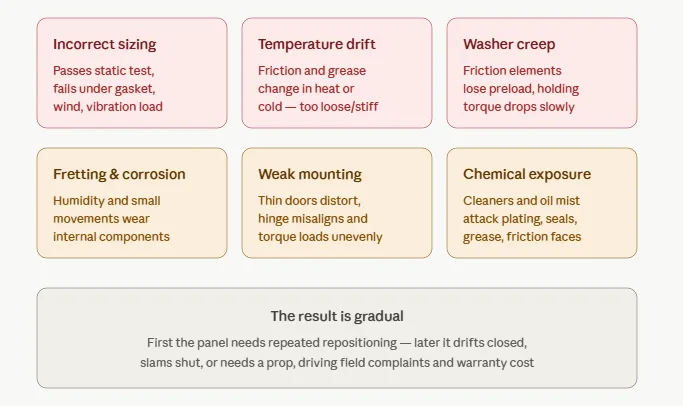
La risposta corretta non è automaticamente “aumentare la coppia”. Una coppia maggiore può aumentare lo sforzo richiesto all’utente, sottoporre a sollecitazioni i punti di fissaggio e mascherare un problema strutturale o di allineamento. Una progettazione su misura dovrebbe affrontare il vero meccanismo di cedimento.
Quali elementi di una cerniera Torque possono essere personalizzati?
La personalizzazione può influire sul movimento della cerniera, sulle modalità di montaggio, sulla sua resistenza alle condizioni ambientali e sull’uniformità delle prestazioni durante la produzione. La tabella sottostante elenca le principali variabili di progettazione.
| Parametro personalizzato | Cosa controlla | Motivo tipico per cui lo si cambia |
|---|---|---|
| Coppia nominale | Resistenza di tenuta sull'asse di cerniera | Adeguare il momento effettivo del pannello |
| Tolleranza di coppia | Coerenza tra le unità | Gestire l'esperienza utente nelle diverse configurazioni delle apparecchiature |
| Coppia di apertura e chiusura | Resistenza in ciascuna direzione | Crea un movimento equilibrato, asimmetrico o unidirezionale |
| Coppia di distacco | Forza necessaria per avviare il movimento | Evitare che il primo movimento risulti esitante o brusco |
| Curva di coppia in funzione dell'angolo | Come varia la resistenza durante la rotazione | Sostenere una zona difficile o ridurre lo sforzo verso la fine |
| Intervallo di apertura o arresto meccanico | Rotazione massima consentita | Prevenire la tensione sul cavo, le collisioni o la corsa eccessiva |
| Posizione di arresto | Punti di fermata prestabiliti | Creare posizioni di servizio, ispezione o osservazione |
| Staffa di montaggio e schema dei fori | Interfaccia con l'apparecchiatura | Adattare un involucro esistente senza doverlo riprogettare |
| Direzione dell'albero e polarità | Installazione a sinistra/destra e orientamento di montaggio | Adattarsi alla configurazione delle porte o al processo di produzione |
| Dimensioni e profilo della confezione | Spazio occupato dalla cerniera | Montare display compatti, coperture o gruppi interni |
| Materiali del corpo, dell'albero e dei dispositivi di fissaggio | Resistenza meccanica, resistenza alla corrosione e compatibilità | Adatto all’uso all’aperto, in ambienti soggetti a lavaggi intensivi, in ambito medico, su veicoli o in zone costiere |
| Trattamento superficiale | Protezione dalla corrosione e aspetto estetico | Adattare alla finitura dell'attrezzatura o al livello di esposizione |
| Materiale di attrito e lubrificante | Comportamento termico, usura e qualità del movimento | Migliorare la stabilità su tutto il campo di funzionamento |
| Obiettivo relativo alla durata di vita | Durata richiesta del servizio | Definire il livello accettabile di mantenimento della coppia dopo l'uso |
Importante: Alcuni parametri interagiscono tra loro. Aumentare la coppia all’interno dello stesso alloggiamento può comportare un aumento della forza di distacco, del calore, dell’usura o delle sollecitazioni sulle alette di montaggio. La scelta di un materiale diverso può inoltre influire sulla producibilità e sulle tolleranze dimensionali. I requisiti complessivi devono essere valutati nel loro insieme, come un sistema, anziché come voci separate.
Definire il sistema della porta vera e propria prima di sostituire la cerniera
La coppia nominale deve essere calcolata in base all’intero gruppo mobile, non al solo pannello in lamiera. Occorre includere il display, il coperchio, la maniglia, la forza di reazione della guarnizione, i cavi, i tubi flessibili, le guaine protettive e qualsiasi accessorio che si muova insieme alla porta. La distanza dall’asse della cerniera al centro di gravità effettivo è importante tanto quanto la massa.
Definire inoltre gli angoli in cui il pannello deve rimanere stabile. Una porta di servizio che deve rimanere fissa a 90° pone un problema progettuale diverso rispetto a un espositore che deve rimanere in qualsiasi angolo compreso tra 20° e 110°. Una copertura con angolo limitato potrebbe richiedere un fermo, mentre un espositore girevole potrebbe necessitare di un movimento continuo e di spazio per il passaggio dei cavi.
Per il metodo di calcolo completo, gli esempi e l'analisi del fattore di sicurezza, consultare il Guida al calcolo della coppia di cerniere. Il Calcolo della coppia di cerniere è in grado di fornire un valore di riferimento iniziale per ciascuna cerniera sulla base della massa del pannello, della distanza dal centro di gravità, dell'angolo e del numero di cerniere. Tale risultato costituisce un punto di partenza per la revisione del progetto, ma non sostituisce la verifica dell'assemblaggio completo.
Modifica standard vs. Sviluppo completamente personalizzato
Il percorso personalizzato a minor rischio è solitamente la modifica più piccola che risolve il problema. Una revisione progettuale efficace distingue quindi le modifiche che possono essere apportate a una piattaforma esistente da quelle che richiedono una nuova struttura.
| Requisito | Modifica della piattaforma esistente | Design completamente personalizzato |
|---|---|---|
| Valore di coppia diverso | Spesso possibile nell'ambito della gamma della piattaforma | Necessario se il meccanismo non è in grado di raggiungere il bersaglio in modo sicuro |
| Finitura o materiale diverso | È possibile purché le interfacce di produzione e di attrito rimangano compatibili | Necessario se la modifica sostanziale riguarda l'intera struttura |
| Schema dei fori o staffa modificati | Spesso è possibile sostituendo una nuova lamella o un nuovo elemento di fissaggio | Necessario quando cambia l'intero percorso di carico |
| Nuova fermata di apertura o direzione di marcia | Può essere aggiunto a un meccanismo già esistente | Necessario in caso di conflitti tra il packaging e la geometria interna |
| Comportamento della coppia unidirezionale o sagomato | Possibile solo su piattaforme compatibili | Probabilmente quando l'attuale meccanismo offre una resistenza simmetrica |
| Un pacchetto molto più compatto a parità di coppia | Limitato dallo stress e dall'area di attrito | Potrebbe essere necessaria una nuova disposizione interna |
| Nuovo asse di movimento o percorso del cavo | È possibile se c'è una piattaforma girevole già esistente che corrisponde | Necessario quando l'architettura di rotazione e instradamento è nuova |
Utilizzare una piattaforma esistente non significa accontentarsi di un componente generico. Significa mantenere le parti che già funzionano — come il meccanismo di attrito interno o la struttura dell’albero — adattando al contempo l’interfaccia e le variabili prestazionali specifiche dell’apparecchiatura.
Priorità di progettazione specifiche per l'applicazione
Lo stesso valore di coppia può determinare progetti di cerniere diversi, poiché le diverse categorie di apparecchiature espongono la cerniera a rischi diversi.
| Applicazione | Principali rischi di integrazione | Priorità nella progettazione personalizzata |
|---|---|---|
| Armadio per telecomunicazioni o accumulo di energia per uso esterno | Cicli termici, vento, polvere, condensa, possibile esposizione al sale | Movimento stabile alla temperatura, materiali resistenti alla corrosione, montaggio rigido, interfacce di attrito protette |
| Carrello medico o display diagnostico | Riposizionamenti frequenti, agenti detergenti, limiti di forza applicabile da parte dell'utente | Stacco fluido, sensazione costante, geometria pulita, tolleranza controllata alla coppia |
| Copertura per l'industria alimentare | Lavaggio con getto d'acqua, detergenti chimici, filtri per residui | Compatibilità dei materiali, superfici pulibili, fessure protette, limiti di pulizia documentati |
| HMI industriale o pannello operatore | Vibrazioni, nebbia d’olio, pannelli di grandi dimensioni, resistenza dei cavi | Interfaccia rigida, dispositivi anti-allentamento, tenuta stabile per tutto l'angolo di lavoro |
| Veicoli o materiale ferroviario | Urti, vibrazioni, installazione inclinata, accessi ripetuti per la manutenzione | Conservazione sicura, montaggio robusto, verifica dei materiali e della documentazione specifici per il progetto |
| Chioschi o apparecchiature self-service | Confezioni compatte, manutenzione frequente, requisiti estetici | Apertura controllata, profilo compatto, funzionamento ripetibile, montaggio nascosto o a vista |
Errori di integrazione che possono invalidare un progetto personalizzato
Una cerniera su misura non può ovviare a tutti i problemi legati all'attrezzatura. Prima di approvare il progetto, verificare il percorso del carico e il metodo di montaggio in corrispondenza della cerniera.
Assi di cerniera non coassiali
Quando i due assi delle cerniere non sono allineati, il gruppo può subire un attrito e esercitare carichi radiali sugli alberi. L’operatore potrebbe interpretare tale attrito come una “coppia maggiore”, ma la resistenza aggiuntiva è incontrollata e può accelerare l’usura.
Porte o telai flessibili
Se il pannello si torce prima che entrambe le cerniere ruotino contemporaneamente, una delle due cerniere potrebbe sostenere una parte maggiore del carico. L'utilizzo di piastre di rinforzo, staffe più corte o una diversa posizione di montaggio potrebbe rivelarsi più efficace rispetto all'aumento della coppia nominale.
Installazione non controllata degli elementi di fissaggio
Un serraggio eccessivo può deformare un'aletta di fissaggio o un pannello sottile. Un serraggio insufficiente può causare micromovimenti e usura da sfregamento. Nel disegno dell'apparecchiatura, specificare le dimensioni del dispositivo di fissaggio, il tipo di innesto, le rondelle, il metodo di bloccaggio della filettatura (ove opportuno) e la coppia di serraggio.
Reazione del cavo e della guarnizione
I fasci di cavi, i tubi flessibili, le guaine protettive e le guarnizioni compresse possono esercitare una forza in una direzione che varia a seconda dell’ampiezza di apertura. Le prove sui campioni devono essere effettuate utilizzando il percorso dei cavi e il sistema di tenuta previsti per la produzione.
Valutare le prestazioni solo in base alla sensazione al tatto
La sensazione al tatto è importante, ma deve essere abbinata a una coppia misurata e a limiti di accettabilità ben definiti. Altrimenti, due revisori potrebbero approvare comportamenti di movimento diversi e la coerenza della produzione diventerebbe difficile da controllare.
Come verificare la validità dei campioni di cerniere a coppia personalizzate
Effettuare la prova della cerniera all'interno dell'apparecchiatura vera e propria o su un modello rappresentativo. Un campione da banco non fissato saldamente non è in grado di riprodurre la flessione del pannello, la forza esercitata dal cavo, la reazione della guarnizione, il comportamento degli elementi di fissaggio né la forza esercitata dall'utente in condizioni reali.
Comportamento in termini di movimento e coppia
- Misurare la coppia di apertura e chiusura nell'intervallo angolare previsto.
- Verificare che il pannello rimanga in posizione in ogni punto di manutenzione o di osservazione previsto.
- Verificare la forza di distacco dopo che l'attrezzatura è rimasta ferma.
- Verificare la presenza di incollaggi, rilasci improvvisi, rumori o derive dipendenti dall'angolo.
- Verificare che lo sforzo richiesto all'utente rimanga accettabile con la posizione effettiva della maniglia.
Misurate il comportamento in fase di apertura, chiusura, distacco e funzionamento in condizioni controllate di fissaggio, angolo, velocità, tempo di permanenza e direzione. Utilizzate il nostro metodo di misurazione della coppia delle cerniere per definire la configurazione del test e i risultati riportati.
Ciclo di vita e mantenimento della coppia
La durata di vita dovrebbe includere un obiettivo di mantenimento della funzionalità, non solo un conteggio dei movimenti di tipo “superato/non superato”. Definire la misurazione iniziale, le condizioni di funzionamento, gli intervalli di ispezione e la coppia residua accettabile. Il nostro Guida alla durata delle cerniere a coppia spiega perché una cerniera possa continuare a muoversi anche dopo aver perso la capacità di sostenere correttamente il pannello.
Temperatura e ambiente
- Verificare il funzionamento alle temperature minima, ambiente e massima previste dal progetto.
- Dopo aver effettuato la prova di esposizione prevista, verificare la presenza di corrosione o di alterazioni del rivestimento.
- Verificare la compatibilità con i prodotti chimici per la pulizia, l'olio o altri fluidi di processo, ove applicabile.
- Verificare che polvere, residui o umidità non possano creare un punto di attrito imprevisto.
- Esaminare le dichiarazioni sui materiali o i documenti di conformità specifici del progetto prima dell'approvazione.
Montaggio e adattamento
- Verificare la posizione dei fori di fissaggio e l'accessibilità per gli attrezzi di installazione.
- Verificare la lunghezza della vite, l'innesto della filettatura e l'interferenza dietro la superficie di montaggio.
- Verificare gli spazi tra le ante e la compressione delle guarnizioni lungo l'intera corsa di apertura.
- Verificare le tolleranze dimensionali nel caso peggiore, non solo quelle nominali dei componenti.
- Verificare che la sostituzione della cerniera durante l'utilizzo non richieda uno smontaggio distruttivo, a meno che ciò non sia intenzionale.
Informazioni necessarie per una valutazione di fattibilità tecnica
Per una prima valutazione tecnica non è necessario disporre di un pacchetto di acquisto completo. Di solito sono sufficienti sei elementi per stabilire se sia opportuno prendere in considerazione una piattaforma standard, una modifica semi-personalizzata o una cerniera completamente personalizzata:
- Il peso complessivo del pannello mobile e la posizione del centro di gravità
- L'intervallo di apertura richiesto e le posizioni in cui il pannello deve rimanere in posizione
- L'ingombro di montaggio disponibile, la disposizione dei fori e lo spessore del pannello o del telaio
- Le condizioni operative, comprese la temperatura e l'esposizione pertinente
- La frequenza di utilizzo prevista e l'obiettivo relativo al ciclo di vita
- Un disegno, un modello 3D, un campione o fotografie nitide dell'installazione
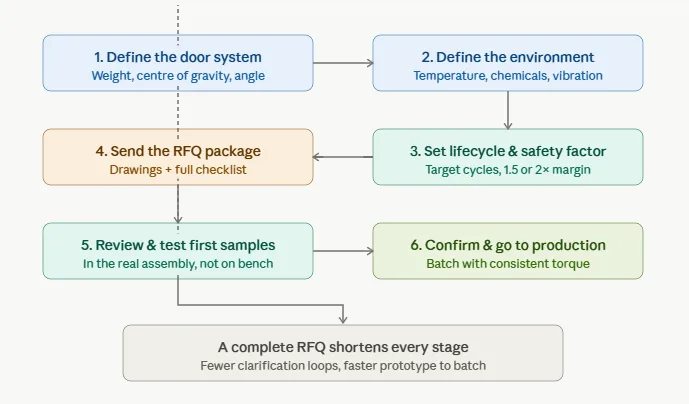
Una volta definito il percorso tecnico, l’ufficio acquisti può aggiungere i requisiti relativi al volume annuale, alle tempistiche, alla documentazione, all’imballaggio e agli aspetti commerciali. Utilizzare il documento separato Guida in cinque passaggi per la richiesta di preventivo (RFQ) relativa alle cerniere a coppia per preparare quel pacchetto completo di approvvigionamento. Tenere separata la valutazione di fattibilità tecnica dalla richiesta di offerta commerciale impedisce che le decisioni iniziali di progettazione vengano ridotte al solo fattore prezzo.
Lista di controllo per la revisione del progetto in fase di pre-produzione
- La massa complessiva del pannello e il suo centro di gravità corrispondono a quelli dell'assieme sottoposto a prova.
- La coppia selezionata non comporta uno sforzo eccessivo da parte dell'utente né sollecitazioni eccessive durante il montaggio.
- Il comportamento di apertura e chiusura viene definito separatamente, ove necessario.
- Entrambi gli assi delle cerniere rimangono allineati per tutto l'intervallo di tolleranza dell'apparecchiatura.
- Il pannello e il telaio sono sufficientemente rigidi da consentire la distribuzione del carico tra i cardini.
- I materiali, le finiture, i lubrificanti e gli elementi di fissaggio rispecchiano l'ambiente reale.
- Le prove cicliche prevedono un limite accettabile di mantenimento della coppia.
- Le prove di temperatura e di esposizione si basano su condizioni e criteri di accettazione concordati.
- I disegni di produzione specificano l'orientamento di montaggio, la direzione di montaggio e l'installazione degli elementi di fissaggio.
- Il campione e il metodo di misurazione approvati vengono conservati come riferimenti per la produzione.
Sintesi: Personalizza il vincolo, non l'etichetta
Una cerniera a coppia personalizzata dovrebbe essere realizzata perché l’apparecchiatura presenta un requisito misurabile che un modello standard non è in grado di soddisfare. Tale requisito può riguardare il comportamento in termini di coppia, la geometria di montaggio, le dimensioni dell’involucro, l’ampiezza di apertura, la compatibilità dei materiali, le prestazioni termiche, la durata nel tempo o una combinazione di questi fattori.
Iniziare dall’assieme in movimento effettivo e identificare il meccanismo di guasto prima di sostituire la cerniera. Successivamente, scegliere il percorso di sviluppo più snello e affidabile: modello standard, modifica di una piattaforma esistente, interfaccia semi-personalizzata o progettazione completamente personalizzata. Verificare il risultato nell’apparecchiatura completa mediante misurazioni definite e limiti di accettazione.
| Richiedi una revisione del progetto personalizzato di una cerniera a coppia Inviateci il peso del pannello, la posizione del baricentro, l’ampiezza di apertura, lo spazio di montaggio disponibile, le condizioni ambientali di funzionamento, l’obiettivo relativo al ciclo di vita e il disegno di installazione. Il nostro team di ingegneri valuterà se sia possibile adattare una piattaforma esistente o se sia necessaria una nuova struttura a cerniera. Contattate i nostri ingegneri → |