-
+86 13720060320
-
lanna@haitangs.com

مفصلات خزانات شحن السيارات الكهربائية | دليل العلب المثبتة على جانب الطريق
مفصلات خزانة شحن السيارات الكهربائية نادرًا ما يتم اختيارها لظروف شحن واحدة. قد تحتوي خزانة الشحن العامة على باب خدمة عريض مزود بشاشة عرض، وأجهزة الدفع، والأسلاك، وشريط التوصيل، وقضبان القفل، والمرشحات، أو مكونات التبريد. ويجب أن يفتح هذا الباب بجانب الأرصفة، وأعمدة الحواجز، والمركبات المتوقفة، وحافظات الكابلات، وأجهزة الشحن المجاورة، مع الحفاظ على محاذاة حشية مقاومة للعوامل الجوية حتى بعد سنوات من التعرض للعوامل الخارجية.
هذا المزيج يجعل المفصلة جزءًا من نظام وصول أكبر على جانب الطريق. ويجب أن يدعم التصميم المقبول الباب بالكامل، ويحافظ على مسار الإحكام، ويقاوم التآكل في منطقة الرذاذ السفلية، ويمنع الإزالة غير المصرح بها، ويتيح للفني وصولاً خاضعًا للرقابة كافياً لصيانة الوحدات الداخلية دون إجهاد الكابلات أو هيكل الخزانة بشكل مفرط.
يساعد هذا الدليل مهندسي العلب ومشتري المعدات الأصلية (OEM) على تحويل تلك الظروف إلى متطلبات خاصة بالمفصلات وخطة للتحقق من ملاءمتها للإنتاج. وهو ليس دليلاً عاماً عن المفصلات المخصصة للاستخدام في الهواء الطلق. أما بالنسبة للسؤال الأوسع نطاقاً حول كيفية تأثير تدهور حالة المفصلات على انخفاض مستوى الحماية المقصود وفقاً لمعايير NEMA أو IP للعلب بمرور الوقت، فيمكنك الرجوع إلى دليلنا لـ مفصلات حاويات خارجية.
حدود القرار: لا تقم بالموافقة على المفصلة بناءً على رسم المفصلة وحده. بل قم بالموافقة عليها على باب خزانة السيارة الكهربائية الكامل، مع مراعاة الحشية المخصصة للإنتاج، والمزلاج، والتجهيزات المثبتة على الباب، ووسائل تثبيت الأسلاك، وتقوية الإطار، ومساحة الفتحة في موقع التركيب، والافتراضات البيئية.
ابدأ بباب خدمة خزانة السيارات الكهربائية، لا بكتالوج المفصلات
قد يحتوي شاحن السيارات الكهربائية على عدة لوحات وصول تبدو متشابهة، لكنها تتطلب مواصفات مختلفة للمفصلات. قبل اختيار مجموعة من المفصلات، يجب تحديد وظيفة كل فتحة، ومن يقوم بفتحها، وما الذي يتم تثبيته عليها، وما إذا كان يُسمح بإزالتها في الأماكن العامة.
| افتتاح مجلس الوزراء المعني بالسيارات الكهربائية | الدور النموذجي في مجال الخدمات | أسئلة خاصة بالمفصلات |
|---|---|---|
| الباب الأمامي الرئيسي للخدمة | الوصول إلى وحدات الطاقة، وأجهزة التحكم، ومعدات الاتصالات، ومكونات التبريد، أو أجهزة الحماية | الوزن الكلي بعد التجميع، قوس الفتح العريض، الأجزاء الإلكترونية المثبتة على الباب، محاذاة الحشية، التعرض للتلاعب من قبل الجمهور، ومساحة العمل المتاحة للفني |
| باب حجرة الكابلات أو الأسلاك السفلي | الوصول بالقرب من مدخل الكابلات، أو لوحات التوصيل، أو أجهزة الحماية، أو الأسلاك الميدانية | رذاذ الطريق، والمياه الراكدة، وبقايا مواد إزالة الجليد، والتلامس مع حافة الرصيف، والصدمات في الجزء السفلي، والتآكل عند المفصلة السفلية |
| لوحة الصيانة الجانبية أو الخلفية | مناطق محددة للصيانة بين أجهزة الشحن والجدران والمظلات أو المساحات الخضراء | مساحة التأرجح المحدودة، والمسافة الفاصلة بين الوحدات المجاورة، ومسار الباب القابل للإزالة، وما إذا كان بإمكان الفني دعم الباب بأمان |
| غطاء الشاشة أو العداد أو وحدة الدفع | الوصول المحدود إلى مجموعة إلكترونية صغيرة | الموضع المحدد، انثناء الكابل، مسار التسرب، الشكل الهندسي للحشية الصغيرة، وما إذا كان يجب أن تظل اللوحة مفتوحة دون الحاجة إلى استخدام اليدين |
وبالتالي، قد يستخدم خزانة واحدة أكثر من بنية مفصلية واحدة. فقد يحتاج الباب الرئيسي إلى مفصلة مخفية أو مثبتة على السطح ذات سعة عالية، في حين قد يحتاج غطاء صغير مخصص للأجهزة الإلكترونية إلى نظام للتحكم في الوضع. أما الباب السفلي المخصص للصيانة، فقد تعطي الأولوية لمقاومة التآكل ونظام منع الرفع على حساب المظهر.
لا تقم بتوحيد نوع المفصلة الواحدة في جميع الفتحات حتى يتم فحص كل من الباب الأكبر حجمًا، والباب السفلي الأكثر تعرضًا للعوامل الخارجية، وموقع الصيانة الأكثر صعوبة. فالمفصلة التي قد تكون مقبولة في اللوح الجانبي العلوي قد تتلف بسرعة بالقرب من منطقة رش الماء المواجهة للرصيف.
رسم خريطة للتعرض على جوانب الطرق حسب موقع المفصلات
“لا يُعد مصطلح ”في الهواء الطلق» بيئة موحدة بالنسبة لخزانة شحن السيارات الكهربائية. فالظروف الخارجية تتغير تبعًا للارتفاع، والاتجاه، والموقع على الطريق، والتصريف، وإدارة الثلوج، وكيفية تركيب الخزانة بالنسبة لحركة المرور.
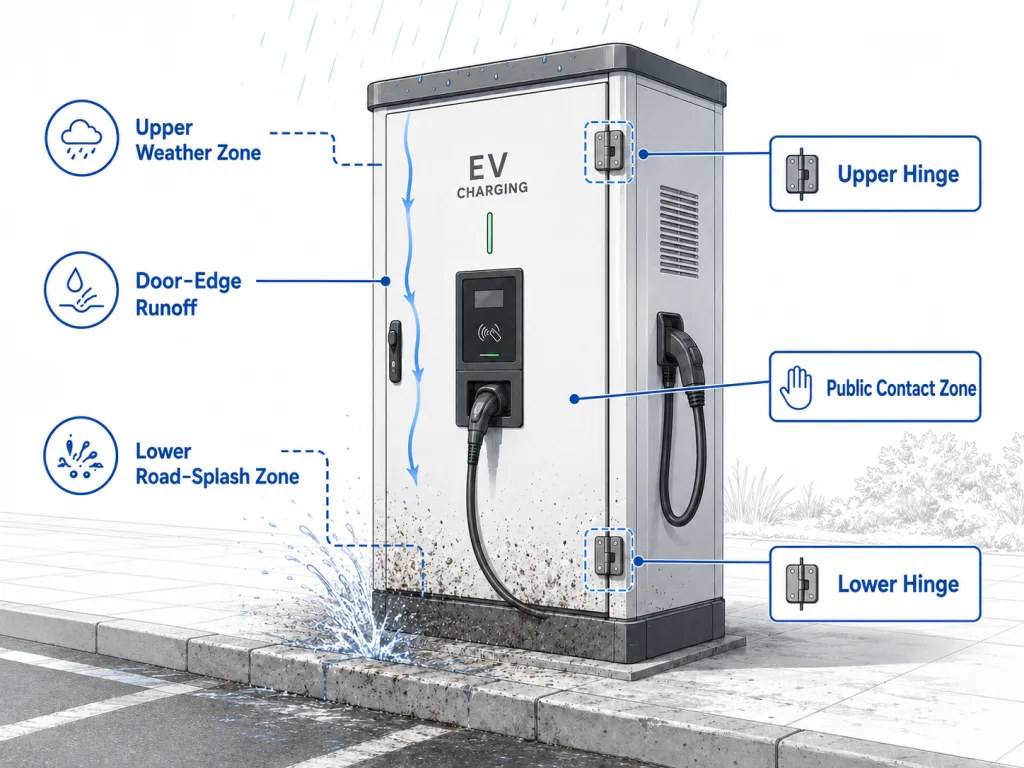
قد تتعرض المفصلات العلوية والسفلية لمستويات متفاوتة جدًّا من الأمطار، ومياه الجريان السطحي، ورذاذ الطرق، والحصى، وبقايا مواد إزالة الجليد.
| منطقة التعرض | ما يصل إلى المفصلة | الآثار المترتبة على التصميم |
|---|---|---|
| المنطقة الجوية العليا | المطر، والتكثف، والأسطح المسخنة بالأشعة فوق البنفسجية، والغبار العالق في الهواء، والتقلبات في درجات الحرارة | التأكد من الصرف، ومتانة الطلاء النهائي، وحماية المسامير، والحركة بعد التعرض لدورات حرارية |
| منطقة تصريف المياه عند حافة الباب | الماء المتدفق على سطح الباب، أو حافة الحشية، أو الغطاء | تجنب وجود تجمعات مائية حول أجنحة المفصلات أو أدوات التثبيت أو التجاويف |
| منطقة رشاشات المياه السفلية | رذاذ المركبات، والحصى، وبقايا مواد إزالة الجليد، والثلج المذاب، والمياه الراكدة، والمواد الكيميائية المستخدمة في التنظيف | مراجعة مجموعة التآكل بالكامل، وتصريف المياه من المفصلة السفلية، وتثبيت الدبوس، وإمكانية الاستبدال |
| منطقة التواصل مع الجمهور | السحب، والانحناء، والصدمات، والكسح، والتعامل غير المصرح به | حماية المسامير والمثبتات، والتحكم في تجاوز مسار الباب، والتحقق من تعزيز الإطار |
| جانب الخدمة المقيدة | الجدران، وأعمدة الحواجز، والمركبات المتوقفة، والمساحات الخضراء، ووحدات توزيع الكابلات، أو محطات الشحن المجاورة | تأكد من زاوية الفتح الفعلية وإمكانية وصول الفني قبل تحديد اتجاه المفصلة والإزاحة |
غالبًا ما تستحق المفصلة السفلية تقييمًا مختلفًا عن المفصلة العلوية. فهي قد تتعرض لمزيد من التلوث، ومزيد من الرطوبة الراكدة، ومزيد من الصدمات المباشرة، في حين تتحمل أيضًا حصة كبيرة من قوة رد فعل الباب. وإذا تم استخدام مادة واحدة أو نظام تثبيت واحد في كل موضع، فيجب اختبار صلاحيته في ظل ظروف التعرض الأسوأ، وليس في ظل الظروف الأكثر نظافة.
تحديد نطاق المنطقة المحيطة بموقع الشحن الفعلي
قد يصبح باب خزانة يفتح بحرية في ممر مصنع غير صالح للاستخدام بعد تركيبه. وعادةً ما تكون محطات الشحن الموجودة على جوانب الطرق وفي مواقف السيارات مقيدة بوجود حواجز الرصيف، وموانع العجلات، والأعمدة الواقية، وحافظات الكابلات، وأعمدة المظلات، وأجهزة التوزيع المجاورة، والمركبات المتوقفة، وممرات المشاة.
حدد موضع فتحة الغلاف في رسم تركيب الخزانة، وليس في رسم الباب فقط. ويجب أن يتضمن الرسم، على الأقل، ما يلي:
- θ — زاوية الفتح الدنيا المطلوبة للخدمة من أجل مهمة الصيانة المقصودة؛;
- A — المسافة من واجهة الباب المغلق إلى أقرب عمود تثبيت أو جدار أو شاحن أو عائق ثابت؛;
- B — مساحة كافية لوقوف الفني وإخراج الأدوات مع فتح الباب؛;
- C — مسار حركة المقابض، وقضبان القفل، وحواف الحماية من المطر، وعلب الشاشات، وميزات تنظيم الكابلات؛;
- L — أي مسافة انتقال محورية مطلوبة في حالة استخدام الباب لمفصلة قابلة للفك أو قابلة للفصل؛;
- مسار الأسلاك وأشرطة التوصيل وحزم الأسلاك المثبتة على الأبواب، مع مراعاة الحد الأدنى من الانحناء على طول القوس الكامل.
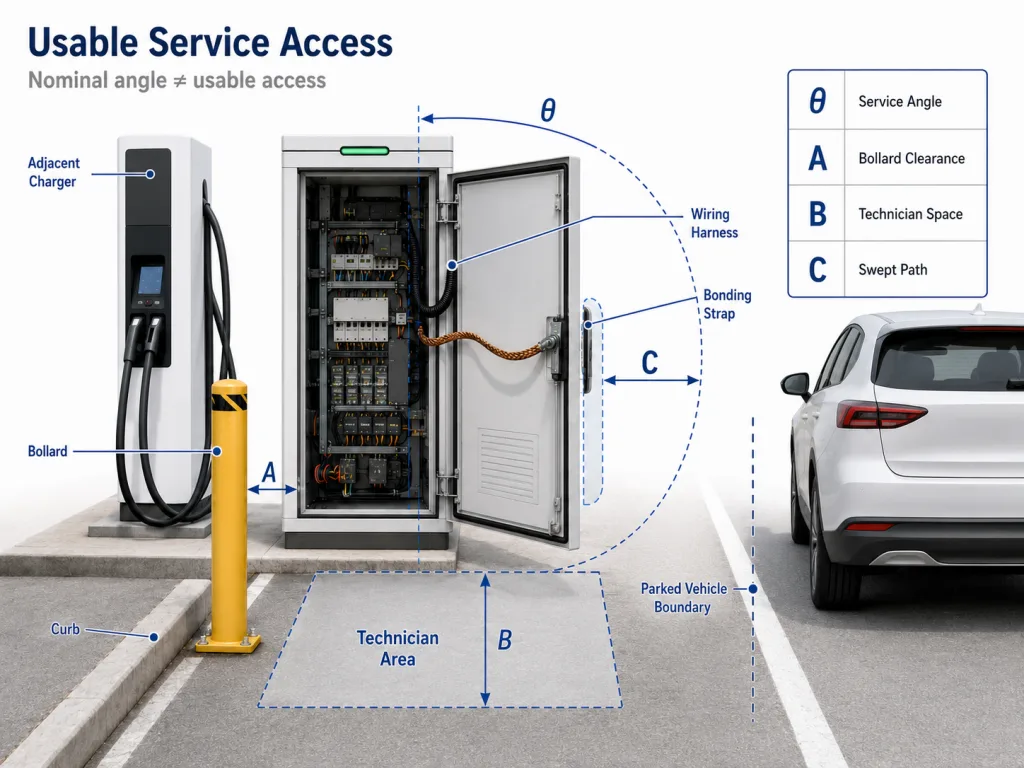
يعتمد الوصول الفعلي إلى الخدمة على الأعمدة المانعة للمرور والمركبات والمعدات المجاورة والأسلاك ومساحة عمل الفني — وليس فقط على زاوية المفصلة.
لا تضمن المفصلة ذات الزاوية الاسمية البالغة 120 درجة توفر نطاق وصول عملي يبلغ 120 درجة. فقد يؤدي غطاء الباب، أو إزاحة المفصلة، أو حافة الحشية، أو المقبض، أو قضيب القفل، أو عمود التثبيت المجاور إلى إيقاف الحركة قبل بلوغ هذه الزاوية. يجب أن يُظهر النموذج النهائي الحجم الكلي للانفتاح ومسار وصول الفني.
كما يؤثر اتجاه الفتح على التعرض للعوامل الجوية. فالباب الذي يفتح في اتجاه المطر السائد أو نحو رذاذ حركة المرور قد يتسبب في تبلل الحافة الداخلية بسهولة أكبر أثناء الاستخدام. وهذا لا يعني أن هناك اتجاهًا “صحيحًا” واحدًا يناسب جميع الحالات، ولكن يجب أخذ ذلك في الاعتبار عند مراجعة الموقع ونظام الصرف.
تشمل الأجهزة الإلكترونية المثبتة على الباب، وأجزاء القفل، وأنظمة تثبيت الكابلات
الباب المصنوع من الصفائح المعدنية العارية لا يمثل الحمل التصميمي. فقد تحتوي أبواب خزانات شحن السيارات الكهربائية على شاشة تعمل باللمس، أو قارئ بطاقات، أو نافذة العداد، أو مجموعة المؤشرات، أو مكونات التهوية، أو قضبان القفل، أو أجزاء المقبض، أو العزل، أو غطاء داخلي، أو الأسلاك، أو شريط التوصيل. ويمكن أن تؤدي هذه المكونات إلى زيادة الكتلة وإزاحة مركز الثقل بعيدًا عن محور المفصلة.
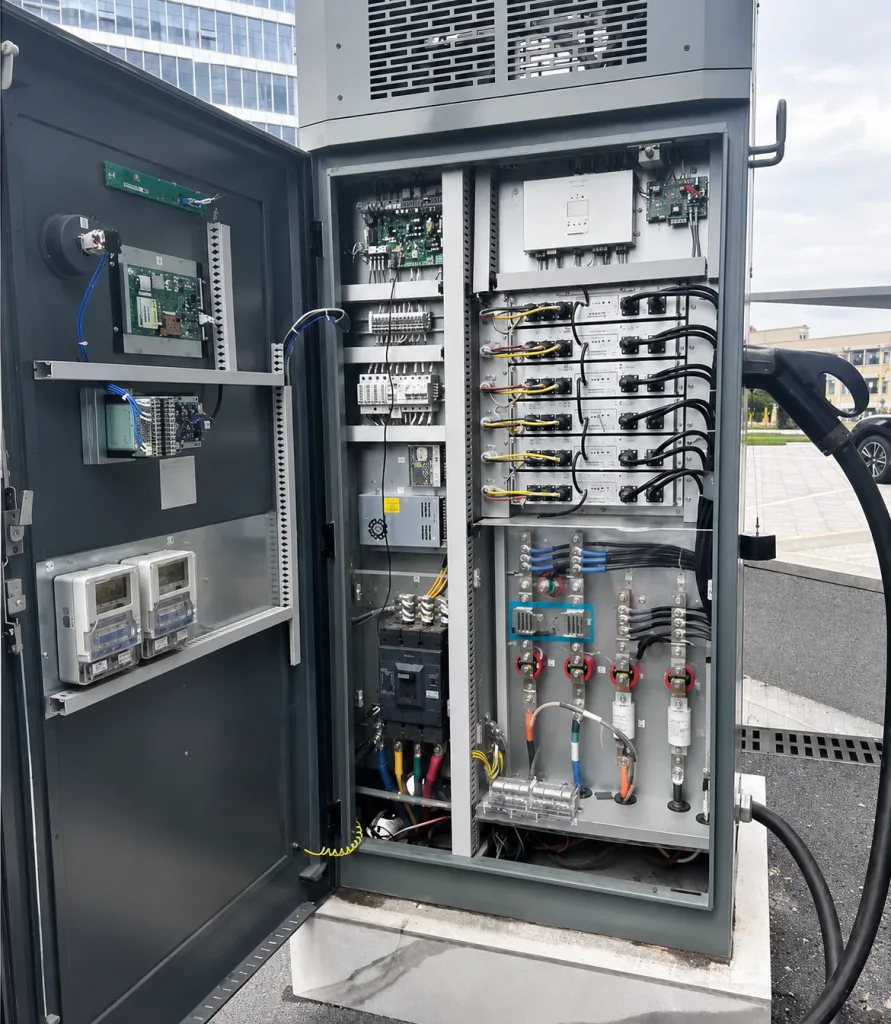
العلاقة العامة في علم الاستاتيكا: يزيد عزم الجاذبية للباب حول محور المفصلة مع زيادة كل من الوزن الإجمالي للباب والمسافة الأفقية لمركز الثقل. استخدم M = W × d وذلك فقط كعلاقة تحميل أولية. أما عدد المفصلات، والمسافة بينها، والتعامل الديناميكي، وصلابة الإطار، وحمل أدوات التثبيت، وشروط الاختبار التي يحددها المورد، فهي لا تزال تتطلب مراجعة هندسية.
تشكل الكابلات المثبتة على الباب عائقًا إضافيًا. يجب ألا يصبح حزام الكابلات حاجزًا للباب، أو يشد على أحد الموصلات، أو يحتك بحافة حادة، أو يحتجز الماء، أو يمنع الإغلاق الكامل. تأكد من وضع حزام الكابلات وحزام التثبيت في أوضاع الإغلاق، والوضع المتوسط، والفتح الكامل. قد يكون الحزام أو الكابل الذي يبدو مريحًا عند زاوية 90 درجة مشدودًا بشكل مفرط عند زاوية التشغيل الفعلية.
في الحالات التي قد يقوم فيها الفنيون بفك الباب، يجب التأكد من فصل الموصلات الكهربائية ووصلة التوصيل الترابطي قبل رفعه. ولا يمكن صيانة الباب القابل للفك ميكانيكيًا إذا تعذر فصل أسلاكه بطريقة آمنة وقابلة للتكرار.
احرص على أن تكون حركة المفصلة متوافقة مع الحشية والمزلاج
تتحكم المفصلة في كيفية اقتراب الباب من سطح الإحكام. فإذا كان محور الدوران أو الإزاحة غير صحيحين، فقد يؤدي ذلك إلى احتكاك جانب المفصلة بالحشية، أو لف حافتها، أو الضغط المفرط على أحد أجزائها، أو بقاءها بعيدة جدًّا عن الإطار. ويمكن أن يسحب المزلاج الجانب المقابل لإغلاقه بينما تظل هناك فجوة قطرية بالقرب من المفصلة.
استعرض ما يلي باعتباره مجموعة واحدة من مفاهيم الهندسة:
- موضع محور المفصلة بالنسبة لسطح الباب وخط الوسط للحشية؛;
- حافة العودة للباب وهندسة عودة الإطار؛;
- الارتفاع بدون حشية وهدف الضغط الخاص بالمشروع؛;
- فجوة مغلقة في المواقع العلوية والوسطى والسفلية من جانب المفصلة؛;
- مسار سحب المزلاج، وما إذا كان الباب يصل إلى نفس مستوى الإسناد قبل بدء الضغط؛;
- الهامش المسموح به لانحناء الباب بعد عمليات التشغيل المتكررة والنقل؛;
- مسارات تصريف حول الأوراق الخارجية، والتجاويف، وفتحات التثبيت.
IEC 60529 يصنف درجات الحماية التي توفرها العلب الكهربائية وفقًا لرمز IP، لكنه لا يحدد نوع المفصلة ولا يثبت أن محاذاة الحشية ستظل ثابتة بعد تكرار فتح وإغلاق الباب والتآكل الناتج عن الاستخدام الميداني. ASTM B117 تحدد هذه المواصفة الأجهزة والإجراءات والشروط الخاصة بالتعرض لرذاذ الملح؛ وهي لا تحدد مدة تعرض موحدة، أو حد قبول، أو عمر خدمة فعلي. ولذلك، يجب تحديد مدة الاختبار الخاص بالمشروع، وتكوين العينة، والتحضير المسبق، ومعايير النجاح/الفشل بشكل منفصل.
بالنسبة لهذه المقالة، فإن المتطلب العملي بسيط: يجب أن تعود مجموعة الباب الكاملة إلى وضع الإغلاق القابل للتكرار، وأن تحافظ على حالة الإحكام المحددة في المشروع بعد التعرض للظروف البيئية ودورات التشغيل المحددة لتلك الخزانة. بالنسبة للمشاريع التي تتضمن عدة وظائف لأبواب الخدمة أو لوحات الصيانة، قم أولاً بمقارنة مسار المفصلة حسب مهمة الوصول في مفصلات محطات شحن السيارات الكهربائية لأبواب الصيانة صفحة التقديم.
اختر تصميم مفصلي لباب خزانة السيارة الكهربائية
يجب أن تتوافق بنية المفصلات مع شروط الوصول والتعرض المحددة مسبقًا. الجدول أدناه يخص خزانات شحن السيارات الكهربائية وحاويات الشوارع تحديدًا؛ وهو لا يمثل تصنيفًا عامًا لأنواع المفصلات.
| العمارة | المكان المناسب لتركيب خزانة السيارات الكهربائية | المخاطر الخاصة بالسيارات الكهربائية التي يجب التحقق منها |
|---|---|---|
| مفصلة مخفية | الأبواب المفتوحة على الجمهور التي تتطلب واجهة خارجية متساوية مع السطح، ومثبتات محمية، ووقاية من محاولات الكسر من الخارج | عمق التركيب الداخلي، الخلوص بين الأجزاء والحشية، تداخل المعدات المثبتة على الباب، تصريف المياه من التجويف، وقفل الضبط بعد النقل |
| مفصلة خارجية شديدة التحمل | أبواب الخدمة الكبيرة التي يُسمح فيها بوجود قطع التثبيت الظاهرة، ويُعد الفحص المباشر أو الاستبدال فيها أمرًا مهمًا | التعرض لرذاذ الطريق، وأمان أدوات التثبيت الخارجية، وثبات الدبابيس، وتجمع المياه، وتقوية الهيكل |
| مفصلة الرفع أو مفصلة العلم | لوحات الخدمة المقيدة التي يتم إزالتها عمدًا لاستبدال الوحدات أو للتجميع في المصنع | فراغ الإزالة المحوري، نظام منع الرفع العام، التعامل الآمن مع الباب، فصل الأسلاك، ومحاذاة الحشية بشكل قابل للتكرار بعد إعادة التركيب |
| مفصلة للتحكم في الوضع | الألواح الصغيرة للعرض أو القياس أو الخدمة التي يجب أن تظل في زاوية التشغيل دون الحاجة إلى دعامة منفصلة | تأثير درجة الحرارة الخارجية على سلوك التثبيت، ومسار الكابلات، وقوة الإغلاق، وما إذا كانت اللوحة لا تزال قادرة على الإغلاق المحكم |
قد تكون المفصلات المخفية مفيدة في محطات الشحن العامة، لكن كونها مخفية لا يجعلها مناسبة تلقائيًّا. فيجب أن يتوافق نطاق حركة الوصلة، وجيب التثبيت، واتجاه الحمل، ونطاق الضبط مع الخزانة. أما الحمل الكامل ومنطق التركيب فينتميان إلى دليل اختيار المفصلات المخفية; ؛ وتربط هذه الصفحة القرار بالخدمات العامة المقدمة على جانب الطريق.
إذا كان إزالة الباب جزءًا من خطة الصيانة، فيجب مراجعة مسار الإزالة مع الشاحن المركب، وليس الافتراض بناءً على آلية المفصلة. فقد تؤدي الأعمدة المثبتة، وهيكل المظلة، ووحدات توزيع الكابلات، والعناصر المعلقة إلى استحالة إزالة الباب القابل للرفع حتى لو كان يتأرجح بحرية.
التعامل مع التآكل باعتباره مشكلة تتعلق بالتركيب في منطقة رش الطرق
لا يكفي الاكتفاء باختيار هيكل مفصلة مصنوع من الفولاذ المقاوم للصدأ. فقد يبدأ التآكل على جانب الطريق من مسمار مصنوع من الفولاذ الكربوني، أو برغي مطلي، أو حافة صفائح معدنية مقطوعة، أو طلاء تالف، أو واجهة غسالة محصورة، أو تجويف يحتفظ بمياه ملوثة بالكلوريد.
راجع عملية التجميع الكاملة:
- مادة هيكل المفصلة وورقة المفصلة؛;
- دبوس، أو جلبة، أو محمل، أو زنبرك، أو مادة الوصلة الداخلية؛;
- مواد الصواميل، والحلقات، وألواح الدعم، وصواميل التثبيت؛;
- هيكل الخزانة والباب؛;
- حالة الطلاء بالمسحوق أو الطلاء العادي حول الثقوب وخطوط اللحام؛;
- التلامس الجلفاني بين معادن مختلفة؛;
- الشقوق، والحواف الأفقية، ومجرى التصريف عند المفصلة السفلية؛;
- الأضرار السطحية الناتجة عن عمليات الضبط أو أدوات التركيب أو الحركة المتكررة.
استخدم بيانات التعرض للكلوريد، ومواد تصنيع الخزانة، والفترة المتوقعة بين عمليات الصيانة، والأدلة المقدمة من المورد، لاتخاذ القرار بين درجات الفولاذ المقاوم للصدأ وأنظمة الطلاء. يتم تناول موضوع علم المعادن ومقارنة الدرجات بشكل منفصل في دليل المقارنة بين SUS 304 و SUS 316 في المفصلات.
عندما يُطلب تقديم وثائق اختبار رش الملح، يجب تحديد العينة على أنها مجموعة المفصلات المُوردة فعليًّا — وليس عينة معدنية غير محددة. ويجب الإشارة إلى ما إذا كان الاختبار يشمل المسامير، ومثبتات التثبيت، وتلف الطلاء، وواجهات التثبيت، والحركة بعد الاختبار. تعتبر عبارة “تم اختباره برش الملح” دون ذكر المدة وتكوين العينة ونقاط التقييم ومعايير القبول دليلاً غير مكتمل.
التوازن بين أمن المواقع العامة والخدمات المصرح بها
تتعرض العلب الموجودة على جوانب الطرق وفي مواقف السيارات لأشخاص غير مخولين بفتحها. وفي الوقت نفسه، قد يضطر الفنيون الميدانيون إلى استبدال وحدات الطاقة أو المراوح أو المرشحات أو أجهزة الدفع أو معدات الاتصالات تحت ضغط الوقت وفي مساحة محدودة.
يجب أن يستوفي المفصل الشرطين التاليين:
- يجب ألا يمكن إزالة الدبابيس والمثبتات الأساسية بسهولة من الجانب المفتوح للجمهور؛;
- يجب أن يتضمن باب الرفع نظام تثبيت مانع للرفع محدد في المشروع، عندما يكون من المتوقع حدوث رفع غير مصرح به؛;
- يجب أن تظل أدوات التثبيت المخفية في متناول الفنيين المصرح لهم دون الحاجة إلى إزالة المجموعات الكهربائية غير ذات الصلة؛;
- يجب ألا يعتمد الباب على الأسلاك الكهربائية أو شريط التوصيل للحد من مدى حركته؛;
- يجب أن تحدد طريقة الإزالة المصرح بها كتلة الباب، ونقاط الرفع، وكيفية فك الوصلات، وعدد الأشخاص أو أدوات الرفع المطلوبة؛;
- يجب ألا يبرز الباب المفتوح إلى مسار مروري نشط أو يسد طريق خروج الفني.
يجب ألا تؤدي ميزات منع الفك إلى جعل أعمال الصيانة المشروعة غير آمنة. فالباب الذي لا يمكن فتحه إلا عندما يتحمل الفني وزنه بالكامل، أو يمد يده خلف مكونات موصلة بالتيار الكهربائي، أو يفك رباطًا يتعذر الوصول إليه، لا يُعد تصميمًا صيانةً متكاملاً.
أوضاع الفشل التي تظهر بعد التثبيت
| الأعراض الميدانية | السبب المحتمل المتعلق بنظام المفصلات | ما الذي يجب فحصه في خزانة السيارة الكهربائية |
|---|---|---|
| يصبح الإغلاق صعبًا بعد النقل أو التركيب | التواء الإطار، أو انزياح المفصلة، أو ترهل الباب، أو حركة الدعامة | مستوى الخزانة، وتثبيت القاعدة، والفجوات المائلة في الأبواب، ومثبتات المفصلات، ومرجع المزلاج |
| يظهر الماء أو الغبار أولاً بالقرب من جانب المفصلة | الضغط غير المتساوي، احتكاك الحشية، انخفاض الباب، أو عطل في التصريف | الفجوة في جانب المفصلة (العلوي/الأوسط/السفلي)، ونمط ظهور الحشية، وإزاحة المحور، وتراكم المياه في المفصلة السفلية |
| تحدث البقع أو الانحشار في المفصلة السفلية قبل المفصلة العلوية | رذاذ الطريق، والمياه الراكدة، والمعادن غير المتجانسة، أو تلف الطلاء | منطقة التعرض المنخفضة، ومواد الدبابيس، ومثبتات التثبيت، ونظام الصرف، وواجهات الشقوق |
| يفتح الباب إلى مسافة تتجاوز الحد الذي يسمح به الكابل أو شريط التثبيت | لم يتم التنسيق بين زاوية المفصلة وتصميم حزام الأمان | الموقف المادي، قوس الفتح الكامل، حمل الموصل، نصف قطر الانحناء، ونقاط تثبيت الشريط |
| لا يمكن للفني إزالة الوحدة عندما يكون الباب مفتوحًا | تم تحديد زاوية الفتح أو مساحة الوقوف دون مراعاة موقع التركيب | موضع العمود، والشاحن المجاور، ومساحة السيارة المتوقفة، ومسار حركة المقبض، ومسار الأداة |
| يمكن رفع الباب المخصص للجمهور أو إخراج الدبوس | المفصلة القابلة للفصل أو المكشوفة تفتقر إلى ميزة التثبيت | اتجاه الدبوس، والدبوس الثابت، وميزة منع الرفع، وتفاعل المزلاج، والوصول إلى أداة التثبيت الخارجية |
| الباب يرتد أو لا يبقى في وضع التشغيل | خطأ في نقطة التوقف، أو عزم التحكم في الموضع، أو الانحدار، أو حمل الرياح، أو مركز الثقل | الاتجاه عند التركيب، والتعرض للرياح، والمكونات المثبتة على الباب، وهيكل التثبيت، ومتطلبات التثبيت |
يجب تتبع أسباب هذه الأعراض عبر نظام الباب بأكمله. فاستبدال المفصلة بقطعة أكبر لن يحل مشكلة الإطار الأصغر من اللازم، أو الشكل الهندسي غير الصحيح للحشية، أو انسداد مساحة الصيانة، أو ضعف حامل المشغل، أو الكابل الذي يوقف حركة الباب.
سيناريو هندسي مركب: خزانة شاحن تيار مستمر سريع على جانب الرصيف
مثال هندسي: هذا سيناريو هندسي مركب تم إنشاؤه لشرح منطق الاختيار. وهو ليس سجلاً لمشروع عميل ولا ادعاءً يتعلق باختبار منتج.
لنتخيل خزانة شحن سريع موضوعة على جانب الرصيف، مزودة بباب خدمة أمامي طويل وباب أصغر في الجزء السفلي مخصص لحجرة الأسلاك. يحتوي الباب الأمامي على شاشة عرض، وقضبان قفل داخلية، وأسلاك كهربائية، وشريط توصيل. ويقع الباب السفلي بالقرب من منطقة رشاشات المياه على جانب الرصيف المواجه للطريق. وتحد الأعمدة الواقية من مساحة الفتح أمام الخزانة، بينما يحد شاحن ثانٍ من الوصول الجانبي.
يقوم الفريق أولاً بفصل متطلبات البابين بدلاً من تخصيص مفصلة واحدة لكليهما.
- الباب الأمامي الرئيسي: يتم قياس الكتلة الإجمالية للوحدة المُجمَّعة ومركز الثقل بعد تركيب الشاشة وقضبان القفل وحزام التثبيت والغطاء الداخلي. ويتم تحديد زاوية الصيانة المطلوبة بناءً على مسار إزالة وحدة الطاقة، وليس بناءً على زاوية المفصلة المفضلة الواردة في الكتالوج.
- فتح المغلف: يتم فحص الباب المفتوح والمقبض ومساحة وقوف الفني للتأكد من عدم تداخلها مع الأعمدة المانعة للوقوف، وشاحن الشحن المجاور، وحافظة الكابل، والحدود المحيطة بالمركبة المتوقفة.
- هندسة الختم: يتم مراجعة محور المفصلة، وخط الوسط للحشية، ومسار سحب المزلاج، ونقاط الإسناد للباب المغلق معًا. ويرتبط الترهل المسموح به بعد انتهاء الدورة بمتطلبات محاذاة الحشية والمزلاج.
- الأمن: لا يمكن إزالة مسمار المفصلة والمثبتات الظاهرة للعيان بسهولة. ويظل الوصول المصرح به إلى أدوات التثبيت ممكنًا من جانب الصيانة.
- تثبيت الكابل: يظل حزام التثبيت ومجموعة الأسلاك ضمن حدود الانحناء والشد المحددة لهما طوال قوس الفتح بأكمله. ويقوم حاجز هيكلي — وليس الكابل — بتحديد الحد الأقصى لحركة التجاوز.
- الباب السفلي: يتم فحص مجموعة المفصلة السفلية للتأكد من خلوها من رذاذ الطريق، وبقايا مواد إزالة الجليد، والتصريف، والتآكل الشقي. ويشمل اختيار المواد المسامير، والبراغي، والغسالات، وواجهة التوصيل بالهيكل.
- التحقق من الصحة: يتم اختبار كلا البابين على الخزانة المخصصة للإنتاج بعد إجراء محاكاة النقل أو ظروف المناولة المحددة في المشروع، والتعرض للعوامل البيئية، ودورات الفتح النموذجية. ويركز قبول الاختبار على التشغيل، والمحاذاة، والتلامس المانع للتسرب، والثبات، وحالة التآكل.
قد تستخدم النسخة النهائية هياكل مفصلية مختلفة في كل من البابين. وهذا لا يمثل تعقيدًا غير ضروري؛ بل يعكس دورين مختلفين في الخدمة ومناطق تعرض مختلفة داخل جهاز الشحن نفسه.
التحقق من صحة المفصلة في خزانة مخصصة للإنتاج
يمكن لعينة المفصلة غير المثبتة أن تؤكد الحركة الأساسية والتشطيب، لكنها لا يمكنها تأكيد تكامل خزانة EV. وينبغي أن تستند الموافقة النهائية على العينة إلى الباب والإطار والحشية والمزلاج ودعامة التثبيت ومجموعة الأسلاك وشريط الربط، بالإضافة إلى افتراضات الخلوص في الموقع، سواء كانت هذه العناصر فعلية أو تمثيلية.
- سجل الحالة الأولية. قم بقياس الفجوات المحددة في المشروع بين أجزاء الباب، وموضع المزلاج، وقوة الفتح أو سلوك التثبيت (حيثما ينطبق ذلك)، ومرونة المفصلة، ونمط ظهور الحشية.
- تحقق من غلاف الفتحة المركب. تأكد من زاوية الخدمة، والمسافة الفاصلة عن الأعمدة، والمسافة الفاصلة عن الوحدات المجاورة، ومساحة الوقوف المخصصة للفني، ومسار إزالة الوحدة، ونطاق حركة المقبض.
- تحقق من الأسلاك والتوصيلات طوال مدة القوس الكهربائي. تأكد من عدم شد أي كابل، أو احتكاكه بأي حافة، أو احتباس الماء فيه، أو منعه من الإغلاق الكامل.
- استخدم دورات تشغيل تمثيلية. يختلف عدد دورات التشغيل، والسرعة، وحمل الباب، وزاوية الفتح، ودرجة الحرارة، وأي ظروف تتعلق بالرياح أو المنحدرات باختلاف كل مشروع، ويجب ذكرها في خطة الاختبار.
- قم بتطبيق التعرض البيئي المحدد. في حالة إجراء اختبار التآكل، يجب تحديد طريقة تحضير العينات، ومدة الاختبار، ونقاط التقييم، ومعايير القبول، وما إذا كان يتم فحص الحركة بعد التعرض.
- أعد فحص المحاذاة والإحكام. قم بقياس انخفاض الباب، وتغير الفجوة، وتشابك المزلاج، وتلامس الحشية، وحركة أدوات التثبيت، وما إذا كان الباب يعود إلى نفس نقطة الإحداثيات المغلقة.
- افحص المفصلة السفلية على حدة. تحقق من وجود رطوبة متبقية، أو بقع، أو تصلب الدبوس، أو تلف الطلاء، أو تآكل الشقوق عند نقطة التثبيت.
- التحقق من الإزالة المصرح بها ومنع الإزالة. تأكد من أن عملية إزالة الخدمة تتم بشكل منظم وعملي، مع تقييد عمليات الإزالة العشوائية من جانب المستخدم وفقًا لمتطلبات المشروع.
لا تصبح التوصية الأولية مراجعة هندسية إلا عند توفر بيانات الخزانة. وتسري الموافقة على العينة على التكوين الذي خضع للاختبار. ولا ينبغي استنتاج الموافقة على الإنتاج في حالة حدوث تغييرات في كتلة الباب، أو موضع المفصلة، أو الحشية، أو نظام التثبيت، أو المادة، أو تعزيزات التثبيت.
قائمة مراجعة مفصلات خزانة شحن السيارات الكهربائية
فحص مفصلات خزانة شحن السيارات الكهربائية / وحدة الشحن على جانب الطريق
دور الباب
[ ] تم تحديد باب الخدمة الرئيسي، أو باب الأسلاك السفلي، أو اللوحة الجانبية/الخلفية، أو غطاء المكونات الإلكترونية
[ ] تم تحديد المستخدم المصرح له وطريقة تشغيل الخدمة المتوقعة
[ ] يُسمح بإزالة الباب، أو يُفرض تقييد على ذلك، أو يُحظر ذلك
المعدات المثبتة على الحمولة وعلى الأبواب
[ ] تم التأكد من كتلة الباب المُجمَّع بالكامل
[ ] تم التأكد من عرض الباب وموقع مركز الثقل
[ ] يشمل الشاشة، وأجهزة الدفع، وقضبان القفل، والمرشحات، والأسلاك، والأغطية الداخلية
[ ] تمت مراجعة تقوية الإطار وحافة تثبيت المفصلة
التعرض على جانب الطريق
[ ] تم تحديد المنطقة العلوية للتأثيرات الجوية والمنطقة السفلية لتناثر رذاذ الطريق
[ ] تم ذكر التعرض لملح إزالة الجليد، ورذاذ الطرق، والمياه الراكدة، والغبار، ومواد التنظيف
[ ] تم التأكد من جسم المفصلة، والمسمار، ومثبتات التثبيت، والحلقات، ومواد واجهة التثبيت
[ ] تمت مراجعة نقاط التصريف والاحتفاظ بالمياه في المفصل السفلي
الافتتاح والوصول إلى الخدمات
[ ] زاوية الخدمة المطلوبة θ المحددة وفقًا لمهمة الصيانة
[ ] تم التحقق من المسافة الآمنة بين الأعمدة، وحواف الرصيف، والمركبات المتوقفة، والجدران، والمظلات، وأجهزة الشحن المجاورة
[ ] تم فحص مسارات حركة المقبض وقضيب القفل وحافة الحماية من المطر
[ ] تم التأكد من المساحة المخصصة لوقوف الفني ومسار إزالة الوحدة
[ ] تم تحديد مسافة الرفع L في حالة استخدام مفصلة قابلة للفك
الختم والإغلاق
[ ] تمت مراجعة محور المفصلة وخط الوسط للحشية معًا
[ ] تم تحديد فجوات الأبواب المغلقة عند المواضع العلوية والوسطى والسفلية من جانب المفصلة
[ ] تم التأكد من مسار سحب المزلاج ونقطة الإحداثيات في حالة الإغلاق
[ ] الحد الأقصى لانحناء الباب بعد انتهاء الدورة، مرتبط بمحاذاة الحشية والمزلاج
[ ] تم فحص التصريف حول الأوراق، والجيوب، وفتحات التثبيت
التوصيلات الكهربائية، والتوصيلات المباشرة، ونقاط التوقف
[ ] تم فحص مجموعة الأسلاك في أوضاع الإغلاق، والوضع المتوسط، والفتح الكامل
[ ] يتمتع حزام التثبيت بمرونة كافية ولا يعمل كحاجز للباب
[ ] يتم توفير مانع تجاوز هيكلي عند الحاجة
[ ] تم تحديد موصل إزالة الباب وتسلسل فك التوصيل
الوصول العام والاحتفاظ بالمعلومات
[ ] لا يمكن إزالة الدبابيس والمثبتات الأساسية بسهولة من الجانب المفتوح للجمهور
[ ] تعريف آلية منع الرفع للمفصلات القابلة للفصل
[ ] لا تزال عملية الإزالة المصرح بها عمليةً عمليةً وآمنةً
[ ] لا يبرز الباب المفتوح إلى مسار المرور ولا يعيق خروج الفني
التحقق من الصحة
[ ] تم اختبار الباب والإطار والحشية والمزلاج وعناصر التعزيز المخصصة للإنتاج
[ ] تم توثيق شروط الدورة وحدود القبول
[ ] تم توثيق عينة الاختبار البيئي ومدته ومعايير النجاح/الفشل
[ ] أُعيد فحص المحاذاة، وملامسة مانع التسرب، والتآكل، والثبات، والحركة بعد الاختبار
بمجرد الانتهاء من هذه المدخلات الخاصة بالخزانة، تتبع خطوات عرض الأسعار والعينات والوثائق ومراقبة الإنتاج العملية الأوسع نطاقًا الموضحة في كيفية شراء المفصلات الصناعية. احرص على فصل عملية تحديد المصادر هذه عن هندسة التطبيقات المذكورة أعلاه.
الأسئلة المتداولة
ما هو أفضل مفصل لخزانة شحن السيارات الكهربائية؟
لا توجد مفصلة واحدة تُعد الأفضل لجميع أجهزة الشحن. فالتصميم الصحيح يعتمد على وظيفة الباب، وكتلة الباب المُجمَّع، ومساحة الفتح، وهندسة الحشية، ومدى تعرضه للتلاعب من قبل الجمهور، ومنطقة التآكل، وما إذا كان يجب أن يكون الباب قابلاً للإزالة أم لا. وقد يتطلب باب الخدمة الرئيسي، وباب الأسلاك السفلي، والغطاء الصغير للأجزاء الإلكترونية هياكل مفصلات مختلفة.
هل ينبغي استخدام الفولاذ المقاوم للصدأ من النوع 304 أم 316 في مفصلات حواجز الطرق؟
يعتمد تحديد الدرجة على التعرض للكلوريد، وملح الطرق، والهواء الساحلي، ومواد الخزانة، والتصريف، وفترة الصيانة، ومجموعة أدوات التثبيت والمسامير الكاملة. عادةً ما يُنظر إلى الفئة 316 في حالات التعرض الشديد للكلوريد، لكن المواصفات النهائية يجب أن تكون مخصصة للمشروع على وجه التحديد ومدعومة بوثائق المورد والتحقق من صحتها.
هل يمكن استخدام مفصلات قابلة للرفع في باب شاحن السيارات الكهربائية؟
نعم، عندما يكون إزالة الباب عملية صيانة مقصودة، ويكون الموقع المركب فيه يوفر خلوصًا محوريًّا كافيًّا. كما يجب أن يراعي التصميم آلية منع الرفع، والأمن من جانب الجمهور، وطرق التعامل مع الباب، وفصل الأسلاك والتوصيلات الكهربائية، وإمكانية إعادة محاذاة الحشية بشكل متكرر بعد إعادة تركيب الباب.
لماذا يتآكل المفصل السفلي قبل المفصل العلوي؟
قد يتعرض المفصل السفلي لكميات أكبر من رذاذ الطريق، وبقايا مواد إزالة الجليد، والحصى، والمياه الراكدة، وملوثات التنظيف. كما قد يحتوي على أسطح تلامس أفقية أو شقوق تحتفظ بالرطوبة. يجب فحص المفصل السفلي باعتباره منطقة تعرض منفصلة، ومراجعة هيكل السيارة، والمسمار، ومثبتات التثبيت، والحلقات، وحواف الطلاء، ونظام التصريف معًا.
هل يُثبت تصنيف IP أن المفصلة مناسبة؟
لا. تصنف المواصفة القياسية IEC 60529 درجة حماية الغلاف ضد الوصول والأجسام الصلبة والماء في إطار اختبارات محددة. وهي لا تحدد نوع المفصلة ولا تثبت استمرار محاذاة الباب على المدى الطويل بعد تكرار فتحه وإغلاقه، والتعرض للتآكل، والنقل، والتآكل الناتج عن الاستخدام الميداني. يجب التحقق من صلاحية المفصلة كجزء من نظام باب الغلاف الكامل.
ما هي المعلومات التي يجب إرسالها لإجراء مراجعة لمفصلة خزانة شحن السيارات الكهربائية؟
يرجى إرسال وظيفة الباب، والكتلة الإجمالية بعد التجميع، والارتفاع، والعرض، ومركز الثقل إن كان متاحًا، ومواقع المفصلات، ومواد الإطار، وهندسة الحشية والمزلاج، وزاوية الفتح المطلوبة، والعوائق الموجودة في الموقع، والتعرض لأملاح الطرق أو البيئة الساحلية، ومتطلبات الحماية العامة ضد الإزالة، وترتيبات الأسلاك والتوصيلات، وعدد الدورات المتوقعة، وشروط اختبار المشروع.
ملخص: الموافقة على استخدام المفصلة كجزء من الخزانة الموضوعة على جانب الطريق
موثوق مفصلات خزانة شحن السيارات الكهربائية يتم اختيارها بناءً على التركيب الكامل على جانب الطريق — وليس بناءً على وزن الباب أو مادته وحدها. يجب تحديد الدور التشغيلي لكل باب، ومنطقة التعرض، ونطاق الفتح، والمكونات المثبتة على الباب، وقيود الأسلاك، وطريقة تركيب الحشية، ومتطلبات منع الإزالة، وشروط التحقق الميداني قبل الموافقة على المفصلة.
أفضل عينة هي خزانة مصممة للإنتاج الفعلي، والتي تمثل الباب الحقيقي والإطار والحشية والمزلاج والتجهيزات الكهربائية وحزمة الأسلاك والتعزيزات والافتراضات البيئية. وهذا هو المكان الذي يمكن للمهندسين فيه التأكد من أن الباب يفتح بمسافة كافية، ويظل صالحًا للاستخدام، ويعود إلى نفس مستوى الإحكام، ويقاوم محاولات الإزالة من جانب الجمهور، ويظل يعمل بعد مرور الدورة المحددة وتحت ظروف التآكل المحددة.
| هل تحتاج إلى مراجعة لمفصلات خزانة شحن السيارات الكهربائية؟ يرجى إرسال وظيفة الباب، والكتلة الإجمالية بعد التجميع، والأبعاد، ومواضع المفصلات، ومواد الإطار، وتصميم الحشية والمزلاج، وزاوية الخدمة المطلوبة، والعوائق الموجودة في الموقع، وظروف التعرض، ومتطلبات الحماية ضد الإزالة، وعدد الدورات المتوقعة. اتصل بفريقنا الهندسي → |