-
+86 13720060320
-
lanna@haitangs.com

Pramoninių durų paslėptų vyrių parinkimo vadovas
Pramoninės įrangos durys sugenda ne tik todėl, kad sulūžta vyriai. Daugelyje projektų gedimai prasideda daug anksčiau: vyriai pasirenkami pagal išvaizdą, kainą ar durų storį, o ne pagal faktinę apkrovą, derinimą, darbo dažnį ir aplinkos poveikį.
Praėjus šešiems mėnesiams po įrengimo, pradeda ryškėti simptomai. Durys pradeda svirti. Tarpinė nebesuspaudžia tolygiai. Durys atidaromos ir uždaromos triukšmingai. Užraktas nebesutampa su rėmu. Sunkesniais atvejais durys gali netikėtai užsidaryti atliekant techninę priežiūrą arba atitrūkti nuo tvirtinimo konstrukcijos.
Elektros valdymo spintose, pramoniniuose korpusuose, švarių patalpų duryse, mašinų apsauguose ir automatinių įrenginių prieigos skyduose paslėpti vyriai yra ne tik estetinis pasirinkimas. Jie turi įtakos durų suderinimui, sandarinimo patikimumui, operatoriaus saugai ir ilgalaikiam eksploatavimui.
Šis vadovas yra mūsų išsamaus pramoniniai vyriai serija. Jame paaiškinama, kaip inžinieriai ir pirkimų komandos turėtų rinktis paslėptus vyrius pramoninės įrangos durims, daugiausia dėmesio skiriant apkrovai, derinimui, montavimo tolerancijai, medžiagų pasirinkimui, EN 1935 klasifikacijai ir RFQ rengimui.
Kodėl pramoninės durys sugenda, kai naudojamas netinkamas paslėptas vyris
Dažnai pasirenkami paslėpti vyriai, nes jie paslepia mechaninę įrangą rėmo viduje. Kai durys uždarytos, vyrių iš išorės nematyti. Tai sukuria švarią išvaizdą ir gali padidinti saugumą, nes pašalinami išoriniai išlaužimo taškai ar atviros tvirtinimo detalės.
Tačiau pramoninės įrangos srityje tikrasis iššūkis nėra išvaizda. Tikrasis iššūkis yra tai, ar paslėptas vyris gali išlaikyti durų sistemą per visą jos gyvavimo ciklą.
Dažniausiai pasitaikantys gedimų modeliai yra šie:
- Durų įlenkimas: Viršutinė arba užrakto pusė nusileidžia, todėl susidaro nelygūs tarpai.
- Sandariklio gedimas: Tarpiklis nebesuspaudžiamas tolygiai, todėl sumažėja IP arba NEMA sandarumas.
- Varžtų kaiščio angos nusidėvėjimas: Šarnyre atsiranda laisvumas, svyravimas arba nestabilus judėjimas.
- Priverstinis išlyginimas: Šarnyras montuojamas veikiamas įtempimo, todėl per kiekvieną ciklą vis labiau dėvisi.
- Nenormalus triukšmas: Šlifavimas, sausas judėjimas arba smūgių triukšmas rodo, kad yra blogas suvedimas arba vidinis nusidėvėjimas.
- Netikėtas durų judėjimas: Atliekant techninę priežiūrą durys gali greitai užsidaryti arba pasislinkti.
- Korozija arba užgriuvimas: Dėl netinkamai parinktos medžiagos lankstas gali užstrigti, įtrūkti arba prarasti tvirtumą.
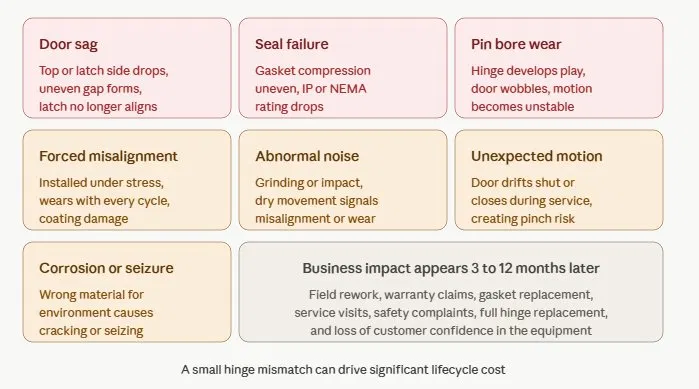
Poveikis verslui gali būti didelis. Dėl nedidelio vyrių neatitikimo gali tekti perdaryti, pažeisti dangą, keisti tarpines, rengti neplanuotus aptarnavimo vizitus, teikti skundus dėl saugos ir keisti visus vyrius.
Štai kodėl paslėptų vyrių pasirinkimas turi būti laikomas ne tik pirkimo, bet ir inžineriniu sprendimu.
Kuo skiriasi paslėptieji vyriai pramoninėse srityse
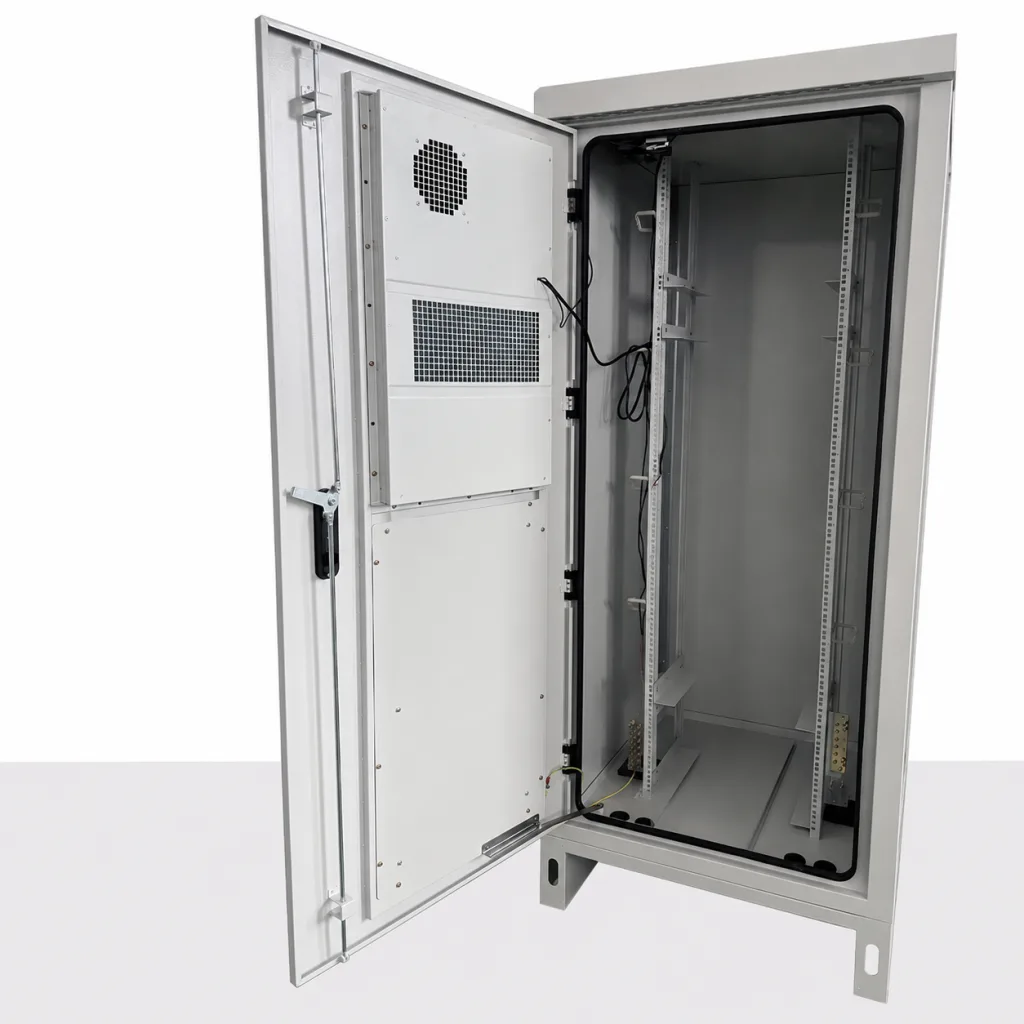
Paslėptas lankstas skiriasi nuo paprasto ant paviršiaus montuojamo lanksto. Jis paprastai yra įmontuotas į duris ir rėmą, o daugelyje konstrukcijų naudojamas daugiasvirtis arba daugiaašis mechanizmas, kad atidarant duris jos judėtų iš lauko ir aplink rėmą.
Pramonėje svarbiausios yra trys savybės.
Visiškai paslėptas montavimas
Vyrių korpusas paslėptas durų, rėmo ar įrangos konstrukcijos viduje. Tai pagerina išvaizdą ir sumažina išorinę prieigą prie vyrio, tačiau taip pat reikia pakankamai vietos viduje vyrio korpusui ir judesio apvalkalui.
Jei frezavimo kišenė, suvirintas laikiklis ar skardos įduba nėra tikslūs, lankstas gali būti priverstas pasislinkti dar prieš tai, kai įranga pasiekia klientą.
"Multi-Link Motion
Daugelyje paslėptų vyrių naudojama keturių strypų arba kelių ašių jungtis. Užuot sukusios aplink vieną matomą kaištį, durys juda į išorę ir tada atsidaro. Tai padeda durims ištrūkti iš rėmo, tarpinės ar aplinkinės konstrukcijos.
Tačiau daugiasvirtis judėjimas taip pat reiškia, kad lankstas yra jautresnis apkrovos krypčiai, montavimo tolerancijai ir rėmo standumui.
3 ašių reguliavimas
Pramoniniai paslėpti vyriai dažnai reguliuojami vertikalia, horizontalia ir suspaudimo kryptimis. Tai naudinga atliekant bandomąjį surinkimą, paleidimą ir tarpinės suspaudimo korekciją.
Koregavimas neturėtų būti naudojamas prastam dizainui paslėpti. Jis turėtų būti naudojamas tinkamai nustatytai vyrių sistemai sureguliuoti.
Standartinių gaminių parinkčių ieškokite nuo mūsų pramoniniai paslėpti vyriai diapazonas.
Verslo pasekmės dėl durų svyravimo, sandariklio gedimo ir nesuderinimo
Sugedęs paslėptas vyris turi įtakos ne tik durų judėjimui. Jis gali paveikti visą įrangos sistemą.
| Gedimo režimas | Tiesioginis rezultatas | Galimas poveikis verslui |
| Durų pasvirimas | Netolygus tarpas ir blogas užrakto suderinimas | Lauko taisymai, garantiniai skundai, pakeitimo darbas |
| Tarpiklio suspaudimo nuostoliai | Sumažintas IP arba NEMA sandarinimo patikimumas | Vandens ar dulkių patekimas, elektros gedimai, prastovos |
| Vyrių angų nusidėvėjimas | Durų klibėjimas ir nestabilus judėjimas | Visiškas vyrių keitimas ir neplanuota techninė priežiūra |
| Kaiščio įpjovimas arba lūžis | Durų atsiskyrimo rizika | Saugos tyrimas ir įrangos sugadinimas |
| Priverstinis įrengimo iškraipymas | Didesnė trintis ir nenormalus dėvėjimasis | Perdirbimas, dangos pažeidimai, surinkimo vėlavimas |
| Korozija | Užgijimas, įtrūkimai arba sumažėjęs stiprumas | Didesnės gyvavimo ciklo keitimo išlaidos |
Šios problemos gali sumažinti įrangos veikimo laiką ir pakenkti klientų pasitikėjimui lauko spintose, telekomunikacijų korpusuose, maisto produktų įrangoje, švarių patalpų prieigos plokštėse ir automatinių mašinų duryse.
Todėl paslėptą vyrį reikėtų rinktis ne tik dėl išvaizdos, bet ir dėl ilgalaikio suderinimo, apkrovos atlaikymo ir aplinkos patikimumo.
Kaip pasirinkti tinkamą paslėptą vyrį
Tinkamas paslėptas vyris priklauso nuo konkrečios durų sistemos. Prieš patvirtindami vyrį, inžinieriai turėtų įvertinti apkrovą, darbo ciklą, medžiagą, korozijos poveikį, montavimo toleranciją ir reikiamus standartus.
1 žingsnis: apskaičiuokite faktinę apkrovą ir dinaminį momentą
Dažna klaida - rinktis lankstą tik pagal tiekėjo nurodytą apkrovos dydį. Pramoninėms durims nepakanka statinės apkrovos. Faktinė vyrių apkrova priklauso nuo:
- Durų masė
- Durų plotis
- Atstumas nuo vyrių ašies iki svorio centro
- Vyrių skaičius
- Atidarymo dažnis
- Operatoriaus jėga
- Vibracija
- Pridėti komponentai, pavyzdžiui, rankenos, stiklas, izoliacija, ekranai arba valdymo įtaisai
| Supaprastinta atrankos formulė: Vyrių apkrovos poreikis = durų masė × atstumas nuo vyrių ašies iki svorio centro × saugos koeficientas ÷ vyrių skaičius |
Saugos koeficientas turėtų būti nustatomas atsižvelgiant į smūginę apkrovą, vibraciją, dažną naudojimą ir galimą per didelės jėgos naudojimą. Daugelyje pramonės sričių praktiškas pradinis saugos koeficientas yra ne mažesnis kaip 1,5. Dideliam ciklui arba saugai svarbioms durims taikomas 2 saugos koeficientas. Galutines vertes reikėtų patvirtinti bandymais. Išsamią skaičiavimo eigą ir praktinius pavyzdžius rasite mūsų vadove kaip apskaičiuoti vyrių apkrovą ir sukimo momentą.
Storos apšiltintos durys arba durys su papildomomis sudedamosiomis dalimis gali paslinkti masės centrą į išorę, todėl padidėja lankstymo momentas, tenkantis vyriams ir tvirtinimo varžtams. Tai viena iš priežasčių, kodėl paslėpti vyriai gali sugesti net tada, kai durų svoris neviršija skelbiamo intervalo.
Jei norite įvertinti plokštės svorį arba gauti rekomendaciją dėl vyrių kategorijos, naudokite mūsų plokštės svorio skaičiuoklė ir vyrių pasirinkimo skaičiuoklė kaip pirmasis atrankos etapas prieš atliekant galutinę inžinerinę peržiūrą.
Atitinka EN 1935 arba projekto bandymų reikalavimus
Standartas BS EN 1935 plačiai naudojamas klasifikuojant vienos ašies vyrius, naudojamus pastatų įrangoje. Pramoniniuose projektuose jis taip pat gali būti naudinga nuoroda, kai reikia nustatyti darbo lygį, ilgaamžiškumą, bandomųjų durų masę, tinkamumą ugniai, atsparumą korozijai ir saugumo klasifikaciją.
Nepasikliaukite vien tik tiekėjo teiginiu, pavyzdžiui, “sunkus” arba “pramoninis”. Pasiteiraukite, kokie bandymų duomenys patvirtina šį teiginį.
Svarbūs klasifikavimo veiksniai:
| Parametras | Kodėl tai svarbu pramoninėms durims |
| Naudojimo kategorija | Nurodo, kad tinka didesnio naudojimo ar didesnio krūvio įrenginiams. |
| Ilgaamžiškumo ciklai | Padeda palyginti numatomą tarnavimo laiką pakartotinai atidarant ir uždarant |
| Bandomoji durų masė | Rodo masės lygį, naudotą atliekant klasifikavimo bandymus. |
| Tinkamumas ugniai | Jei durys yra priešgaisrinio mazgo dalis. |
| Atsparumas korozijai | Svarbu drėgnoje, lauko, plaunamoje ar cheminėje aplinkoje |
| Saugumo klasifikacija | Tai aktualu apsaugai nuo įsilaužimo arba neprižiūrimai įrangai |
Jei projektui reikia EN 1935, ANSI/BHMA, UL, priešgaisrinio įvertinimo, RoHS, REACH ar kitų dokumentų, nurodykite tai RFQ. Nemanykite, kad kiekvienas paslėptų vyrių modelis turi tą patį sertifikatą ar bandymų ataskaitą.
Patvirtinkite medžiagą, apsaugą nuo korozijos ir suderinamumą
Medžiagos turėtų būti parenkamos atsižvelgiant į darbo aplinką. Švarioje patalpoje esančioje spintoje įrengtam paslėptam vyrui nereikia tokios pačios medžiagos kaip vyrui, naudojamam pakrantėje esančiame lauko korpuse arba cheminio plovimo mašinoje.
| Medžiaga | Tipinė aplinka | Atrankos pastabos |
| Cinkuotas plienas | Sausoje patalpų aplinkoje | Ekonomiškas, bet ribotas atsparumas korozijai |
| Nerūdijantis plienas 304 | Bendroji pramoninė arba drėgna aplinka | Geras bendras atsparumas korozijai |
| Nerūdijantis plienas 316 / 1.4401 | Lauko, pakrantės, cheminių medžiagų ar plovimo poveikis | Geresnis atsparumas korozijai agresyvioje aplinkoje |
| Cinko lydinio liejinys | Lengva ir vidutinio sunkumo vidaus įranga | Reikalingas tinkamas paviršiaus apdorojimas |
| Aliuminio lydinys | Lengvos durys arba įrangos dangčiai | Patikrinkite stiprumą, dėvėjimosi savybes ir paviršiaus apsaugą |
Jei tai koroziją sukelianti aplinka, paprašykite informacijos apie druskos purškimo bandymus, korozijos klasės dokumentus arba medžiagų sertifikatus. Venkite neaiškių medžiagų aprašymų, pavyzdžiui, “nerūdijantis plienas”, nenurodant klasės. Pramoninės įrangos atveju medžiagos klasė turi įtakos atsparumui korozijai, ilgalaikiam patikimumui ir klientų pripažinimui.
Patikrinkite montavimo metodą ir leistiną nuokrypį
Paslėptiems vyriams labai svarbus montavimo tikslumas. Dėl nedidelės įterpimo gylio, frezavimo padėties, suvirinimo ar skylės tolerancijos paklaidos vyrių mechanizmas gali patirti nuolatinę šoninę apkrovą.
Skardos lakštinio metalo durims
Patikrinkite nišos gylį, durų storį, rėmo standumą, suvirinimo arba kniedijimo būdą, tvirtinimo detalių tarpą, vyrių kišenės išlyginimą, durų tarpą po reguliavimo ir tarpinės suspaudimą.
Suvirintų paslėptų vyrių atveju dėl karščio iškraipymų gali pasislinkti vyrių ašis. Kontroliuojamas tvirtinimo ir tikrinimo procesas gali padėti išvengti nesutapimų.
Medinėms, sudėtinėms arba skydinėms durims
Patikrinkite frezavimo šablono matmenis, frezos skersmenį, kišenės gylį, varžtų laikymo stiprumą, atstumą tarp durų kraštų ir įdėklo ar sutvirtinimo reikalavimus.
Pramoniniams korpusams
Patikrinkite, ar lankstas vis dar leidžia visiškai atidaryti duris, ar tinkamai įjungtas užraktas, ar tolygiai suspaustos tarpinės, ar galima pasiekti montavimo varžtus, ar jį galima sureguliuoti sumontavus ir ar po aptarnavimo galima pakartotinai suderinti.
Tikslas - ne tik sumontuoti lankstą. Tikslas yra išlaikyti duris išlygintas po daugkartinio naudojimo.
Taikymo matrica pagal įrangos tipą
Skirtingos įrangos durims reikia skirtingų paslėptų vyrių prioritetų.
| Paraiška | Rekomenduojama kryptis | Pagrindiniai parametrai | Spąstai, kurių reikia vengti |
| Elektros valdymo spinta | Pramoninis paslėptas lankstas su saugiu vidiniu tvirtinimu | Durų svoris, IP/NEMA sandarumas, atsparumas korozijai | Nepaisoma tarpiklio suspaudimo ir dinaminės apkrovos |
| Mašinos apsauga | Paslėptas lankstas arba integruotas sukimo momentas paslėptas vyris | Laisvo sustojimo poreikis, vibracija, saugos prieiga | Vyrių pasirinkimas tik pagal durų svorį |
| Švarios patalpos durys | Visiškai integruotas reguliuojamas paslėptas vyris | lygūs paviršiai, atsparumas korozijai, derinimas | Priverstinis derinimas montuojant |
| Įrangos prieigos durys | Didelio ciklo paslėptas lankstas su daugiasiūliu judesiu | Ilgaamžiškumo ciklai, atidarymo kampas, reguliavimas | Trūksta fiksavimo poveržlių arba prastas tvirtinimo standumas |
| Lauko korpusas | Nerūdijančio plieno paslėptas lankstas | 304/316 medžiaga, korozijos poveikis, sandarinimas | Vidaus cinkuotų vyrių naudojimas lauke |
| Sunkiosios įrangos durys | Sustiprintas paslėptas lankstas arba pritaikyta lanksto konstrukcija | Apkrova, smūgis, atstumas tarp lankstų, eksploatavimo koeficientas | Operatoriaus piktnaudžiavimo arba atsitiktinio pakrovimo ignoravimas |
Ši matrica yra atspirties taškas. Galutinis pasirinkimas turėtų būti pagrįstas faktine durų geometrija, mase, aplinka ir bandymų reikalavimais.
Dažniausios paslėptų vyrių pasirinkimo klaidos
Skaityti tik matmenis
Nepakanka atstumo tarp montavimo angų ir vyrių dydžio. Inžinieriai taip pat turėtų patikrinti apkrovos reitingą, ciklų trukmę, medžiagą, apsaugą nuo korozijos, reguliavimo diapazoną ir montavimo toleranciją.
Statinės apkrovos traktavimas kaip dinaminio pajėgumo
Atliekant statinį bandymą vyriai gali išlaikyti duris, tačiau greitai susidėvi pakartotinai atidarant, vibruojant ar smūgiuojant.
Įrengimo tolerancijos ignoravimas
Paslėptas lankstas, sumontuotas esant priverstiniam iškraipymui, dėvisi greičiau. Turi būti kontroliuojamas maršrutų sudarymas, suvirinimas arba tvirtinimo detalių išlyginimas.
Netinkamos medžiagos pasirinkimas
SS304 gali tikti bendram drėgnam pramoniniam naudojimui, tačiau pakrantės, chemijos ar plovimo aplinkoje gali prireikti SS316 ar kito korozijai atsparaus sprendimo.
Peržiūrėjimas Durų pojūtis ir triukšmas
Sausas judėjimas, šlifavimas, staigus uždarymas arba neįprastas triukšmas gali reikšti neteisingą sureguliavimą, nepakankamą tepimą arba vidinį nusidėvėjimą.
Priežiūros prieigos ignoravimas
Jei sumontavus lanksto negalima jo patikrinti, sutepti ar sureguliuoti, aptarnavimas lauke tampa sudėtingesnis.
Tikrinimo ir techninės priežiūros tvarkaraštis
Reguliarus tikrinimo grafikas gali pailginti paslėptų vyrių tarnavimo laiką ir padėti aptikti derinimo problemas, kol jos netapo gedimais.
| Dažnis | Patikrinkite elementą | Priėmimo kriterijai |
| Kasdienis arba kassavaitinis vizualinis patikrinimas | Sklandus atidarymas ir uždarymas, neįprastas garsas | Jokio surišimo, šlifavimo ar staigių judesių |
| Kas ketvirtį | Montavimo varžtų sandarumas ir matoma korozija | Varžtai patikimi, be akivaizdžios korozijos |
| Pusmetis | Durų tarpas ir tarpinės suspaudimas | Tolygūs tarpai ir pastovus sandarinimo slėgis |
| Metinis | Dėvėjimasis, tepimas, reguliavimas, užrakto sureguliavimas | Jokio išmatuojamo pasvirimo ar didesnio vyrių laisvumo |
| Po aptarnavimo darbų | Durų derinimas ir tvirtinimo momentas | Durys užsidaro sklandžiai, o tarpinė susispaudžia tolygiai |
Naudingos tikrinimo priemonės: suportas arba mikrometras, matuoklis, ryškus žibintuvėlis, dinamometrinis raktas, durų tarpų kontrolinis sąrašas ir skaitmeninis fotoaparatas dokumentavimui. Dulkėtoje, drėgnoje, cheminėje ar didelio ciklo aplinkoje sutrumpinkite tikrinimo intervalus.
RFQ kontrolinis sąrašas dėl paslėptų vyrių
Prieš prašydami paslėptų vyrių kainos pasiūlymo, paruoškite aiškius parametrus. Tai padės tiekėjui tinkamai įvertinti vyrį, užuot pasiūlius bendrą katalogo variantą. Norėdami gauti platesnių nestandartinių vyrių RFQ gairių visiems vyrių tipams, žr. nestandartiniai vyriai OEM įrangai vadovas.
Informacija apie duris
- Durų aukštis, plotis, storis
- Durų medžiaga
- Durų svoris
- Pridėti komponentai ant durų
- Svorio centras, jei žinomas
Veikimo sąlygos
- Įrengimas patalpose arba lauke
- Temperatūros diapazonas
- Drėgmė arba kondensatas
- Pakrantės arba cheminių medžiagų poveikis
- Dulkės, alyvos rūkas arba plovimas
- Atidarymo dažnis
- Vibracijos arba smūgių poveikis
Reikalavimai vyriams (specifiniai paslėptiems)
- Reikalingas atidarymo kampas
- Paslėptas montavimo gylis (įleidimas)
- 3 ašių reguliavimo poreikis
- Kompresijos reguliavimo poreikis
- Keliamosios galios reikalavimas
- Ilgaamžiškumo ciklo tikslas
- Atsparumo korozijai reikalavimas
- Priešgaisriniai arba saugos reikalavimai, jei taikoma
Įrengimo informacija
- Montavimo būdas
- Skylių modelis arba frezavimo šablonas
- Suvirinimo reikalavimai
- Durų ir (arba) rėmo medžiaga
- Tarpiklio tipas
- Užrakto padėtis
- Įrengimo tolerancija
- Reikalingi dokumentai
Jei įrangos durelėms būdinga neįprasta apkrova, ribota montavimo erdvė, didelis ciklų dažnis arba specialūs atitikties reikalavimai, prie RFQ pridėkite brėžinius ir nuotraukas.
Dažnai užduodami klausimai
Kuo skiriasi paslėptieji ir paviršiniai vyriai?
Paslėptas vyris yra įmontuotas durų ir rėmo viduje, todėl uždarius duris jis yra paslėptas. Paviršiuje montuojamas lankstas yra durų ir rėmo išorėje su matomais galais. Paslėptieji vyriai pasižymi švaresne išvaizda ir 3 ašių reguliavimu, tačiau reikalauja tikslesnio montavimo. Paviršinius vyrius montuoti paprasčiau, tačiau jų reguliavimas ribotas.
Kokį durų svorį gali išlaikyti paslėptas vyris?
Tai priklauso nuo vyrių modelio, vyrių skaičiaus ir atstumo nuo ašies iki svorio centro. Pramoniniai paslėpti vyriai paprastai atlaiko duris nuo kelių kilogramų iki 80 kg ar daugiau vienai porai. Visada nustatinėkite dydį pagal apkrovos poreikį (masė × atstumas × saugos koeficientas ÷ vyrių skaičius), o ne vien pagal skelbiamą statinį parametrą.
Ar pramoniniai paslėpti vyriai turi 3 ašių reguliavimą?
Daugelyje pramoninių paslėptų vyrių po montavimo galima reguliuoti vertikaliai, horizontaliai ir suspaudžiant. Tai naudinga norint tiksliai sureguliuoti durų išlyginimą ir tarpinės suspaudimą paleidimo metu. Reguliuojant reikia tiksliai sureguliuoti teisingai nustatytą vyrį, o ne kompensuoti montavimo klaidas.
Kokia yra EN 1935 vyrių klasifikacija?
BS EN 1935 yra Europos standartas, skirtas klasifikuoti vienos ašies vyrius, naudojamus pastatų įrangoje. Jame apibrėžiama naudojimo kategorija, ilgaamžiškumo ciklai, bandomoji durų masė, tinkamumas ugniai, atsparumas korozijai ir saugumo klasifikacija. Pramoniniuose projektuose standartas EN 1935 gali būti naudinga nuoroda, tačiau vis tiek gali prireikti atlikti konkrečiam projektui pritaikytus bandymus.
Ar turėčiau rinktis SUS304, ar SUS316 paslėptiems vyriams?
SUS304 yra standartinis pasirinkimas bendroje pramoninėje ir drėgnoje aplinkoje. SUS316 sudėtyje yra molibdeno, todėl jis skirtas naudoti pakrantėse, cheminių medžiagų ar plovimo vietose, kur yra chloridų ar agresyvių valymo priemonių. Medžiagos klasę derinkite prie darbo aplinkos, o ne tik prie bendros ‘nerūdijančiojo plieno’ specifikacijos.
Galutinė rekomendacija
Pramoninių durų atveju paslėptų vyrių vertė yra ne tik paslėptas montavimas. Tikroji vertė yra ilgalaikis durų suderinimas, sandarinimo patikimumas, įrangos saugumas ir mažesnė remonto darbų apimtis.
Naujuose projektuose, prieš pasirinkdami lankstą, apskaičiuokite faktinę apkrovą ir dinaminį momentą. Suderinkite bandymų reikalavimus su darbo aplinka. Prieš patvirtindami patvirtinkite medžiagos klasę, apsaugą nuo korozijos, montavimo būdą ir reguliavimo diapazoną.
Ieškodami esamos įrangos gedimų, pirmiausia patikrinkite vyrių įleidimo gylį, tvirtinimo varžtų sukimo momentą, durų tarpą, tarpinės suspaudimą ir matomą nusidėvėjimą. Jei vyriai jau įgavo laisvumo arba durys atsikišo už reguliavimo ribų, gali prireikti juos pakeisti.
Viešųjų pirkimų komandos nepirkite tik pagal dydį ir kainą. Reikalaukite klasifikacijos, bandymų duomenų, informacijos apie medžiagas ir montavimo reikalavimų, reikalingų konkrečiai durų sistemai.
| Prašyti paslėptų vyrių pasirinkimo pagalbos Jei renkatės paslėptus vyrius pramoniniam korpusui, švarių patalpų durims, valdymo spintai, mašinų apsaugams ar įrangos prieigos skydui, atsiųskite savo durų dydį, svorį, medžiagą, darbo aplinką ir montavimo būdą. Mūsų inžinierių komanda gali padėti peržiūrėti vyrių tipą, apkrovos diapazoną, pasirinktą medžiagą ir montavimo suderinamumą. Susisiekite su mūsų inžinieriais → |