-
+86 13720060320
-
lanna@haitangs.com

Auswahlhilfe für verdeckt liegende Scharniere für Industrietüren
Türen für Industrieanlagen versagen nicht nur, weil das Scharnier bricht. Bei vielen Projekten beginnt der Ausfall schon viel früher: Das Scharnier wird nach Aussehen, Preis oder Türstärke ausgewählt, anstatt nach der tatsächlichen Belastung, der Ausrichtung, der Betriebshäufigkeit und den Umgebungsbedingungen.
Sechs Monate nach der Montage treten erste Anzeichen auf. Die Tür beginnt durchzuhängen. Die Dichtung schließt nicht mehr gleichmäßig an. Das Öffnen und Schließen wird laut. Der Türverschluss passt nicht mehr zum Rahmen. In schwerwiegenderen Fällen kann sich die Tür während der Wartungsarbeiten unerwartet schließen oder sich aus der Befestigung lösen.
Bei Schaltschränken, Industriegehäusen, Reinraumtüren, Maschinenschutzvorrichtungen und Zugangsklappen für automatisierte Anlagen sind verdeckte Scharniere nicht nur eine ästhetische Entscheidung. Sie beeinflussen die Ausrichtung der Türen, die Dichtungssicherheit, die Sicherheit des Bedienpersonals und die langfristige Funktionsfähigkeit.
Dieser Leitfaden ist Teil unseres umfassenden industrielle Scharniere Reihe. Darin wird erläutert, wie Ingenieure und Beschaffungsteams verdeckte Scharniere für Türen an Industrieanlagen auswählen sollten, wobei der Schwerpunkt auf Belastung, Ausrichtung, Einbautoleranzen, Materialauswahl, der Klassifizierung nach EN 1935 und der Erstellung von Ausschreibungen liegt.
Warum Industrietore versagen, wenn das falsche verdeckte Scharnier verwendet wird
Häufig wird ein verdecktes Scharnier gewählt, da es die mechanischen Beschläge im Rahmen verbirgt. Bei geschlossener Tür ist das Scharnier von außen nicht sichtbar. Dies sorgt für ein klares Erscheinungsbild und kann die Sicherheit erhöhen, da keine Aufhebelspalten oder freiliegenden Befestigungselemente vorhanden sind.
Bei Industrieanlagen liegt die eigentliche Herausforderung jedoch nicht im Aussehen. Die eigentliche Herausforderung besteht darin, ob das verdeckte Scharnier das Türsystem über den gesamten Lebenszyklus hinweg tragen kann.
Zu den häufigsten Fehlermustern gehören:
- Durchhängen der Tür: Die Oberseite oder die Seite mit dem Riegel der Tür hängt durch, wodurch ungleichmäßige Spalten entstehen.
- Defekt der Dichtung: Die Dichtung lässt sich nicht mehr gleichmäßig zusammendrücken, wodurch die Dichtungsleistung nach IP- oder NEMA-Norm beeinträchtigt wird.
- Verschleiß der Scharnierstiftbohrung: Das Scharnier entwickelt Spiel, wackelt oder bewegt sich unruhig.
- Erzwungene Fehlausrichtung: Das Scharnier wird unter Belastung eingebaut, wodurch sich der Verschleiß bei jedem Zyklus erhöht.
- Ungewöhnliche Geräusche: Knirschende, trockene Geräusche oder Schlaggeräusche deuten auf eine schlechte Ausrichtung oder inneren Verschleiß hin.
- Unerwartete Bewegung der Tür: Die Tür kann sich während der Wartungsarbeiten schnell schließen oder sich verschieben.
- Korrosion oder Festfressen: Eine ungeeignete Materialwahl kann dazu führen, dass das Scharnier festfrisst, Risse bekommt oder an Festigkeit verliert.
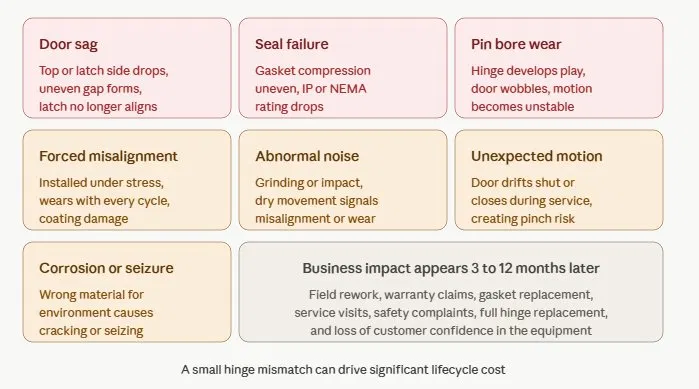
Die Auswirkungen auf den Geschäftsbetrieb können erheblich sein. Eine geringfügige Fehlausrichtung der Scharniere kann zu Nacharbeiten, Beschädigungen der Beschichtung, dem Austausch von Dichtungen, ungeplanten Wartungseinsätzen, Sicherheitsbeanstandungen und dem vollständigen Austausch der Scharniere führen.
Aus diesem Grund muss die Auswahl verdeckter Scharniere als technische Entscheidung betrachtet werden und nicht nur als Kaufentscheidung.
Was verdeckte Scharniere in industriellen Anwendungen auszeichnet
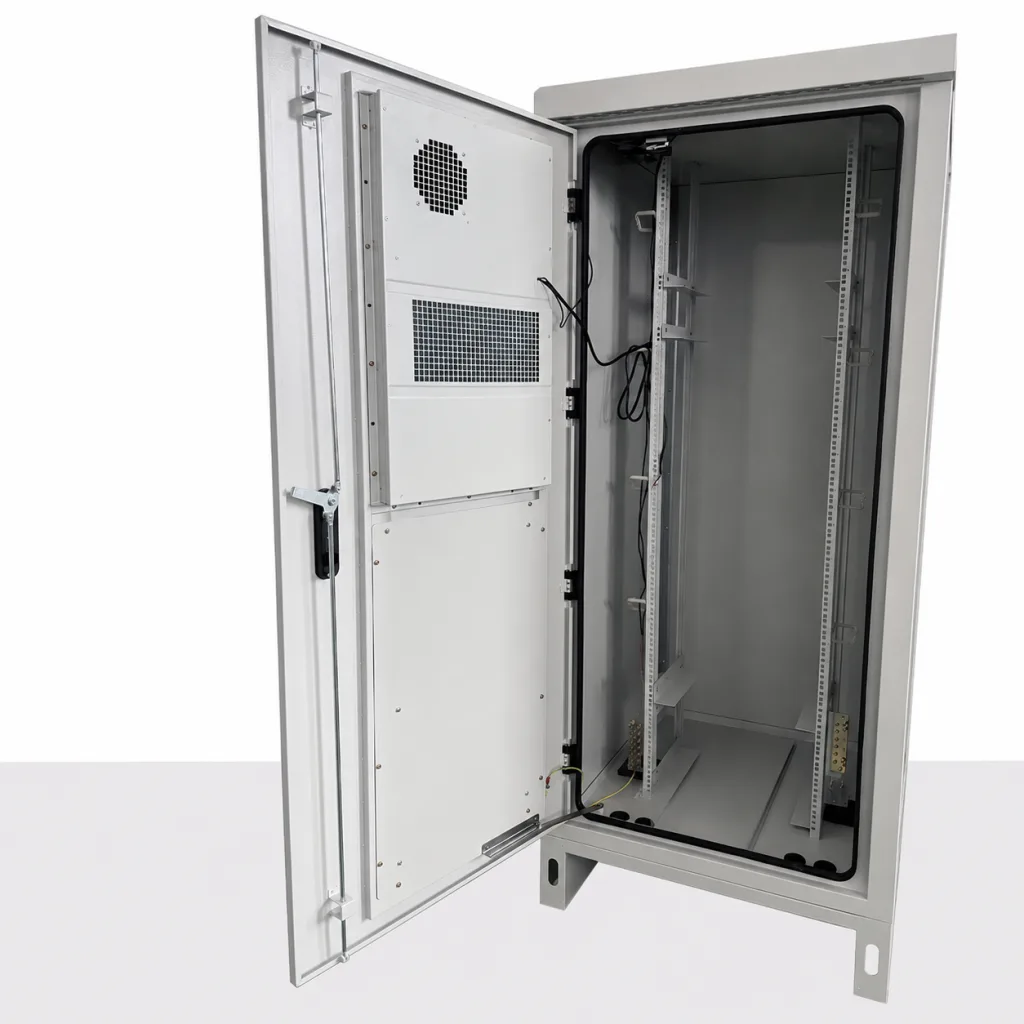
Ein verdecktes Scharnier unterscheidet sich von einem einfachen Aufsatzscharnier. Es ist in der Regel in die Tür und den Rahmen eingelassen, und viele Ausführungen nutzen einen Mehrgelenk- oder Mehrfachmechanismus, um die Tür beim Öffnen nach außen und um den Rahmen herum zu bewegen.
In industriellen Anwendungen sind drei Eigenschaften von entscheidender Bedeutung.
Vollständig verdeckte Installation
Der Scharnierkörper ist im Inneren der Tür, des Rahmens oder der Gerätekonstruktion verborgen. Dies verbessert das Erscheinungsbild und schränkt den Zugang zum Scharnier von außen ein, erfordert jedoch auch ausreichend Platz im Inneren für den Scharnierkörper und den Bewegungsbereich.
Wenn die Einbaufassung, die geschweißte Halterung oder die Blechaussparung nicht passgenau ist, kann das Scharnier bereits vor der Auslieferung an den Kunden aus der Ausrichtung geraten.
Mehrgelenkbewegung
Viele verdeckte Scharniere arbeiten mit einem Viergelenk- oder mehrachsigen Gestänge. Anstatt sich um einen einzigen sichtbaren Bolzen zu drehen, bewegt sich die Tür nach außen und öffnet sich dann. Dadurch kann die Tür den Rahmen, die Dichtung oder die umgebende Konstruktion freigeben.
Eine Mehrgelenkbewegung bedeutet jedoch auch, dass das Gelenk empfindlicher auf die Lastrichtung, Einbautoleranzen und die Rahmensteifigkeit reagiert.
3-Achsen-Verstellung
Industrielle verdeckte Scharniere lassen sich häufig in vertikaler, horizontaler und kompressionsbezogener Richtung verstellen. Dies ist bei der Probemontage, der Inbetriebnahme vor Ort und der Korrektur der Dichtungskompression von Nutzen.
Die Justierung sollte nicht dazu dienen, mangelhafte Konstruktion zu kaschieren. Sie sollte vielmehr dazu dienen, ein korrekt ausgelegtes Scharniersystem fein abzustimmen.
Für Standardproduktoptionen beginnen Sie mit unserem industrielle verdeckte Scharniere Bereich.
Geschäftliche Folgen von Türverwindungen, Dichtungsversagen und Fehlausrichtung
Ein defektes verdecktes Scharnier beeinträchtigt nicht nur die Bewegung der Tür, sondern kann das gesamte Beschlagsystem beeinträchtigen.
| Fehlermodus | Direktes Ergebnis | Mögliche Auswirkungen auf das Geschäft |
| Durchhängen der Tür | Ungleichmäßiger Spalt und schlechte Ausrichtung des Verschlusses | Nacharbeiten vor Ort, Reklamationen im Rahmen der Gewährleistung, Arbeitskosten für den Austausch |
| Verlust durch Dichtungskompression | Verminderte Zuverlässigkeit der IP- oder NEMA-Dichtung | Eindringen von Wasser oder Staub, elektrische Störungen, Ausfallzeiten |
| Verschleiß der Scharnierbohrung | Türflattern und instabile Bewegung | Kompletter Scharnieraustausch und außerplanmäßige Wartungsarbeiten |
| Stiftscherung oder Bruch | Gefahr des Losrutschens der Tür | Sicherheitsuntersuchung und Sachschäden |
| Verzerrung durch erzwungene Installation | Erhöhte Reibung und ungewöhnlicher Verschleiß | Nacharbeit, Beschädigungen der Beschichtung, Verzögerungen bei der Montage |
| Korrosion | Verformung, Rissbildung oder Festigkeitsverlust | Höhere Wiederbeschaffungskosten über die gesamte Lebensdauer |
Bei Außenschränken, Telekommunikationsgehäusen, Lebensmitteltechnik, Zugangsklappen für Reinräume und automatischen Maschinentüren können diese Probleme die Betriebszeit der Anlagen beeinträchtigen und das Vertrauen der Kunden erschüttern.
Ein verdecktes Scharnier sollte daher nicht nur aus optischen Gründen ausgewählt werden, sondern auch im Hinblick auf dauerhafte Ausrichtung, Belastbarkeit und Umweltbeständigkeit.
So wählen Sie das richtige verdeckte Scharnier aus
Die Wahl des richtigen verdeckten Scharniers hängt vom jeweiligen Türsystem ab. Techniker sollten vor der Freigabe eines Scharniers die Belastung, die Einschaltdauer, das Material, die Korrosionsbelastung, die Einbautoleranzen und die erforderlichen Normen prüfen.
Schritt 1: Berechnung der tatsächlichen Belastung und des dynamischen Moments
Ein häufiger Fehler ist es, ein Scharnier allein anhand der vom Hersteller angegebenen Tragfähigkeit auszuwählen. Die statische Tragfähigkeit reicht für Industrietore nicht aus. Die tatsächliche Belastung des Scharniers hängt ab von:
- Türgewicht
- Breite der Tür
- Abstand von der Scharnierachse zum Schwerpunkt
- Anzahl der Scharniere
- Öffnungshäufigkeit
- Bedienkraft
- Vibration
- Zusätzliche Komponenten wie Griffe, Glas, Isolierungen, Anzeigen oder Bedienelemente
| Vereinfachte Auswahlformel: Erforderliche Scharnierbelastung = Türmasse × Abstand von der Scharnierachse zum Schwerpunkt × Sicherheitsfaktor ÷ Anzahl der Scharniere |
Der Sicherheitsfaktor sollte Stoßbelastungen, Vibrationen, häufigen Betrieb und eine mögliche übermäßige Krafteinwirkung berücksichtigen. Für viele industrielle Anwendungen ist ein Sicherheitsfaktor von mindestens 1,5 ein praktischer Ausgangspunkt, wobei für Türen mit hoher Zykluszahl oder sicherheitskritische Türen ein Wert von 2 verwendet wird. Die endgültigen Werte sollten durch Tests bestätigt werden. Einen detaillierten Berechnungsablauf und ausgearbeitete Beispiele finden Sie in unserem Leitfaden unter Wie berechnet man die Belastung und das Drehmoment eines Scharniers?.
Eine dicke, isolierte Tür oder eine Tür mit zusätzlichen Bauteilen kann den Schwerpunkt nach außen verlagern und so das Biegemoment auf das Scharnier und die Befestigungsschrauben erhöhen. Dies ist ein Grund dafür, dass verdeckte Scharniere versagen können, selbst wenn das Türgewicht scheinbar innerhalb des angegebenen Bereichs liegt.
Um das Gewicht der Platte zu schätzen oder eine Empfehlung zur Scharnierkategorie zu erhalten, nutzen Sie unseren Plattengewicht-Rechner und Scharnierauswahl-Rechner als erster Screening-Schritt vor der abschließenden technischen Prüfung.
Entspricht der Norm EN 1935 oder den Anforderungen der Projektprüfung
Die Norm BS EN 1935 wird häufig zur Klassifizierung von einachsigen Scharnieren verwendet, die in der Baubeschlagtechnik zum Einsatz kommen. In industriellen Projekten kann sie zudem als nützliche Referenz für Belastungsklasse, Lebensdauer, Prüfmassen der Türen, Brandschutztauglichkeit, Korrosionsbeständigkeit und Sicherheitsklassifizierung dienen.
Verlassen Sie sich nicht allein auf Angaben des Lieferanten wie “für hohe Beanspruchung” oder “in Industriequalität”. Fragen Sie nach, welche Testdaten diese Behauptung stützen.
Zu den wichtigen Klassifizierungsfaktoren zählen:
| Parameter | Warum dies für Industrietore wichtig ist |
| Verwendungskategorie | Weist auf die Eignung für Anwendungen mit höherer Beanspruchung oder im Schwerlastbereich hin |
| Lebensdauerzyklen | Hilft beim Vergleich der zu erwartenden Lebensdauer bei wiederholtem Öffnen und Schließen |
| Masse der Testtür | Zeigt den bei den Klassifizierungsprüfungen verwendeten Massenwert an |
| Brandverhalten | Dies ist relevant, wenn die Tür Teil einer Brandschutzkonstruktion ist |
| Korrosionsbeständigkeit | Besonders geeignet für feuchte Umgebungen, den Außenbereich, Bereiche, die mit Wasser gereinigt werden, oder Umgebungen mit Chemikalien |
| Sicherheitsstufe | Geeignet für Einbruchschutz oder unbeaufsichtigte Geräte |
Falls für das Projekt Zertifizierungen nach EN 1935, ANSI/BHMA, UL, Brandschutzklassen, RoHS, REACH oder andere Nachweise erforderlich sind, geben Sie dies bitte in der Angebotsanfrage an. Gehen Sie nicht davon aus, dass jedes Modell eines verdeckten Scharniers über dieselbe Zertifizierung oder denselben Prüfbericht verfügt.
Material, Korrosionsschutz und Verträglichkeit prüfen
Die Materialauswahl sollte auf die Einsatzumgebung abgestimmt sein. Ein verdecktes Scharnier, das in einem sauberen Innenraumschrank verbaut wird, erfordert nicht dasselbe Material wie ein Scharnier, das an einem Gehäuse im Küstenbereich im Freien oder an einer Maschine für die chemische Reinigung zum Einsatz kommt.
| Material | Typische Umgebung | Hinweise zur Auswahl |
| verzinkter Stahl | Trockene Innenräume | Kostengünstig, aber mit begrenzter Korrosionsbeständigkeit |
| Edelstahl 304 | Allgemeine industrielle Umgebungen oder feuchte Umgebungen | Gute allgemeine Korrosionsbeständigkeit |
| Edelstahl 316 / 1.4401 | Einsatz im Freien, an der Küste, in chemischer Umgebung oder in nassem Umfeld | Bessere Korrosionsbeständigkeit in aggressiven Umgebungen |
| Druckguss aus einer Zinklegierung | Geräte für leichte bis mittlere Beanspruchung im Innenbereich | Erfordert eine geeignete Oberflächenbehandlung |
| Aluminiumlegierung | Leichte Türen oder Geräteabdeckungen | Festigkeit, Verschleißverhalten und Oberflächenschutz prüfen |
Für korrosive Umgebungen sollten Sie gegebenenfalls Informationen zum Salznebel-Test, Unterlagen zur Korrosionsbeständigkeit oder Werkstoffzertifikate anfordern. Vermeiden Sie vage Werkstoffbezeichnungen wie “Edelstahl” ohne Angabe der Güteklasse. Bei Industrieanlagen wirkt sich die Werkstoffgüte auf die Korrosionsbeständigkeit, die langfristige Zuverlässigkeit und die Kundenakzeptanz aus.
Installationsmethode und Toleranz überprüfen
Verdeckte Scharniere reagieren empfindlich auf die Genauigkeit der Montage. Schon ein kleiner Fehler bei der Einbautiefe, der Fräsposition, der Schweißausrichtung oder der Bohrungstoleranz kann zu einer dauerhaften seitlichen Belastung des Scharniermechanismus führen.
Für Blechtüren
Überprüfen Sie die Einbautiefe, die Türstärke, die Rahmensteifigkeit, die Schweiß- oder Nietmethode, den Abstand der Befestigungselemente, die Ausrichtung der Scharnieraufnahme, den Türspalt nach der Justierung und die Dichtungspressung.
Bei geschweißten verdeckten Scharnieren kann es durch Wärmeverformung zu einer Verschiebung der Scharnierachse kommen. Ein kontrolliertes Verfahren mit Heftschweißung und anschließender Überprüfung kann dazu beitragen, Fehlausrichtungen zu vermeiden.
Für Türen aus Holz, Verbundwerkstoff oder Paneelen
Überprüfen Sie die Abmessungen der Fräsvorlage, den Fräserdurchmesser, die Frästiefe, die Schraubenhaltekraft, den Abstand zur Türkante sowie die Anforderungen an Einlagen oder Verstärkungen.
Für Industriegehäuse
Prüfen Sie, ob das Scharnier noch ein vollständiges Öffnen der Tür, ein ordnungsgemäßes Einrasten der Verriegelung, eine gleichmäßige Dichtungspressung, den Zugang zu den Befestigungsschrauben, eine Nachjustierung nach dem Einbau sowie eine wiederholbare Ausrichtung nach Wartungsarbeiten ermöglicht.
Das Ziel besteht nicht nur darin, das Scharnier anzubringen. Das Ziel ist es, die Tür auch nach wiederholtem Gebrauch in der richtigen Position zu halten.
Anwendungsmatrix nach Gerätetyp
Unterschiedliche Gerätetüren erfordern unterschiedliche Prioritäten bei den verdeckten Scharnieren.
| Anmeldung | Empfohlene Richtung | Wichtige Parameter | Zu vermeidende Fallstricke |
| Schaltschrank | Industrielles verdecktes Scharnier mit sicherer Innenbefestigung | Türgewicht, IP/NEMA-Dichtung, Korrosionsbeständigkeit | Unter Vernachlässigung der Dichtungskompression und der dynamischen Belastung |
| Maschinenschutz | Verdecktes Scharnier oder drehmomentintegriert verdecktes Scharnier | Not-Aus-Bedarf, Vibration, Sicherheitszugang | Die Auswahl eines Scharniers allein nach dem Gewicht der Tür |
| Reinraumtür | Vollständig versenktes, verstellbares Scharnier | Glatte Oberflächen, Korrosionsbeständigkeit, Ausrichtung | Ausrichtung während der Installation erzwingen |
| Gerätetür | Hochbelastbares verdecktes Scharnier mit Mehrgelenkbewegung | Lebensdauerzyklen, Öffnungswinkel, Einstellung | Fehlende Sicherungsscheiben oder unzureichende Befestigungssteifigkeit |
| Außengehäuse | Verdecktes Scharnier aus Edelstahl | Werkstoff 304/316, Korrosionsbelastung, Abdichtung | Verwendung von verzinkten Scharnieren für den Innenbereich im Außenbereich |
| Tür für Baumaschinen | Verstärktes verdecktes Scharnier oder maßgefertigte Scharnierkonstruktion | Belastung, Stoß, Scharnierabstand, Sicherheitsfaktor | Missbrauch von Operatoren oder zufällige Beladung ignorieren |
Diese Matrix dient als Ausgangspunkt. Die endgültige Auswahl sollte sich nach der tatsächlichen Geometrie der Tür, ihrer Masse, der Umgebung und den Testanforderungen richten.
Häufige Fehler bei der Auswahl von verdeckten Scharnieren
Nur die Abmessungen lesen
Der Abstand der Befestigungslöcher und die Größe der Scharniere reichen nicht aus. Ingenieure sollten außerdem die Tragfähigkeit, die Lebensdauer, das Material, den Korrosionsschutz, den Einstellbereich und die Einbautoleranzen prüfen.
Behandlung statischer Lasten als dynamische Kapazität
Ein Scharnier hält eine Tür zwar bei einer statischen Prüfung, nutzt sich jedoch bei wiederholtem Öffnen, durch Vibrationen oder Stöße schnell ab.
Ignorieren der Einbautoleranz
Ein verdecktes Scharnier, das unter gewaltsamer Verformung eingebaut wird, nutzt sich schneller ab. Das Fräsen, Schweißen oder die Ausrichtung der Befestigungselemente muss kontrolliert erfolgen.
Die Wahl des falschen Materials
Edelstahl 304 mag für den allgemeinen Einsatz in feuchten Industrieumgebungen geeignet sein, doch in Küstengebieten, bei Kontakt mit Chemikalien oder in Umgebungen, in denen eine Hochdruckreinigung erforderlich ist, kann Edelstahl 316 oder eine andere korrosionsbeständige Lösung erforderlich sein.
Das Gefühl beim Öffnen der Tür und Geräusche
Ein trockenes Laufgeräusch, Knirschen, plötzliches Schließen oder ungewöhnliche Geräusche können auf eine Fehlausrichtung, unzureichende Schmierung oder inneren Verschleiß hindeuten.
Wartungszugriff ignorieren
Wenn das Scharnier nach dem Einbau nicht mehr überprüft, geschmiert oder eingestellt werden kann, erschwert dies die Wartung vor Ort.
Inspektions- und Wartungsplan
Ein regelmäßiger Inspektionsplan kann die Lebensdauer von verdeckten Scharnieren verlängern und dazu beitragen, Ausrichtungsprobleme zu erkennen, bevor sie zu Ausfällen führen.
| Häufigkeit | Artikel prüfen | Abnahmekriterien |
| Tägliche oder wöchentliche Sichtprüfung | Reibungsloses Öffnen und Schließen, ungewöhnliche Geräusche | Kein Verklemmen, kein Schleifen und keine plötzlichen Bewegungen |
| vierteljährlich | Festigkeit der Befestigungsschrauben und sichtbare Korrosion | Schrauben fest angezogen, keine sichtbaren Korrosionsspuren |
| Halbjährlich | Türspalt und Dichtungsdruck | Gleichmäßige Spalten und gleichmäßiger Anpressdruck |
| Jährlich | Verschleiß, Schmierung, Einstellung, Ausrichtung der Verriegelung | Kein messbares Durchhängen oder nennenswertes Spiel im Scharnier |
| Nach der Wartung | Ausrichtung der Türen und Anzugsmoment der Befestigungselemente | Die Tür schließt sanft und die Dichtung wird gleichmäßig zusammengedrückt |
Zu den nützlichen Prüfwerkzeugen gehören Messschieber oder Mikrometer, Fühlerlehre, eine helle Taschenlampe, ein Drehmomentschlüssel, eine Checkliste für Türspalte sowie eine Digitalkamera zur Dokumentation. In staubigen, feuchten, chemikalienbelasteten oder stark beanspruchten Umgebungen sollten die Inspektionsintervalle verkürzt werden.
Checkliste für die Angebotsanfrage zu verdeckten Scharnieren
Bevor Sie ein Angebot für verdeckte Scharniere anfordern, sollten Sie klare Vorgaben festlegen. Dies hilft dem Anbieter, das Scharnier richtig zu bewerten, anstatt Ihnen eine allgemeine Katalogoption anzubieten. Eine umfassendere Anleitung für die Anforderung von Angeboten für maßgefertigte Scharniere aller Art finden Sie in unserem kundenspezifische Scharniere für OEM-Geräte Leitfaden.
Informationen zur Tür
- Türhöhe, -breite, -stärke
- Türmaterial
- Gewicht der Tür
- Zusätzliche Elemente an der Tür
- Schwerpunkt, sofern bekannt
Betriebsbedingungen
- Installation im Innen- oder Außenbereich
- Temperaturbereich
- Luftfeuchtigkeit oder Kondensation
- Exposition an der Küste oder durch Chemikalien
- Staub, Ölnebel oder Nassreinigung
- Öffnungshäufigkeit
- Vibrationen oder Stößen ausgesetzt
Anforderungen an Scharniere (speziell für verdeckte Montage)
- Erforderlicher Öffnungswinkel
- Einbautiefe (Einbauprofiltiefe)
- Notwendigkeit einer 3-Achsen-Einstellung
- Notwendigkeit einer Kompressionseinstellung
- Anforderung an die Tragfähigkeit
- Zielwert für den Lebensdauerzyklus
- Anforderungen an die Korrosionsbeständigkeit
- Gegebenenfalls Brandschutz- oder Sicherheitsvorschriften
Details zur Installation
- Montageverfahren
- Bohrbild oder Fräsvorlage
- Anforderungen an das Schweißen
- Material der Tür/des Rahmens
- Dichtungsart
- Rastposition
- Einbautoleranz
- Erforderliche Unterlagen
Sollte die Gerätetür ungewöhnlichen Belastungen ausgesetzt sein, nur begrenzten Einbauraum bieten, einer hohen Schaltfrequenz unterliegen oder besonderen Konformitätsanforderungen genügen müssen, fügen Sie der Anfrage bitte Zeichnungen und Fotos bei.
Häufig gestellte Fragen
Was ist der Unterschied zwischen verdeckten und Aufputz-Scharnieren?
Ein verdecktes Scharnier ist in die Tür und den Rahmen eingelassen, sodass es bei geschlossener Tür nicht sichtbar ist. Ein Aufsatzscharnier sitzt an der Außenseite von Tür und Rahmen und hat sichtbare Gelenke. Verdeckte Scharniere sorgen für ein klareres Erscheinungsbild und ermöglichen eine 3-Achsen-Verstellung, erfordern jedoch eine präzisere Montage. Aufsatzscharniere sind einfacher zu montieren, bieten jedoch nur begrenzte Verstellmöglichkeiten.
Welches Türgewicht kann ein verdecktes Scharnier tragen?
Das hängt vom Scharniermodell, der Anzahl der Scharniere und dem Abstand zwischen der Achse und dem Schwerpunkt ab. Industrielle verdeckte Scharniere tragen in der Regel Türen mit einem Gewicht von einigen Kilogramm bis zu 80 kg oder mehr pro Paar. Die Dimensionierung sollte stets anhand der Lastanforderung (Masse × Abstand × Sicherheitsfaktor ÷ Anzahl der Scharniere) erfolgen, nicht allein anhand der angegebenen statischen Tragfähigkeit.
Verfügen verdeckte Scharniere für den industriellen Einsatz über eine 3-Achsen-Verstellung?
Viele verdeckte Scharniere für den industriellen Einsatz lassen sich nach der Montage in vertikaler und horizontaler Richtung sowie hinsichtlich der Dichtungspressung einstellen. Dies ist nützlich, um die Ausrichtung der Tür und die Anpressung der Dichtung bei der Inbetriebnahme fein abzustimmen. Die Einstellung dient dazu, ein korrekt ausgelegtes Scharnier fein abzustimmen, und nicht dazu, Montagefehler auszugleichen.
Was ist die EN 1935-Klassifizierung für Scharniere?
BS EN 1935 ist eine europäische Norm zur Klassifizierung von einachsigen Scharnieren, die in der Baubeschlagtechnik verwendet werden. Sie legt die Nutzungskategorie, die Lebensdauerzyklen, die Masse der Prüftür, die Brandschutztauglichkeit, die Korrosionsbeständigkeit und die Sicherheitsklasse fest. Für industrielle Projekte kann die Norm EN 1935 als nützliche Referenz dienen, doch können projektspezifische Prüfungen dennoch erforderlich sein.
Sollte ich für verdeckte Scharniere SUS304 oder SUS316 wählen?
SUS304 ist die Standardwahl für allgemeine industrielle Umgebungen und feuchte Umgebungen. SUS316 enthält einen Molybdänzusatz und ist für den Einsatz in Küstengebieten, in der chemischen Industrie oder in Umgebungen mit Hochdruckreinigung vorgesehen, in denen Chloride oder aggressive Reinigungsmittel vorhanden sind. Passen Sie die Werkstoffsorte an die Betriebsumgebung an, nicht nur an eine allgemeine ‘Edelstahl’-Spezifikation.
Abschließende Empfehlung
Bei Industrietoren liegt der Vorteil eines verdeckten Scharniers nicht nur in der verdeckten Montage. Der eigentliche Vorteil liegt in der langfristigen Ausrichtung des Tors, der Zuverlässigkeit der Dichtung, der Anlagensicherheit und dem geringeren Reparaturaufwand vor Ort.
Bei neuen Projekten sind vor der Auswahl des Scharniers die tatsächliche Belastung und das dynamische Moment zu berechnen. Die Prüfanforderungen sind an die Betriebsumgebung anzupassen. Vor der Freigabe sind die Werkstoffgüte, der Korrosionsschutz, die Montageart und der Einstellbereich zu überprüfen.
Zur Fehlerbehebung bei vorhandenen Geräten sollten Sie zunächst die Einbautiefe der Scharniere, das Anzugsmoment der Befestigungsschrauben, den Türspalt, den Anpressdruck der Dichtung und sichtbare Verschleißerscheinungen überprüfen. Wenn das Scharnier bereits Spiel aufweist oder die Tür über den Einstellbereich hinaus durchhängt, ist möglicherweise ein Austausch erforderlich.
Beschaffungsteams sollten ihre Kaufentscheidungen nicht allein nach Größe und Preis treffen. Fordern Sie die für das jeweilige Türsystem erforderlichen Klassifizierungen, Prüfdaten, Materialinformationen und Einbauvorschriften an.
| Unterstützung bei der Auswahl verdeckter Scharniere anfordern Wenn Sie verdeckte Scharniere für ein Industriegehäuse, eine Reinraumtür, einen Schaltschrank, eine Maschinenschutzvorrichtung oder eine Zugangsklappe für Geräte auswählen, teilen Sie uns bitte die Abmessungen, das Gewicht, das Material, die Einsatzumgebung und die Montageart Ihrer Tür mit. Unser Ingenieurteam hilft Ihnen gerne bei der Auswahl des Scharniertyps, der Belastbarkeit, des Materials und der Kompatibilität der Montage. Kontakt zu unseren Ingenieuren → |