サンプルテキスト
- +86 13720060320
- lanna@haitangs.com

溶接ヒンジ
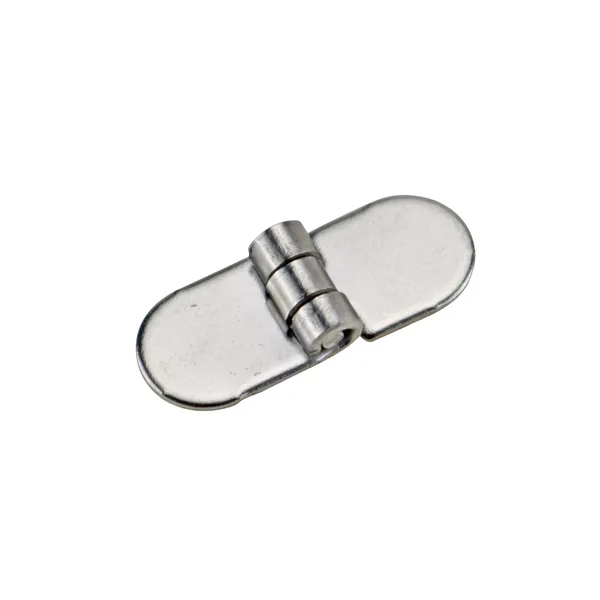
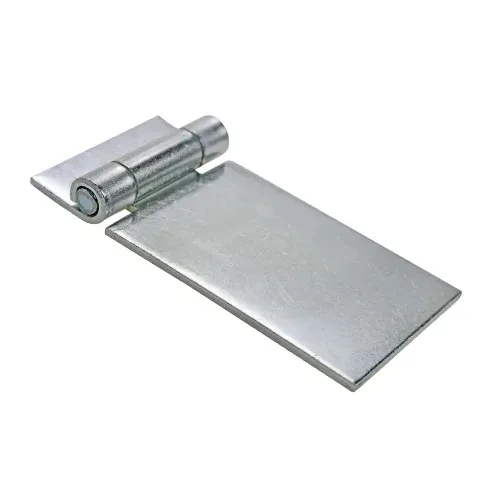
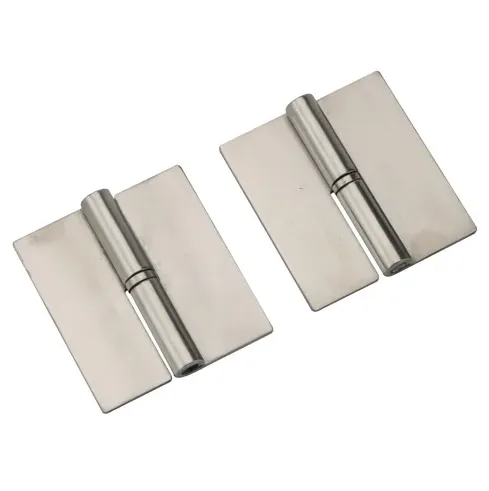
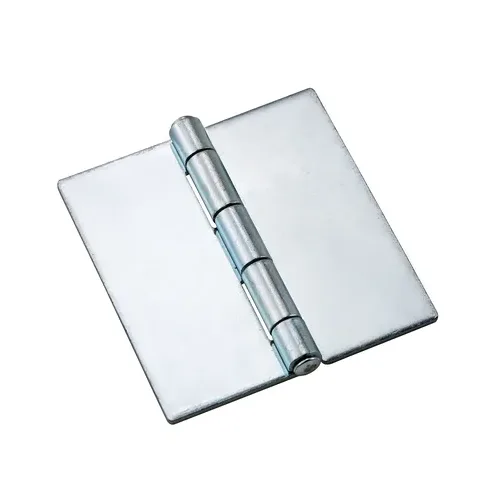
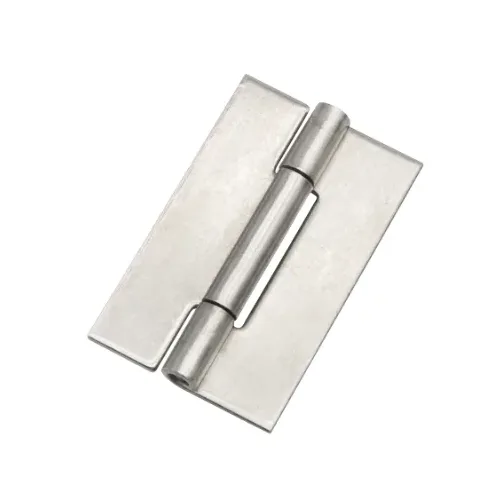

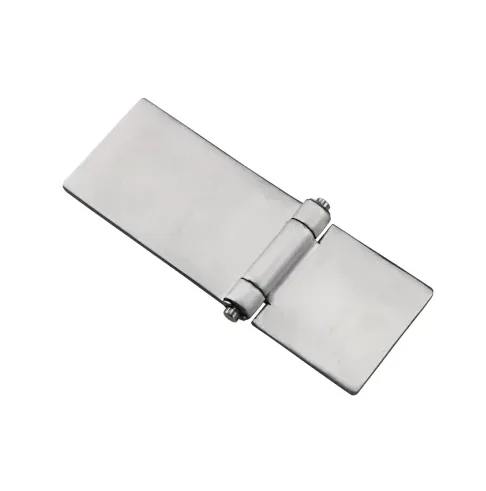
溶接ヒンジ are permanently-attached hinges designed for direct welding to the parent metal of doors, frames, gates, and structural enclosures — eliminating fastener holes, bolt heads, and the loosening risk that mechanical fasteners face under vibration and impact. The welded joint becomes a continuous metallurgical bond, often as strong as the surrounding steel itself. HSP manufactures 7+ weld-on hinge models in three main variants: pure no-hole butt weld-on hinges (the standard configuration), weld-on lift-off hinges with a removable pin, and weld-on flag hinges with offset leaves — all available in SUS 304 stainless steel and SPCC cold-rolled steel, in lengths from 25 mm compact designs to 185 mm long-leaf variants.
For steel fabricators, gate manufacturers, container builders, and heavy-equipment OEMs, weld-on hinge selection comes down to four factors: required leaf length matched to door size, material grade for the operating environment, weld compatibility with the parent metal, and the choice between pure butt weld-on, weld-on lift-off, or weld-on flag configurations. Drawing on 10+ years of supplying 産業用ヒンジソリューション to steel fabrication, marine, security gate, and heavy-equipment OEMs, our engineering team matches leaf geometry, material, and weld preparation to the application — including custom dimensions for OEM production.
What Are Weld-on Hinges?
A weld-on hinge has flat, undrilled leaves designed for direct fusion welding to a parent metal surface. Unlike bolt-on hinges (which require pre-drilled mounting holes and threaded fasteners), weld-on hinges fuse permanently to the substrate using MIG, TIG, or stick welding — producing a continuous metallurgical joint as strong as the surrounding steel.
This permanent attachment makes weld-on hinges the standard choice in heavy steel fabrication, structural gate construction, container and trailer manufacturing, and any application where mechanical fasteners would loosen under sustained vibration, impact, or thermal cycling. The welded joint also eliminates external fastener heads — giving a clean, uninterrupted exterior surface that is preferred for structural appearance and improved security (no exposed screws to remove from the outside).
- No mounting holes: Flat undrilled leaves designed exclusively for welded installation. No drilling, no tapping, no fasteners required during installation.
- Maximum joint strength: The welded joint reaches or exceeds the strength of the surrounding parent metal — making weld-on hinges the structurally strongest hinge attachment method.
- Vibration and impact resistance: No bolts to work loose under sustained vibration. Preferred for mining equipment, agricultural machinery, heavy transport, and structural gate applications.
- Clean exterior surface: No protruding fastener heads, no exposed screws — supports structural appearance and reduces tampering risk on security cabinets and exterior doors.
- Welding compatibility: Standard models compatible with MIG, TIG, and stick (MMA) welding processes. Filler material should match the hinge grade — particularly important when welding stainless steel hinges to stainless substrates.
- 材料: SUS 304 stainless steel (brushed, vibratory polished, or mirror finish) for marine, food machinery, and outdoor applications; SPCC cold-rolled steel (zinc galvanized) for indoor industrial and cost-sensitive fabrications.
HSP Weld-on Hinge Variants
HSP weld-on hinges are not a single product type — they span multiple structural configurations to suit different applications. Within the catalog, the main variants are:
- Pure no-hole weld-on (butt-style): The standard configuration — flat, symmetric leaves welded permanently to door and frame, with the pin fixed inside the knuckle. HSP offers compact (25.4 mm), small (50 mm), medium (81 mm), and long-leaf (155 mm and 185 mm) variants in SUS 304 stainless and SPCC carbon steel.
- Weld-on lift-off variants: Combine the permanent weld-on attachment with a removable pin design — allowing the door to be lifted off after installation. Used where a structurally welded mounting is required but the door must still be removable for maintenance.
- Weld-on flag variants: Combine the offset-leaf flag-hinge geometry with weld-on attachment — used on heavy steel gates, container doors, and structural enclosures where the flag’s vertical pin design supports gravity-retained installation on welded structures.
- Long-leaf weld-on variants: Extended leaf length (155–185 mm) for large doors, container panels, and gate fabrications where load is distributed across a long weld bead — improving alignment stability and load distribution.
- 表面仕上げ: Brushed, vibratory polished, mirror polished (SUS 304), and zinc galvanized (SPCC) — selected to match the surrounding fabrication’s finish and environment.
一般的なアプリケーション
- Industrial gates and security barriers: Heavy steel gates, security fencing doors, and perimeter access points where mechanical fasteners would be tampered with or loosened by repeated impact.
- Heavy equipment and machinery: Access covers, inspection hatches, and panel doors on construction, mining, and agricultural machinery — high-vibration environments where weld-on attachment outperforms bolted joints.
- Steel fabrication and structural enclosures: Custom-fabricated enclosures, generator housings, and transformer cabinets where welding is already standard practice during the fabrication process.
- Marine and offshore structures: Watertight doors, deck hatches, and access panels on vessels and offshore platforms — SUS 304 weld-on hinges provide corrosion resistance in chloride-laden environments.
- Container and trailer manufacturing: Shipping container doors, refrigerated trailer access panels, and modified-vehicle compartments where weld-on joints survive long-haul vibration and impact loads.
- Food machinery weld-on applications: Stainless steel food processing equipment where SUS 304 weld-on hinges with brushed or polished finish maintain hygienic surfaces without exposed fastener heads.
- Long-leaf piano-style applications: Doors and lids requiring long-bead welded attachment — HSP 155 mm and 185 mm models support these continuous-attachment installations.
How to Choose a Weld-on Hinge
Weld-on hinge selection requires matching leaf length to door size, material grade to environment, and the choice of variant (pure butt vs lift-off vs flag) to the operational requirement. Weld preparation and filler-material compatibility are also critical — particularly when welding stainless steel hinges to stainless substrates.
- Leaf length and door size: Match leaf length to door height and weight. Compact 25 mm and 50 mm leaves for small access panels and instrument cases; 81 mm medium leaves for standard cabinet and gate applications; 155–185 mm long leaves for large doors, container panels, and load-bearing gate fabrications.
- Variant selection: Choose pure butt weld-on for permanent non-removable doors; weld-on lift-off when the door must be removable after structural welding; weld-on flag for offset-leaf installations on heavy gates and container fabrications.
- Material grade: SUS 304 stainless steel for marine, food machinery, outdoor, and washdown environments; SPCC cold-rolled steel with zinc galvanizing for indoor industrial and cost-sensitive volume production. Material grade must match the parent metal for compatible welding.
- 溶接方法と溶加材 MIG、TIG、棒溶接はすべて、HSPウェルドオン・ヒンジに適合します。フィラーの材質は、ヒンジのグレードに合わせる必要があります。特に、異種のフィラーが溶接界面で腐食を引き起こす、ステンレスとステンレスの接合には重要です。.
- ドア1枚あたりのヒンジの数: 大きなドアや重いドアには、複数のヒンジに荷重を分散させます。一般的には、中程度のドアには2つ、重いゲートやロングスパンのパネルには3つ以上のヒンジを使用します。.
- ピンの直径: ピンの直径をドアの重量と期待されるサイクルに合わせます。ピンの直径が大きいほど、負荷容量が大きくなり、激しい使用でもサイクル寿命が長くなります。.
品質検証
溶接ヒンジの各バッチは2次元寸法検査で検証されます。特にリーフの平面度とピンの同心度は、溶接後の正確なアライメントに不可欠です。引張試験と荷重試験でピンの強度を確認し、専用リグを使用した疲労サイクル試験で、繰り返される動きの下での長期間の動作を確認します。ASTM B117に基づく塩水噴霧試験は、SUS 304および亜鉛亜鉛メッキ製品で実施されます。表面仕上げ検査は、取り付け後の研磨が不可能なステンレス製製品の一貫性を確認します。.
溶接式蝶番とボルト式蝶番の比較
溶接ヒンジ 最大限の接合強度、耐振動性、耐タンパー性が最も重要な部分に選ばれています。. ボルトオン・ヘビーデューティ・ヒンジ メカニカル・ファスナーを使用する - 現場での設置、交換可能性、調整可能性が、ジョイントの永続性よりも重要な場合に選択される。.
| 選択要因 | 溶接ヒンジ | ボルトオン工業用ヒンジ |
|---|---|---|
| アタッチメント方式 | 溶接(永久金属結合) | ボルト締め/ネジ締め(メカニカルファスナー) |
| ジョイント強度 | 周囲の鋼材と同等 | ファスナーのサイズとプレテンションによる制限 |
| 耐振動性 | ファスナーを緩める必要がない | スレッドロッキングコンパウンドまたはロックワッシャーが必要 |
| インストール | 溶接技術と設備が必要 | 標準的なハンドツールにより、現場での設置がより迅速に |
| フィールド交換 | 切断と再溶接が必要 | 直接交換、ネジを外して交換 |
| セキュリティ/改ざん | カットしないと取り外せない | アクセス可能なファスナーは取り外し可能 |
| 最高のアプリケーション | スチール加工、ゲート、コンテナ、船舶 | キャビネットドア、マシンガード、交換可能パネル |
よくある質問
ウェルドオンヒンジとは何ですか?
ウェルドオン・ヒンジは、ドアやフレームの母材に直接溶接するためだけに設計された、穴の開いていない平らなリーフを備えています。ボルトオンヒンジとは異なり、溶接ヒンジには取り付け穴がありません。MIG、TIG、または棒溶接で母材に永久的に融合し、連続的な冶金的結合を形成します。.
HSPウェルドオン・ヒンジに対応する溶接方法は?
HSPウェルドオン・ヒンジは、MIG、TIG、スティック(MMA)溶接に対応しています。適切な溶接方法は、母材の厚み、ヒンジのグレード、加工環境によって異なります。フィラー材は、ヒンジの材種に合わせる必要があります。溶接部の腐食を防ぐため、ステンレスとステンレスの接合には特に重要です。.
溶接ヒンジはステンレス鋼製もありますか?
はい。HSPは、船舶、食品機械、洗浄、屋外用にSUS304ステンレス鋼、屋内工業用やコスト重視の大量生産用にSPCC冷間圧延鋼(亜鉛メッキ)の溶接式ヒンジを供給しています。フィラー材がヒンジのグレードに適合していることをご確認ください。.
純粋な溶接式ヒンジと溶接式リフトオフ・ヒンジの違いは何ですか?
純粋な溶接式ヒンジは、ナックルの内側に固定ピンがあり、一度溶接された扉は切断しなければ取り外せません。ウェルドオン・リフトオフ・ヒンジは、取り外し可能なピンが付いており、取り付け後に扉を持ち上げて取り外すことができます。永久的な設置には純粋なウェルドオンを、修理のためにドアを取り外す必要がある場合はウェルドオン・リフトオフをお選びください。.
溶接ヒンジはアルミ構造にも使用できますか?
スチール製ヒンジをアルミニウムに直接溶接するには、異種金属専門の溶接技術が必要で、信頼性の高い接合部が得られない場合があります。アルミニウム製ヒンジの場合は、アルミニウム溶接ヒンジをご指定いただくか、アルミニウム対応のファスナーを使用したボルトオンヒンジをお使いください。具体的なアルミニウム・アプリケーションのガイダンスについては、当社のエンジニアリング・チームにお問い合わせください。.
葉の長さはどのくらいを選べばいいのでしょうか?
リーフの長さをドアサイズに合わせる:小型のアクセスパネルや計器ケースにはコンパクトな25mmと50mm、標準的なキャビネットやゲート用途には81mmのミディアム、大型ドアやコンテナパネル、長い溶接継ぎ目に荷重を分散することでアライメントの安定性が向上するロングビード構造溶接部には155~185mmのロングリーフ。.
ウェルドオン・ヒンジのOEM生産は可能ですか?
はい。リーフ寸法、ピン径、ナックル形状、材質、表面仕上げは、OEM注文にて対応可能です。お客様は図面またはサンプル要件を提供し、サンプルは通常10営業日以内に準備されます。生産MOQは1,000個から。. エンジニアリングチームへのお問い合わせ テクニカルサポート.