-
+86 13720060320
-
lanna@haitangs.com

Drehmomentgelenk für medizinische Monitorarme: Spezifikationshinweise
Ein Monitorarm für medizinische Geräte benötigt ein Drehmomentgelenk – ein Reibungsgelenk, das den Bildschirm in jedem beliebigen Winkel hält, ohne dass eine Arretierung oder eine Gasfeder erforderlich ist. Die eigentliche Herausforderung besteht darin, das Halte-Drehmoment auf die maximale Momentbelastung abzustimmen und sicherzustellen, dass es den täglichen Verstellungen und der routinemäßigen Desinfektion standhält. Ein frei schwingendes Scharnier kann dies nicht leisten: Der Bildschirm verrutscht, hängt durch oder fühlt sich locker an, was die Behandlung unterbricht und für den Hersteller zu Garantieansprüchen führt. Auf dieser Seite erfahren Sie, was speziell für medizinische Anwendungen zu beachten ist; allgemeine Informationen zu allen Scharniertypen finden Sie in unserem Leitfaden unter So wählen Sie ein Industriescharnier aus.
In einem Krankenhaus ist der Monitorarm Teil des Arbeitsablaufs und kein bloßes Zubehör. Eine Pflegekraft muss den Bildschirm am Krankenbett möglicherweise Dutzende Male pro Schicht neu ausrichten; ein OP-Bildschirm muss genau dort bleiben, wo er eingestellt wurde; ein Telemedizin-Wagen wird ständig bewegt. Das Scharnier muss die Position halten, einem Verrutschen widerstehen und auch nach Tausenden von Zyklen noch leichtgängig sein – und dabei das Abwischen mit Desinfektionsmitteln aushalten, die die Oberflächen angreifen. Da der Bildschirm vom Drehpunkt aus freitragend ist, ist die effektive Belastung am Scharnier viel höher als das reine Gewicht des Bildschirms; daher muss die Spezifikation das gesamte Drehmoment widerspiegeln, nicht die Masse.
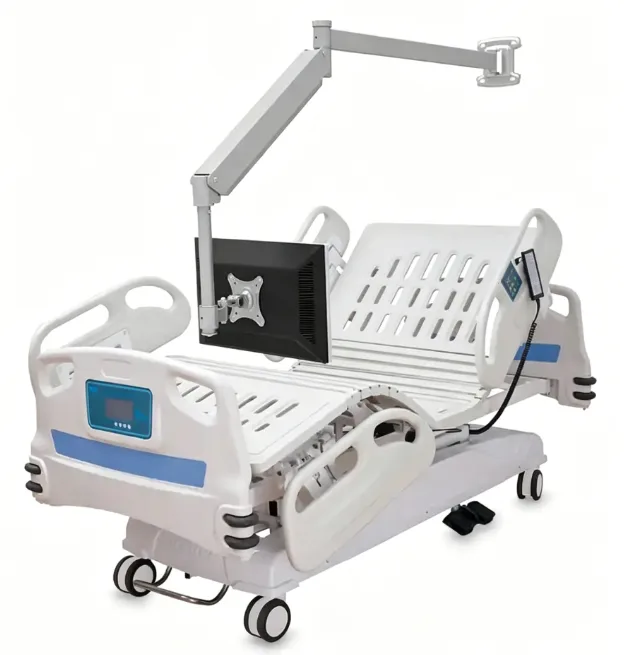
Kurzanleitung zur Auswahl nach Anwendungsbereich
Nicht jeder Monitorarm für medizinische Geräte benötigt dasselbe Gelenk. Wählen Sie den Typ entsprechend dem Anwendungsfall aus und passen Sie ihn dann an die tatsächliche Belastung und Geometrie an.
| Anmeldung | Typische Priorität | Gängiger Drehmomentansatz |
|---|---|---|
| Bettseitiger Monitor / Stationsmonitor | Häufiges Umlagern, leichtes Gefühl | Mäßiges Drehmoment, sanfter Anfahrwiderstand; oft einstellbar |
| OP / Operationsanzeige | Felsenfester Halt, kein Verrutschen | Höheres Drehmoment, strenge Begrenzung des Axialspiels |
| Telemedizin / mobiler Wagen | Bewegung, Vibration, Reinigung | Langlebiges Material, korrosionsbeständig, angenehmes Griffgefühl |
| Bereich Diagnostik/Bildgebung | Präzise Positionierung, lange Lebensdauer | Stabile Drehmomentkurve, hohe Zyklusbeständigkeit |
Da die Belastung innerhalb einer Produktfamilie oft variiert oder sich im Laufe der Programmentwicklung ändert, kommen bei medizinischen Monitorarmen häufig einstellbares Drehmomentscharnier So lässt sich das Spielgefühl für jede Version individuell anpassen – wobei die Einstellungen dokumentiert und gesperrt werden, damit die Konsistenz der Einheiten gewährleistet bleibt.
Was ist anzugeben (medizinische Angaben)
Ein Drehmomentwert allein ist keine Spezifikation. Bei einem medizinischen Monitorarm müssen das Gewicht und der Schwerpunkt des Monitors, die Armlänge vom Drehpunkt bis zur Last, der erforderliche Bewegungsbereich, das akzeptable Losbrechmoment, die Reinigungsumgebung sowie die Befestigungsschnittstelle definiert werden. Zwei Leistungsmerkmale sind hier wichtiger als anderswo:
- Losreißmoment vs. Laufmoment: Der Anfahrmoment ist die Kraft, die die Bewegung in Gang setzt, das Laufmoment ist die Kraft, die sie aufrechterhält. Ist das Anfahrmoment zu hoch, fühlt sich der Arm ruckartig an; sinkt das Laufmoment zu stark ab, wirkt das Bild instabil. Für den klinischen Einsatz sind ein gleichmäßiger und vorhersehbarer Lauf ebenso wichtig wie der Nennwert.
- Axiales Spiel: Seitliche Bewegungen am Drehpunkt führen zu sichtbaren Bildverwacklungen auf dem Bildschirm, was den Eindruck einer unzuverlässigen Ausrüstung vermittelt und das Vertrauen der Nutzer untergräbt. Eine präzise Steuerung des Drehpunkts ist in der Medizin eine Priorität und keine Nebensache.
Zwei weitere Faktoren gelten für alle Drehmomentscharniere; überprüfen Sie diese daher, aber leiten Sie sie hier nicht erneut her: Lebensdauer und Drehmomentbeständigkeit — Das Scharnier muss nach den erwarteten Zyklen noch halten und darf diese nicht nur überstehen (siehe die Leitfaden zur Lebensdauer von Drehmomentgelenken); und fest eingestellt vs. einstellbar — fest für ein unveränderliches Design, anpassbar für sich weiterentwickelnde oder variierende Programme (siehe die feste vs. einstellbare Führung).
Reinigungsverträglichkeit, Montage und Kabelführung
Hier unterscheiden sich medizinische Arme am stärksten von gewöhnlichen Geräten. Der Arm wird wiederholt mit Krankenhausdesinfektionsmitteln abgewischt, daher spielen Oberflächenbeschaffenheit, Korrosionsbeständigkeit und die verwendeten Materialien eine entscheidende Rolle. Eloxiertes Aluminium eignet sich für manche Konstruktionen, doch Edelstahl ist bei aggressiver Reinigung im Allgemeinen robuster; beschichteter Stahl ist eine ungeeignete Wahl, wenn mit regelmäßiger Einwirkung von Chemikalien zu rechnen ist. Bitten Sie den Lieferanten, ausdrücklich anzugeben, ob die Materialien der Scharniere mit gängigen Krankenhausreinigungsmitteln kompatibel sind – wenn die Antwort vage ist, geht das Risiko auf Sie über.
Die Befestigung und die Kabelführung entscheiden darüber, ob sich der Arm stabil anfühlt. Jede Lockerheit im Befestigungssystem (Durchgangsschraube, Flansch oder Sonderhalterung) führt zu einem Wackeln, das als Versagen des Scharniers wahrgenommen wird, selbst wenn das Scharnier einwandfrei funktioniert. Und da bei Monitorarmen Video- und Stromkabel durch das Drehgelenk geführt werden, kann das Gelenk nicht den gesamten zentralen Raum einnehmen – planen Sie die Kabelführung von Anfang an, nicht erst, nachdem das Gelenk ausgewählt wurde.
Compliance- und Beschaffungskontrollen
Bei einem medizinisch relevanten Produkt ist die Dokumentation ebenso wichtig wie die mechanische Leistungsfähigkeit. Erwarten Sie vom Lieferanten RoHS- und REACH-Erklärungen, die Rückverfolgbarkeit der Materialien sowie Prüfnachweise für die Drehmomentbeständigkeit und die Umweltbeständigkeit. “Medical Grade” ist kein Marketingbegriff – er sollte durch Materialdaten und Prüfergebnisse untermauert sein. Fragen Sie beim Vergleich von Lieferanten: Wie sieht die Drehmomentkurve über den gesamten Betriebsbereich aus? Wie verhält sich das Produkt nach wiederholten Zyklen? Welche Materialien kommen in der Reibungsfläche zum Einsatz? Wie reagiert es auf Reinigungschemikalien? Ist das Drehmoment fest oder einstellbar? Und kann der Lieferant Qualität und Liefermenge über das gesamte Programm hinweg gewährleisten? Ein hervorragendes Scharnier, das nicht konsistent geliefert werden kann, stellt ein Programmrisiko dar; behandeln Sie es daher als Lebenszykluskomponente und nicht als Standardteil.
Die Fehler, die bei Monitorarm-Konstruktionen immer wieder auftreten, sind vorhersehbar: zu geringes Drehmoment (Durchhängen im praktischen Einsatz), zu hohes Drehmoment (zu schwergängig und störend), vernachlässigte Kabelführung (was sich in Problemen mit dem Scharnier äußert) und Materialien, die bei der Reinigung Schaden nehmen (Drehmomentverlust oder Korrosion). Richtig ausgeführt, ist das Scharnier unsichtbar – der Benutzer bewegt den Bildschirm, lässt ihn los, und er bleibt ohne Verrutschen, Herabfallen oder Wackeln an Ort und Stelle. Teilen Sie uns das Gewicht Ihres Monitors, die Armlänge, den Bewegungsbereich, die Zielzyklenanzahl und Ihre Reinigungsroutine mit und unser Ingenieurteam kann das Scharnier an die jeweilige Anwendung anpassen.
FAQ
Warum benötigt ein Monitorarm für medizinische Geräte ein Drehgelenk anstelle eines Standardgelenks?
Ein herkömmliches Scharnier lässt sich frei schwenken und kann den Bildschirm nicht in einem festgelegten Winkel arretieren. Ein Drehmomentscharnier sorgt durch kontrollierte Reibung dafür, dass der Monitor ohne Arretierung oder Gasfeder in der eingestellten Position bleibt – dies ist unerlässlich, wenn der Bildschirm mehrmals täglich neu ausgerichtet wird und während der Pflege nicht verrutschen darf.
Wie viel Drehmoment benötigt das Scharnier eines medizinischen Monitorarms?
Es hängt vom Gewicht des Monitors, der Armlänge vom Drehpunkt bis zur Last und der Anzahl der Scharniere ab, die die Last tragen – entscheidend ist das Gesamtmoment, nicht nur das Gewicht des Bildschirms. Ein weit vom Drehpunkt entfernt montierter Bildschirm benötigt weitaus mehr Drehmoment, als seine Masse vermuten lässt; daher sollte die Dimensionierung anhand der Geometrie und nicht anhand des Gewichts erfolgen.
Sind Drehgelenke für medizinische Monitorarme reinigungsbeständig?
Das ist möglich, sofern das Material für die Desinfektionsroutine geeignet ist. Edelstahl ist im Allgemeinen widerstandsfähiger als beschichteter Stahl, wenn er wiederholt einer klinischen Reinigung unterzogen wird. Bitten Sie den Lieferanten, die Materialverträglichkeit mit gängigen Reinigungsmitteln zu bestätigen und RoHS- sowie REACH-Erklärungen vorzulegen.
Sollte ein Monitorarm für medizinische Zwecke mit einem festen oder einem verstellbaren Drehgelenk ausgestattet sein?
Ein einstellbares Drehmoment ist üblich, da sich das Gewicht und das Handgefühl des Bildschirms innerhalb einer Produktfamilie oft unterscheiden oder sich im Laufe der Produktentwicklung ändern und das Scharnier somit für jede einzelne Baugruppe angepasst werden kann. Verwenden Sie ein festes Drehmoment, wenn das Design endgültig festgelegt ist und jedes Gerät das gleiche Handgefühl aufweisen soll. Dokumentieren und sichern Sie alle einstellbaren Werte, damit die Geräte einheitlich bleiben.