-
+86 13720060320
-
lanna@haitangs.com

So beschaffen Sie Industriescharniere | Einkaufsleitfaden für OEM-Käufer
Die erfolgreiche Beschaffung von Industriescharnieren ist ein Prozess und keine reine Preisvergleichsmaßnahme: Definieren Sie die Anforderungen, suchen und prüfen Sie einen Hersteller, der seine Kompetenz nachweisen kann, fordern Sie ein Muster an und prüfen Sie dieses, und sichern Sie sich schließlich die Qualität durch die entsprechenden Unterlagen, bevor Sie den Produktionsstart genehmigen. Die Einkäufer, die dabei den Kürzeren ziehen, sind fast immer diejenigen, die einen Schritt auslassen – meist die Musterprüfung. Dieser Leitfaden führt Beschaffungsteams, OEM-Einkäufer und Projektmanager durch den gesamten Beschaffungsprozess. Es geht um So kaufen Sie ein, und nicht, welches Scharnier Sie wählen sollen – falls Sie sich noch für einen Scharniertyp entscheiden müssen, tun Sie das zuerst und nutzen Sie dann diese Anleitung, um das passende Scharnier zu finden.
Kurze Antwort: Um industrielle Scharniere zu beschaffen, sollten Sie zunächst die Anwendung definieren, Ladung, Material, Oberflächenbeschaffenheit, Menge und Dokumentationsanforderungen. Anschließend sollten Sie die Hersteller anhand ihrer nachgewiesenen Produktionskapazitäten in die engere Wahl nehmen, eine vollständige Angebotsanfrage versenden, Muster anfordern und an der tatsächlichen Baugruppe testen, Materialzertifikate und Prüfberichte überprüfen und den Produktionsauftrag erst erteilen, nachdem die Mindestbestellmenge, die Vorlaufzeit, die Bedingungen für den Werkzeugbau und der Lieferplan vereinbart wurden.
Dieser Leitfaden richtet sich an Beschaffungsteams, Einkäufer bei Erstausrüstern (OEM) und Projektmanager, die industrielle Scharniere direkt von einem echten Hersteller beziehen möchten und nicht nur Katalogpreise vergleichen wollen.
Schritt 1 – Legen Sie Ihre Anforderungen fest, bevor Sie einkaufen
Die Beschaffung beginnt bereits, bevor Sie Kontakt zu jemandem aufnehmen. Ein Lieferant kann nur auf der Grundlage einer genau definierten Anwendung ein präzises Angebot unterbreiten. Legen Sie daher zunächst fest, welche Anforderungen an das Scharnier gestellt werden – Belastungs- und Bewegungsbedingungen, Einsatzumgebung, Oberflächenbeschaffenheit und Stückzahl –, bevor Sie einen Preis anfragen. An dieser Stelle fällt auch die Entscheidung für den Typ: Wenn Sie noch nicht festgelegt haben, welche Scharnierfamilie für den Auftrag benötigt wird, handelt es sich um eine Auswahlfrage, die im Leitfaden zur Auswahl von Industrie-Scharnieren, und nicht um die Beschaffung. Wenn man mit einem klar definierten Bedarf auf den Markt geht, unterscheidet sich ein Angebot, auf das man reagieren kann, deutlich von einer Woche langem Hin und Her.
Schritt 2 – Hersteller anhand ihrer tatsächlichen Leistungsfähigkeit in die engere Wahl nehmen
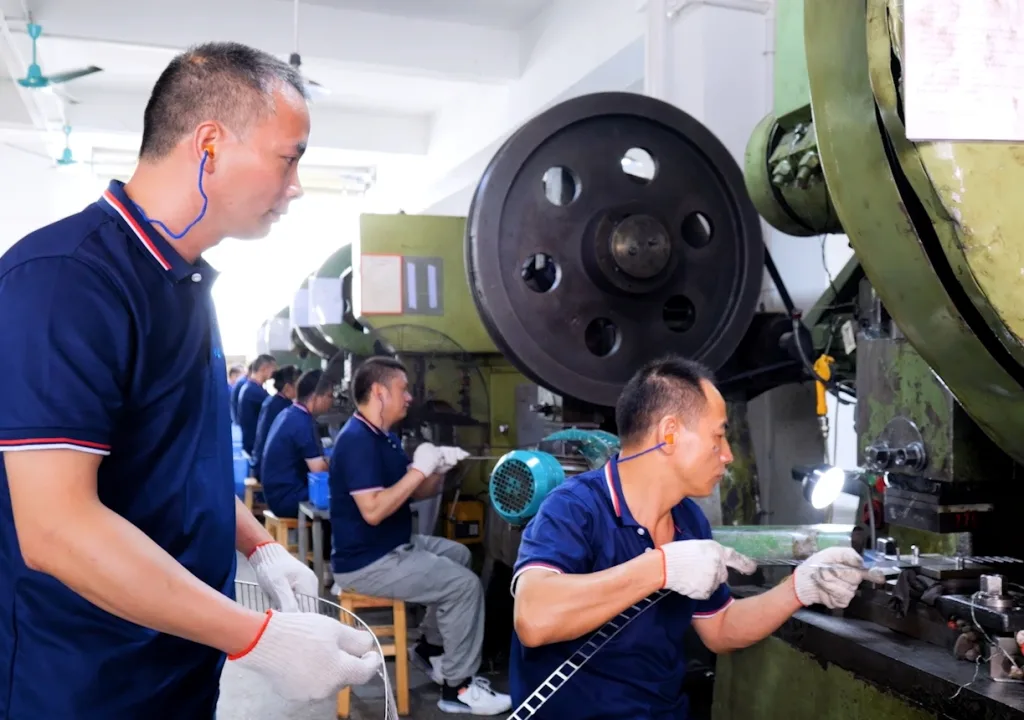
Nicht jeder “Scharnierlieferant” ist auch ein Hersteller, und dieser Unterschied ist entscheidend für Qualität, Preis und Sonderanfertigungen. Erstellen Sie eine Auswahlliste auf der Grundlage von Fertigungskapazitäten für industrielle Scharniere Sie können Folgendes überprüfen: Stellen sie den von Ihnen benötigten Typ her oder vertreiben sie ihn nur? Können sie eine echte Produktionsstätte und eine eigene Fertigung vorweisen? Welche Prüfungen können sie durchführen – Maß-, Belastungs-, Ermüdungszyklus- und Korrosionsprüfungen? Und welche Zertifizierungen und Unterlagen können sie vorlegen? Als Hersteller betreiben wir einen nach ISO 9001 zertifizierten Betrieb mit einer Fläche von rund 7.000 m² und vier hauseigenen Prüfstationen – optische 2D-Messung, Zug- und Belastungsprüfung, Ermüdungszyklusprüfung sowie Salznebelprüfung nach ASTM B117 – und beliefern Kunden in mehr als 55 Ländern; Es geht nicht um die Zahlen an sich, sondern darum, dass ein echter Hersteller dieses Leistungsniveau vorweisen kann, während ein Händler dazu nicht in der Lage ist. Wenn Einkäufer einen Lieferanten allein nach dem Preis beurteilen, ohne dessen Leistungsfähigkeit zu berücksichtigen, erhalten sie am Ende Scharniere, die auf dem Papier den Anforderungen genügen, im Einsatz jedoch versagen.
Bevor Sie einen Hersteller in die engere Wahl ziehen, bitten Sie ihn, Folgendes zu demonstrieren:
CHECKLISTE ZUR HERSTELLERQUALIFIZIERUNG
------------------------------------
[ ] Fotos oder Videos der Produktionsstätte (tatsächliche Anlage)
[ ] Eigenfertigung, kein Weiterverkauf
[ ] ISO 9001-Zertifikat
[ ] Fähigkeit zur Ausstellung von Materialzertifikaten
[ ] Fähigkeit zur Durchführung von Belastungs- und Ermüdungszyklusprüfungen
[ ] Fähigkeit zur Durchführung von Salznebelprüfungen (ASTM B117)
[ ] Erfahrung mit Exporten in Ihren Markt
[ ] Lieferzeit für Muster
[ ] Fähigkeit zur Herstellung kundenspezifischer Werkzeuge
Schritt 3 – Senden Sie eine vollständige Angebotsanfrage
Mit einer Auswahlliste in der Hand hängt die Qualität Ihrer Angebote nun von der Qualität Ihrer Angebotsanfrage ab. Vergewissern Sie sich, dass die OEM- und ODM-Fertigungsoptionen mit jedem in die engere Wahl gekommenen Lieferanten, bevor Sie ein Angebot anfordern. Eine Angebotsanfrage, in der Belastung, Geometrie, Leistungsanforderungen, Umgebungsbedingungen, Stückzahl und Dokumentationsbedarf angegeben sind, führt gleich beim ersten Mal zu einem genauen Preis; eine Anfrage, in der diese Angaben fehlen, führt zu einer Schätzung oder einer Liste von Fragen. Da dieser Schritt eigene Details beinhaltet, die es zu beachten gilt, behandeln wir ihn separat im Leitfaden für die Angebotsanfrage in 5 Schritten — Diese Vorgehensweise gilt für alle industriellen Scharniere, nicht nur für Drehmomentscharniere. Das Ziel in dieser Phase sind vergleichbare, präzise Angebote, nicht der niedrigste Preis.
Schritt 4 – Fordern Sie stets ein Muster an und prüfen Sie es
Dies ist der Schritt, den Einkäufer am häufigsten überspringen, und er ist derjenige, der die kostspieligsten Fehler verursacht. Unserer Erfahrung nach ist der häufigste Fehler bei der Beschaffung, einen Serienauftrag zu erteilen, ohne zuvor ein Muster zu bestellen – man verlässt sich auf eine Zeichnung, ein Katalogfoto oder einen niedrigen Preis und stellt dann am fertigen Produkt fest, dass das Scharnier verrutscht, klemmt, sich falsch anfühlt oder nicht passt. Ein Muster kostet wenig und nimmt kaum Zeit in Anspruch; bei uns beträgt die Lieferzeit für ein Muster etwa 10 Tage. Passen Sie es an die tatsächliche Baugruppe an – die echte Tür, den Rahmen, die Verkleidung und die Verkabelung – und vergewissern Sie sich, dass es einwandfrei funktioniert, bevor Sie sich auf eine Serienproduktion festlegen. Ein Scharnier, das auf dem Papier passt, kann im Produkt dennoch falsch sein, und anhand des Musters können Sie das kostengünstig herausfinden, anstatt später teure Fehler zu machen.
Schritt 5 – Dokumentation und Einhaltung der Vorschriften überprüfen
Bei jedem OEM-Programm gehören die Unterlagen zum Bauteil dazu. Vergewissern Sie sich vor Produktionsbeginn, dass der Lieferant alles bereitstellen kann, was Ihr Prozess und Ihr Markt erfordern – Werkstoffzeugnisse, die die Güteklasse belegen, Unterlagen zum Qualitätsmanagementsystem nach ISO 9001 sowie Prüfberichte zu Belastbarkeit, Lebensdauer oder Salznebelbeständigkeit. All diese Dokumente stellen wir selbstverständlich zur Verfügung, und ein kompetenter Hersteller sollte nicht zögern, sie vorzulegen; ein Lieferant, der keine Werkstoffzertifikate oder Prüfberichte vorweisen kann, gibt damit einen Hinweis darauf, wie die Teile hergestellt werden. Wenn die Korrosionsbeständigkeit entscheidend ist, überprüfen Sie die Werkstoffnachweise besonders genau – die Entscheidung über die Werkstoffgüte selbst wird im Leitfaden: Edelstahl 304 vs. 316.
Beschaffung von maßgefertigten Scharnieren: Der Werkzeugbau
Wenn ein bestehendes Produkt die Anforderungen nicht erfüllen kann und der Kunde einen echten Sonderwunsch hat, wechselt der Beschaffungsprozess von der Auswahl zur Entwicklung, und der Ablauf ist wie folgt: Zeichnung, Bestätigung, Werkzeugbau, Muster, Produktion. Der Schritt des Werkzeugbaus (Formenbau) ist derjenige, der den größten Zeitaufwand verursacht – bei uns dauert der Werkzeugbau etwa 20 Tage –, daher sollte er von Anfang an in den Zeitplan einbezogen werden und nicht erst spät entdeckt werden. Die Werkzeugfertigung sollte nur dann in Angriff genommen werden, wenn ein Standardprodukt die Anforderungen wirklich nicht erfüllt; wenn ein bestehendes Modell passt, spart dessen Verwendung sowohl Werkzeugkosten als auch Vorlaufzeit. Planen Sie ein kundenspezifisches Programm unter Berücksichtigung dieser Gegebenheiten: Definieren Sie die Zeichnung präzise, bestätigen Sie sie vor Beginn der Werkzeugfertigung und berücksichtigen Sie die Vorlaufzeit für Werkzeugfertigung und Muster im Projektzeitplan.
Checkliste für die Genehmigung vor Produktionsbeginn
Bevor der Fertigungsauftrag erteilt wird, vergewissern Sie sich bitte, dass alle nachstehend aufgeführten Punkte vereinbart und dokumentiert sind – so lassen sich Streitigkeiten nach Beginn der Produktion vermeiden:
CHECKLISTE FÜR DIE FREIGABE VOR DER PRODUKTION
---------------------------------
[ ] Freigegebenes Muster (an der tatsächlichen Baugruppe validiert)
[ ] Endgültige Zeichnung freigegeben
[ ] Material und Oberflächenbehandlung bestätigt
[ ] Prüfunterlagen erhalten (Werkstoffzertifikat / Belastungsprüfung / Salznebelprüfung)
[ ] Mindestbestellmenge vereinbart
[ ] Produktionsvorlaufzeit vereinbart
[ ] Bedingungen für den Werkzeugbau (falls Sonderanfertigung)
[ ] Verpackung festgelegt
[ ] Prüfstandard vereinbart
[ ] Lieferplan bestätigt
Schritt 6 – Erteilen Sie den Fertigungsauftrag unter klaren Bedingungen
Nachdem das Muster genehmigt und die Dokumentation bestätigt wurde, sollte der Fertigungsauftrag auf den Bedingungen basieren, die beide Seiten schriftlich vereinbart haben: die Mindestbestellmenge (bei uns liegt diese in der Regel bei etwa 1.000 Stück), die Produktionsvorlaufzeit, die Bedingungen für den Werkzeugbau, falls es sich um ein Sonderteil handelt, die geltenden Zertifizierungen und Berichte sowie der Lieferplan. Wenn diese Punkte von vornherein klar festgelegt werden, lassen sich Streitigkeiten vermeiden, die entstehen, wenn Mengen, Zeitpläne oder Unterlagen nur angenommen, aber nicht vereinbart wurden. Sobald Ihre Anforderungen, das Muster und die Bedingungen festgelegt sind, teilen Sie diese mit und unser Ingenieurteam kann auf der Grundlage des tatsächlichen Programms Angebote erstellen und liefern.
FAQ
Wie kann ich Industrie-Scharniere direkt vom Hersteller beziehen?
Legen Sie den Anwendungszweck und die Menge fest, erstellen Sie eine Auswahlliste von Herstellern anhand nachweisbarer Leistungsfähigkeit und Zertifizierungen, senden Sie eine vollständige Angebotsanfrage, fordern Sie ein Muster an und prüfen Sie es, bestätigen Sie die Unterlagen (Werkstoffzertifikate, ISO 9001, Prüfberichte) und erteilen Sie anschließend den Produktionsauftrag zu den vereinbarten Mindestbestellmengen, Lieferzeiten und Werkzeugbedingungen. Der Schritt, den Einkäufer am häufigsten überspringen – und am meisten bereuen –, ist das Muster.
Woran erkenne ich einen Scharnierhersteller im Gegensatz zu einem Händler?
Fragen Sie nach, ob der Anbieter über die entsprechenden Kapazitäten verfügt: ob er den Typ selbst herstellt oder weiterverkauft, ob er eine echte Produktionsstätte vorweisen kann, welche Prüfungen er durchführt (Maß-, Belastungs-, Ermüdungszyklus- und Salznebelprüfungen) und welche Zertifizierungen und Unterlagen er vorlegen kann. Ein Hersteller kann dies nachweisen; ein Händler in der Regel nicht.
Sollte ich vor der Serienfertigung von Scharnieren ein Muster bestellen?
Ja – immer, bei jedem kritischen Auftrag oder Großauftrag. Die Erteilung eines Fertigungsauftrags ohne validiertes Muster ist der häufigste und kostspieligste Fehler bei der Beschaffung. Passen Sie das Muster an die tatsächliche Baugruppe an und vergewissern Sie sich, dass es funktioniert, bevor Sie den Auftrag erteilen. Die Vorlaufzeit für ein Muster beträgt oft etwa 10 Tage – eine kostengünstige Absicherung gegen eine fehlerhafte Produktionscharge.
Wann sind für ein kundenspezifisches Scharnier Werkzeuge erforderlich, und wie lange dauert die Herstellung?
Eine Werkzeugfertigung ist erforderlich, wenn kein bestehendes Produkt den Anwendungsanforderungen entspricht und der Kunde einen echten Sonderwunsch hat. Der Ablauf ist wie folgt: Zeichnung, Bestätigung, Werkzeugfertigung, Muster, Produktion, wobei die Werkzeugfertigung etwa 20 Tage in Anspruch nimmt. Wenn ein Standardmodell geeignet ist, lassen sich durch den Verzicht auf die Werkzeugfertigung sowohl Kosten als auch Vorlaufzeit einsparen.
Welche Unterlagen sollte ein Scharnierlieferant vorlegen?
Bei einem OEM-Programm sollten Sie Materialzertifikate zum Nachweis der Güteklasse, Unterlagen zum Qualitätsmanagementsystem nach ISO 9001 sowie Prüfberichte zu Belastbarkeit, Lebensdauer oder Salznebelbeständigkeit erwarten. Ein kompetenter Hersteller stellt diese selbstverständlich zur Verfügung; die Unfähigkeit, sie vorzulegen, ist ein Warnsignal.