-
+86 13720060320
-
lanna@haitangs.com

Um 360° schwenkbares Drehgelenk für Deckenleuchten und -armaturen
Ein um 360° schwenkbares Drehgelenk ist die richtige Wahl, wenn sich eine Halterung frei um ihre eigene Achse drehen kann und dennoch genau in der eingestellten Position verbleibt – sei es bei einer Deckenleuchte, einem drehbaren Display oder einem Kamera- bzw. Sensorkopf, der seinen Winkel beibehalten muss, ohne zurückzurutschen. Das Besondere an dieser Kombination ist: volle Drehbarkeit zum Ausrichten sowie eine Reibung, die die Position hält, sodass die Halterung nicht verrutscht, sobald man sie loslässt. Auf dieser Seite geht es um diese Anwendung – das Ausrichten und Fixieren einer drehbaren Halterung – und nicht um einen allgemeinen Überblick über Schwenkbeschläge. Um Modelle und Größen zu durchsuchen, siehe die Drehbereich des um 360° schwenkbaren Drehgelenks.
Wenn eine rotierende Vorrichtung ein Haltemoment benötigt
Ein einfaches Drehgelenk ermöglicht es, eine Halterung frei zu drehen, was für etwas, das nur gelegentlich neu positioniert und festgeklemmt werden muss, völlig ausreicht. Sobald die Halterung jedoch dorthin gerichtet und dort zurückgelassen — eine Lampe, die auf ein Display gerichtet ist, ein in Richtung eines Gangs ausgerichteter Bildschirm, ein auf eine Warteschlange ausgerichteter Sensor — die freie Drehbarkeit wird zum Problem, da die Leuchte unter ihrem eigenen Gewicht oder durch Vibrationen zurückdriftet. Ein um 360° schwenkbares Drehmomentgelenk löst dieses Problem durch kontrollierte Reibung um die Drehachse: Der Benutzer dreht es in einen beliebigen Winkel innerhalb des gesamten Kreises, lässt es los, und es bleibt in dieser Position. Keine Verriegelung, keine Rastung, keine Stellschraube, die bei jeder Richtungsänderung nachgezogen werden muss.
Der Grund, warum “360°” wichtig ist, liegt in der Freiheit bei der Ausrichtung. Ein auf 90° oder 180° begrenztes Scharnier zwingt den Installateur dazu, die Leuchte in einer bestimmten Ausrichtung zu montieren, damit der nutzbare Lichtbogen genau dort hinfällt, wo er benötigt wird. Eine vollständige Drehbarkeit beseitigt diese Einschränkung – die Leuchte kann in jeder beliebigen Ausrichtung installiert werden und erreicht dennoch jeden Winkel –, weshalb sie sich besonders für Decken- und Überkopfmontagen eignet, bei denen die Anflugrichtung nicht festgelegt ist.
Aus der Praxis: ein um 360° drehbares Scheibenscharnier in einer Deckenleuchte
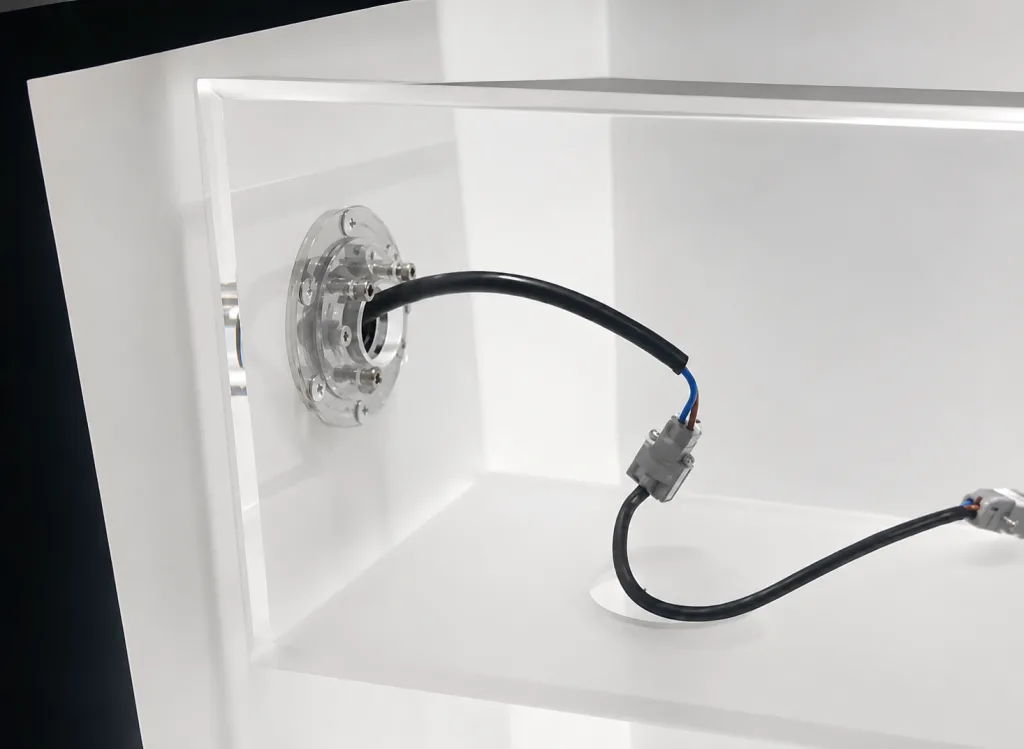
Die hier gezeigte Leuchte ist ein echtes Beispiel: eine Deckenleuchte, die um ein scheibenförmiges, um 360° schwenkbares Drehgelenk herum konstruiert ist. Der Leuchtenkopf lässt sich um eine volle Umdrehung drehen, sodass er nach der Installation in jede beliebige Richtung ausgerichtet werden kann, und ein 3 N·m konstantes Drehmoment hält es in jedem beliebigen Winkel innerhalb dieses Drehbereichs, ohne zurückzuschnellen. Das Scharnier besteht aus Edelstahl, und das Versorgungskabel wird durch die zentrale Bohrung der Scheibe geführt – so verläuft die Verkabelung mit Die Leuchte wird in die Halterung eingesetzt, anstatt sich beim Ausrichten des Lichtstrahls um die Außenseite zu wickeln und zu verdrehen. Diese Führung durch die zentrale Bohrung ist ein charakteristisches Merkmal von Scheibenscharnieren und der Hauptgrund dafür, dass sie sich eher für motorbetriebene Leuchten als für einfache Halterungen eignen.
Da eine Deckenleuchte im Laufe ihrer Lebensdauer viele Male ausgerichtet und neu ausgerichtet wird, darf das Halte-Drehmoment nicht vorzeitig nachlassen. In unseren eigenen Zyklustests behielt dieses Scharnier seine Haltekraft bei etwa Drehmomentabfall des 15% nach 10.000 Zyklen — was für eine Halterung dieses Gewichts immer noch fest im nutzbaren Bereich liegt. Bei einer 360°-Halterung gilt derselbe Test wie bei jedem Drehgelenk: Es kommt nicht darauf an, dass sie sich weiterdreht, sondern dass sie auch nach Tausenden von Verstellungen noch stoppt und in der eingestellten Position bleibt.
So bestimmen Sie die Größe und geben die Spezifikationen an
Wie bei jedem Drehmomentgelenk wird die Haltekraft durch das Moment bestimmt, nicht durch das reine Gewicht der Halterung – also das Gewicht multipliziert mit dem Abstand des Schwerpunkts zur Drehachse. Ein kompakter Leuchtenkopf an einem langen Arm kann ein höheres Drehmoment erfordern als eine schwerere, aber gut zentrierte Leuchte. Überprüfen Sie vor der Auswahl eines Modells das bewegte Gewicht, den Schwerpunktversatz, die Anzahl der Scharniere und die Sicherheitsreserve; die Drehmoment-Scharnier-Rechner wandelt diese Eingaben in ein Solldrehmoment um.
Zwei Details sind spezifisch für 360°-Leuchten. Erstens: Wenn die Leuchte mit Strom versorgt wird, planen Sie die Kabelführung von Anfang an durch die zentrale Bohrung des Scharniers und stellen Sie sicher, dass das Kabel genügend Spiel und Biegebeständigkeit für wiederholte vollständige Drehungen aufweist – ein Kabelbaum, der außen verlegt wird, verdreht sich und versagt schließlich. Zweitens sollten Material und Oberflächenbeschaffenheit an den Einsatzort der Leuchte angepasst werden: Edelstahl für feuchte, küstennahe oder häufig gereinigte Standorte; plattierter oder beschichteter Stahl für trockene Innenmontagen. Ob das Drehmoment werkseitig fest eingestellt oder einstellbar belassen werden soll, ist derselbe Kompromiss wie bei jedem Drehmomentgelenk – ein fest eingestelltes, wiederholgenaues Produkt steht für ein konstantes Drehmoment, das in der Scharnierführung mit festem vs. einstellbarem Drehmoment.
Wenn Sie sich noch nicht sicher sind, welche Art von Scharnier die Leuchte überhaupt benötigt, gehen Sie zunächst vom übergeordneten Rahmen in So wählen Sie ein Industriescharnier aus.
Wenn Drehung, Belastung und Verlegung festgelegt sind, geben Sie das Gewicht der Vorrichtung, den Schwerpunktversatz, die Drehungsanforderung, das Zyklusziel und die Umgebungsbedingungen an, und unser Ingenieurteam kann mit einem um 360° schwenkbaren Scharnier kombiniert werden.
FAQ
Wozu dient ein um 360 Grad schwenkbares Drehmoment-Scharnier?
Dadurch kann sich eine Halterung um eine volle Umdrehung drehen und durch kontrollierte Reibung in jedem beliebigen Winkel in ihrer Position gehalten werden, ohne dass eine Verriegelung oder Arretierung erforderlich ist. Sie eignet sich für Deckenleuchten, drehbare Displays sowie Kamera- oder Sensorköpfe, die ausgerichtet werden müssen und anschließend in der eingestellten Position verbleiben sollen.
Wie kann ein Drehgelenk ohne Verriegelung seine Position halten?
Eine speziell entwickelte Reibung um die Drehachse sorgt für eine konstante Haltekraft. Der Benutzer kann die Halterung von Hand drehen; sobald sie jedoch losgelassen wird, bleibt sie in diesem Winkel stehen und springt nicht zurück oder verrutscht unter ihrem eigenen Gewicht.
Kann das Stromkabel durch ein 360°-Drehgelenk geführt werden?
Ja – Scheibenscharniere verfügen über eine zentrale Bohrung, sodass das Kabel durch die Drehachse verläuft und sich mit der Halterung mitdreht, anstatt sich außen um diese zu wickeln. Stellen Sie sicher, dass das Kabel über genügend Spiel und Biegebeständigkeit für wiederholte vollständige Drehungen verfügt.
Wie viel Drehmoment benötigt ein Schwenkgelenk für eine Deckenleuchte?
Das hängt vom Gewicht der Halterung und davon ab, wie weit ihr Schwerpunkt von der Drehachse entfernt ist – nicht das reine Gewicht, sondern das Moment bestimmt das Drehmoment. Die Dimensionierung sollte auf der Grundlage dieser Geometrie mit einer Sicherheitsmarge erfolgen; ein kompakter Kopf an einem langen Arm kann ein höheres Drehmoment erfordern als eine schwerere, gut zentrierte Halterung.